
The moment I took my first bite of Spicy Korean Chicken Katsu, I knew I had stumbled upon something truly special. Picture this: tender chicken breasts enveloped in a golden, crispy panko coating, sizzling away in the pan, releasing an irresistible aroma that fills the kitchen with warmth and comfort. What truly sets this dish apart is its vibrant sauce—a delightful dance of spice and sweetness that ignites the taste buds and keeps you coming back for more.
Ideal for busy weeknights or impressing guests at dinner parties, this recipe takes just 30 minutes from start to finish, making it the perfect solution for those who crave homemade goodness without the fuss. Whether you’re a culinary novice or a seasoned chef, you’ll appreciate the harmony of flavors and textures that elevate this classic dish. Join me as we dive into the recipe, tailored for flavor enthusiasts seeking a delicious twist on comfort food!
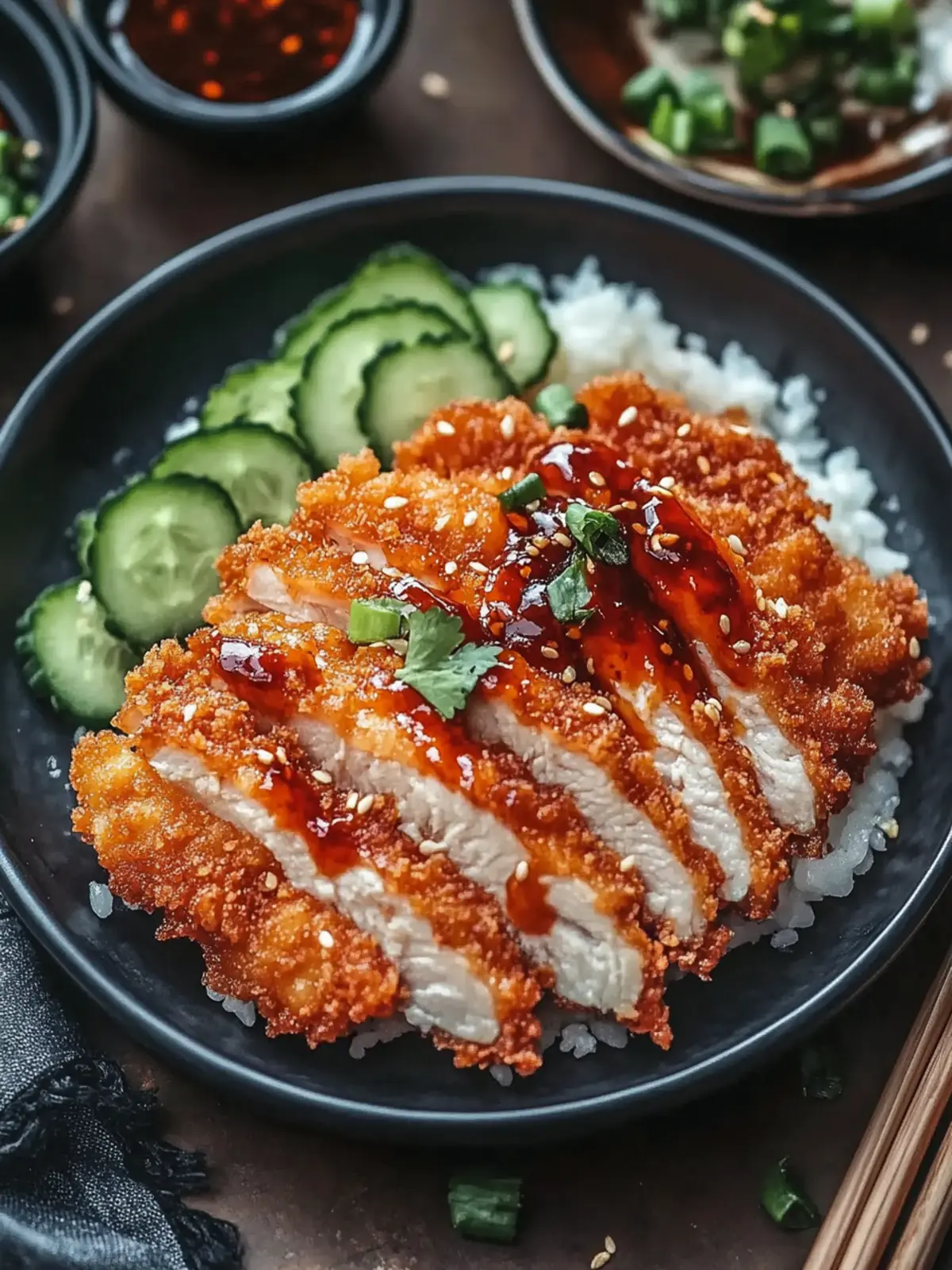
Spicy Korean Chicken Katsu: Why is it a Must-Try?
Irresistible Flavor: The combination of sweet and spicy in the sauce sparks a flavor explosion that will leave you craving more.
Crispy Texture: Each bite features a perfectly crunchy panko coating, contrasting beautifully with the juicy chicken inside.
Quick to Prepare: In just 30 minutes, you can whip up this dazzling dish, making it ideal for busy weeknights or unexpected guests.
Customizable Heat: You can easily adjust the spice level to suit your preferences, whether you prefer a mild touch or a fiery kick.
Made Ahead: You can prep ahead by breading the chicken 24 hours in advance—perfect for meal prep or entertaining with minimal effort.
Crowd-Pleaser: Whether shared with friends or family, this dish promises to impress and satisfy everyone at the table.
Spicy Korean Chicken Katsu Ingredients
Unlock the secret to making this delicious dish!
For the Chicken
- Chicken Breasts – Boneless and skinless ensures tenderness; prefer fresh chicken for the best flavor.
- All-Purpose Flour – Initial coating creates a crunchy texture; consider gluten-free alternatives for a gluten-free version.
- Garlic Powder – Adds aromatic flavor; fresh garlic can be substituted if preferred.
- Salt – Enhances overall flavor; adjust according to personal taste.
- Black Pepper – Offers subtle warmth; feel free to adjust for spiciness.
- Eggs (beaten) – Binds breadcrumbs to chicken, helping the coating adhere.
- Panko Breadcrumbs – Provides a light and crispy texture; for a different texture, traditional breadcrumbs can be used.
- Oil – For frying; essential for achieving a crispy texture—vegetable oil is recommended.
For the Sauce
- Soy Sauce – Forms the base of the spicy sauce; consider low-sodium versions for a healthier option.
- Rice Vinegar – Adds acidity to balance flavors; substitute with apple cider vinegar if needed.
- Sugar – Balances sauce sweetness; honey can replace sugar for natural sweetness.
- Honey (optional) – Enhances sweetness; omit for less sweetness.
- Gochujang (Korean chili paste) – Provides heat and flavor; adjust quantity for desired spice level.
- Garlic (minced) – Intensifies flavor in the sauce; use fresh for best results.
- Ginger (grated, optional) – Adds warmth and complexity; omit for a milder sauce.
How to Make Spicy Korean Chicken Katsu
-
Prepare Chicken: Slice the chicken breasts in half lengthwise for even cooking. Season both sides with salt and pepper, allowing the flavors to penetrate the meat.
-
Breading Setup: Arrange three shallow bowls on your countertop: one with seasoned flour, another with beaten eggs, and the last filled with panko breadcrumbs. This organized setup makes breading a breeze!
-
Bread Chicken: Start by dipping each piece of chicken into the flour, shaking off the excess. Then, coat it in the beaten egg, and finally, press it into the panko breadcrumbs, ensuring a generous coating sticks.
-
Fry Chicken: Heat oil in a non-stick pan over medium-high heat until it reaches 350°F. Fry the chicken for about 3-4 minutes on each side until they are golden brown and crispy.
-
Make Sauce: While the chicken is frying, grab a saucepan and combine soy sauce, rice vinegar, sugar, honey, gochujang, minced garlic, and ginger. Heat the mixture over medium heat until it thickens slightly.
-
Serve: Once the chicken is perfectly fried, drizzle the spicy sauce over each piece. For a beautiful final touch, garnish with sesame seeds or sliced green onions.
Optional: Serve with a side of steamed rice for a complete meal.
Exact quantities are listed in the recipe card below.
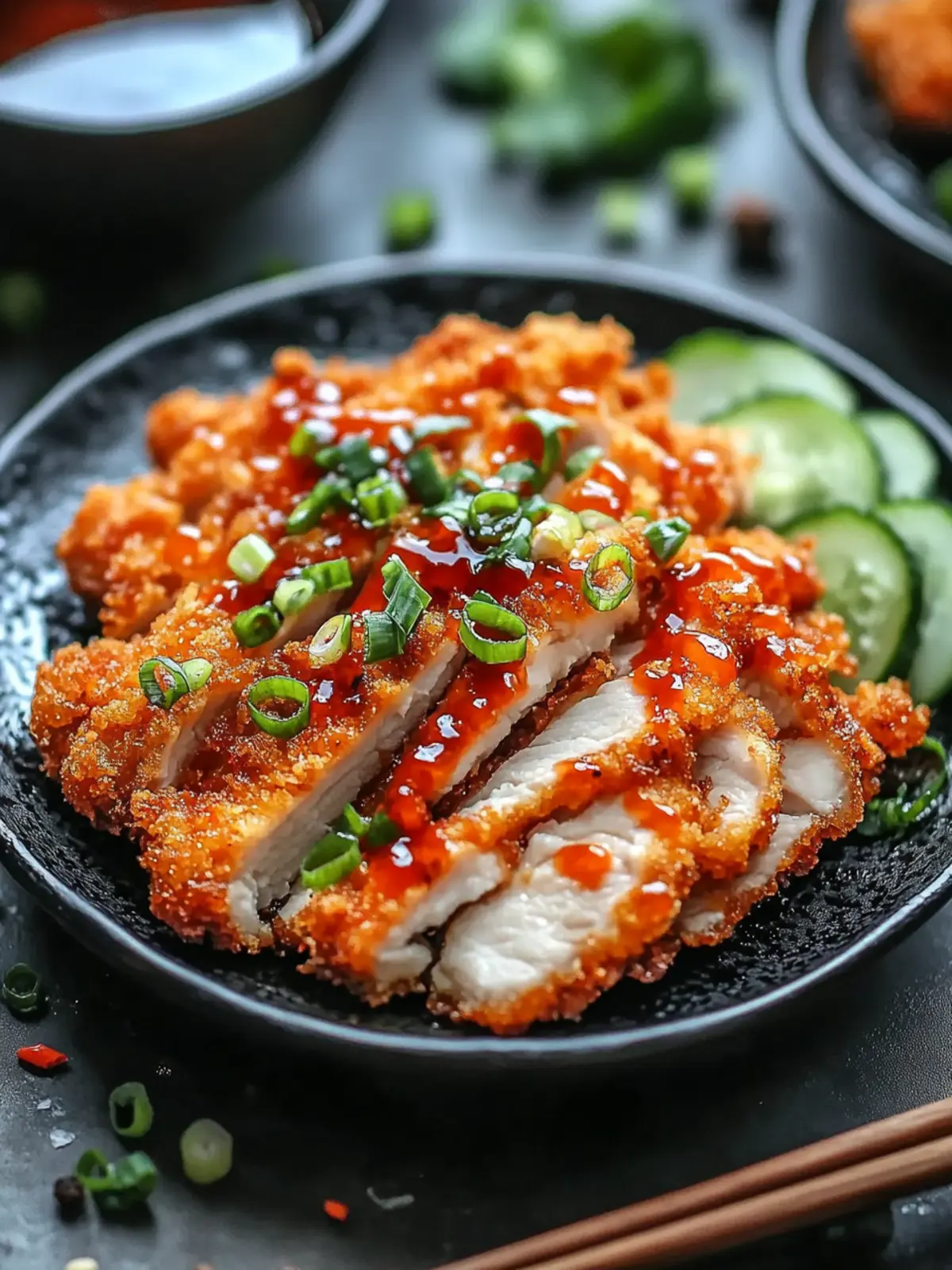
Expert Tips for Spicy Korean Chicken Katsu
- Temperature Check: Use a meat thermometer to ensure chicken reaches an internal temp of 165°F. This prevents undercooking and ensures juicy results.
- Avoid Overcrowding: Fry in batches if needed. Overcrowding the pan can lower oil temperature, resulting in soggy coating instead of crispy chicken.
- Pre-Bread Ahead: Bread the chicken up to 24 hours in advance and store in the refrigerator. This makes the cooking process faster and more convenient!
- Customize Spice: Adjust the amount of gochujang according to your heat preference for your Spicy Korean Chicken Katsu. More for heat, less for mild.
- Perfect Panko: Press panko breadcrumbs firmly onto the chicken for an extra crispy coating. It ensures every bite has a satisfying crunch.
- Rest Before Serving: Allow fried chicken to rest on a paper towel for a minute before serving. This helps retain crispiness while draining excess oil.
Make Ahead Options
Preparing Spicy Korean Chicken Katsu in advance is a game-changer for busy weeknights! You can bread the chicken up to 24 hours ahead of time, ensuring that your meal prep is stress-free. Simply follow the breading steps and store your coated chicken in an airtight container in the refrigerator to maintain its crispiness. When you’re ready to serve, heat your oil and fry the chicken directly from the fridge for perfectly golden results. Additionally, you can make the spicy sauce up to 3 days in advance—just refrigerate it in an airtight container. Reheating the sauce gently before serving will keep its flavors bright and delicious, making for a quick and satisfying meal when time is tight!
Spicy Korean Chicken Katsu: Flavorful Variations
Customization is the name of the game here! Elevate your culinary experience with these tempting twists on your Spicy Korean Chicken Katsu.
-
Gluten-Free: Substitute all-purpose flour and panko with gluten-free alternatives to enjoy the same delightful crunch without worries.
-
Crispy Oven-Baked: For a healthier option, bake the breaded chicken at 400°F for 20-25 minutes, turning halfway through. You’ll delight in a crispy result without frying.
-
Vegetarian Option: Replace chicken with eggplant slices or firm tofu. Simply bread and fry until golden for a scrumptious meat-free alternative.
-
Extra Spicy: Add more gochujang to the sauce or toss in some sliced fresh chilies when frying for an exciting heat boost that’ll thrill spice lovers.
-
Sweet & Savory: Incorporate a splash of sesame oil into the sauce for added depth and nuttiness, complementing the sweet and spicy notes beautifully. This small change can make a big difference!
-
Asian-Inspired Slaw: Serve with a quick coleslaw mixed with sesame oil, soy sauce, and a hint of lime. The crunch and tang will perfectly balance the richness of the chicken katsu.
-
Serve with Noodles: Pair your chicken with a simple bowl of stir-fried noodles, drizzled with a bit of the sauce, to create a well-rounded meal that’s hearty and delicious.
Get creative and make this recipe your own! Each variation sparks new flavor horizons and keeps the excitement alive in your kitchen.
Storage Tips for Spicy Korean Chicken Katsu
Fridge: Store leftovers in an airtight container for up to 3 days. This keeps the chicken fresh while preserving its delightful crunch.
Freezer: For longer storage, freeze individual pieces wrapped tightly in plastic wrap and then in foil for up to 3 months. This helps maintain the flavor and texture.
Reheating: To restore crispiness, reheat in the oven at 375°F for about 10-15 minutes or use an air fryer for optimal results. Avoid microwaving, as it can make the coating soggy.
What to Serve with Spicy Korean Chicken Katsu?
Elevate your meal experience with delightful sides that complement the hearty crunch and vibrant flavors of this dish.
- Steamed Rice: A comforting base that soaks up the spicy sauce, balancing the dish’s heat and adding a lovely texture.
- Crispy Pickled Vegetables: Their tangy crunch offers a refreshing contrast to the richness of the chicken, cutting through the flavors beautifully.
- Korean Slaw: This colorful mix of cabbage and carrots dressed in sesame oil provides a crunchy, zesty side that energizes each bite.
- Miso Soup: A warm and savory pairing that offers a soothing complement to the crispy chicken, enhancing the overall meal experience.
- Sesame Noodles: These lightly tossed noodles drizzled with sesame dressing add a lovely nutty flavor and a delightful chewiness to the spread.
- Kimchi: Fermented vegetables bring an additional layer of texture and complexity, enhancing the bold flavors of the chicken katsu.
- Cold Beer or Iced Green Tea: A refreshing drink option that can cool down any spice, perfectly enhancing your dining experience.
- Mango Sticky Rice: For dessert, this sweet yet subtle dish rounds off your meal with a comforting tropical sweetness that pairs well with savory flavors.
Spicy Korean Chicken Katsu Recipe FAQs
How do I select the perfect chicken breasts for this recipe?
Absolutely! For the best flavor and tenderness, choose boneless and skinless chicken breasts that are fresh, with no dark spots or discoloration. If possible, buy from a trusted butcher or local market, ensuring they feel firm and moist.
How long can I store leftovers of Spicy Korean Chicken Katsu in the fridge?
You can store leftovers in an airtight container in the fridge for up to 3 days. To keep it fresh, ensure the container is sealed tightly to prevent moisture loss and maintain that signature crunch.
Can I freeze Spicy Korean Chicken Katsu, and what’s the best way to do it?
Very! To freeze, wrap each piece of fried chicken tightly in plastic wrap, then in aluminum foil or place them in a freezer-safe bag. This prevents freezer burn and ensures it stays flavorful. Well-wrapped, it can last for up to 3 months.
What if my fried chicken isn’t crispy enough?
If the coating isn’t crispy, first check that your oil is hot enough (around 350°F). Avoid overcrowding the pan as it lowers the oil’s temperature. If you’ve already fried and your chicken is soggy, try reheating in an oven or air fryer to restore that coveted crunch!
Can I make Spicy Korean Chicken Katsu gluten-free?
Absolutely! Substitute regular all-purpose flour and panko breadcrumbs with gluten-free alternatives. However, ensure that your sauces, particularly the soy sauce, are labeled gluten-free as well. This way, everyone can enjoy this tasty dish without any dietary concerns!
What considerations should I keep in mind for allergies?
Make sure to check for any allergies, especially with common ingredients like soy sauce, which contains gluten, and gochujang, which may have additives. For a nut-free version, ensure no cross-contamination if you’re serving to individuals with nut allergies, as some sauces may contain nuts.

Spicy Korean Chicken Katsu: Crispy Crunch with a Fiery Twist
Ingredients
Equipment
Method
- Prepare Chicken: Slice the chicken breasts in half lengthwise for even cooking. Season both sides with salt and pepper, allowing flavors to penetrate the meat.
- Breading Setup: Arrange three shallow bowls with seasoned flour, beaten eggs, and panko breadcrumbs for easy breading.
- Bread Chicken: Dip chicken into flour, shaking off excess, coat with beaten egg, and then press into panko breadcrumbs.
- Fry Chicken: Heat oil in a non-stick pan over medium-high heat until it reaches 350°F. Fry chicken for 3-4 minutes on each side until golden brown.
- Make Sauce: In a saucepan, combine soy sauce, rice vinegar, sugar, honey, gochujang, minced garlic, and ginger. Heat until thickened slightly.
- Serve: Drizzle sauce over fried chicken and garnish with sesame seeds or sliced green onions.