
There’s something irresistibly captivating about the bright colors and tangy aroma wafting from a sizzling pan of Chinese Sweet and Sour Pork (Tang Cu Li Ji). This dish transports me straight to bustling street markets where vendors serve up crispy portions of pork, coated in a glossy sauce that perfectly balances sweet and sour flavors. Each bite delivers an explosion of taste, with tender pork paired beautifully with the juicy sweetness of pineapple and the crunch of vibrant bell peppers.
After a long week of fast food and takeout, I find this satisfying meal a delightful antidote. Not only is it a feast for the senses, but it’s also easier to prepare than you might think—no deep dive into complicated techniques required! With just a handful of ingredients and a few straightforward steps, you can create a dish that impresses family and friends while reigniting the joy of homemade cooking. So, roll up your sleeves, and let’s adventure into this Cantonese classic that promises every bit of crispy goodness you crave!
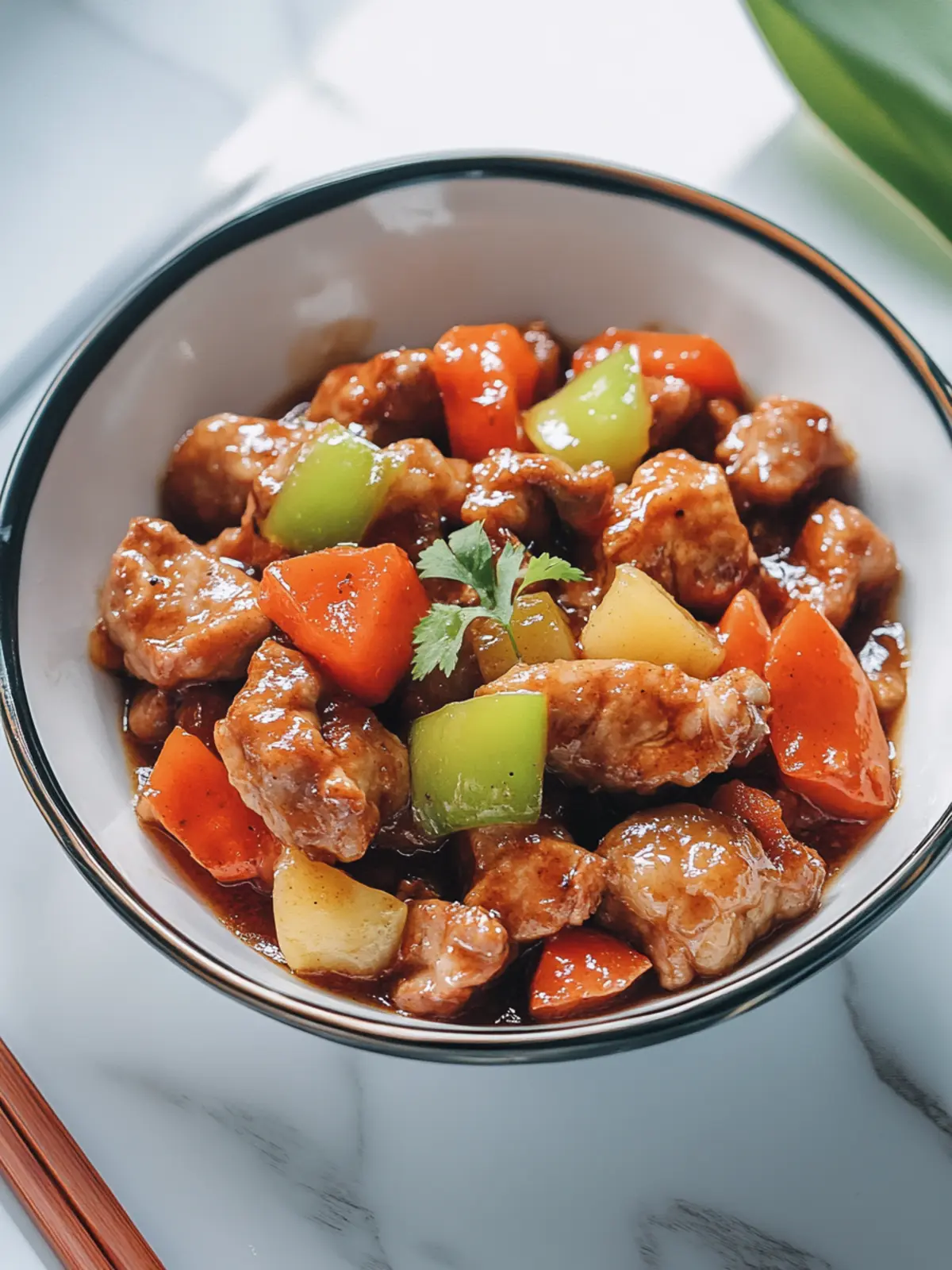
Why is Chinese Sweet and Sour Pork a Must-Try?
Deliciously Balanced Flavors: This recipe perfectly marries sweet and tangy tastes, ensuring each bite is bursting with flavor.
Crispy Perfection: Achieve a delightful crunch by frying the pork twice, making it irresistibly crispy every time.
Quick and Simple: A straightforward recipe that doesn’t require professional cooking skills, allowing anyone to indulge in homemade goodness.
Customizable Options: Easily swap ingredients like chicken or tofu, making it family-friendly and accommodating various dietary preferences.
Crowd-Pleasing Delight: Whether for a busy weeknight dinner or entertaining guests, this dish is sure to impress and satisfy every hungry palate!
Dive into the world of Chinese cuisine with this delectable dish and learn more about the ingredient breakdown.
Chinese Sweet and Sour Pork Ingredients
For the Pork
- Pork Tenderloin – This main protein choice ensures tenderness after frying; substitute with pork shoulder for richer flavor.
- Egg – Binds the batter to the pork and helps create a crispy coating; use a flax or chia seed substitute for a vegan option.
- Light Soy Sauce – Adds seasoning and umami richness; tamari works as a gluten-free alternative.
- Shaoxing Wine (or Dry Sherry) – Enhances flavor with a hint of sweetness; any dry white wine can be a suitable substitute.
For the Batter
- Cornflour (Cornstarch) – Essential for crispiness in the batter; arrowroot starch can be used for a different texture.
- Plain Flour – Provides structure for a crunchy crust; gluten-free flour blends are viable options.
- Oil for Deep Frying – Necessary for achieving that crispy texture; vegetable or peanut oil are both great choices.
For the Sauce
- Ketchup – Adds sweetness and flavor depth to the sauce; homemade tomato sauce or a mix with tomato paste works well too.
- Chinkiang Vinegar (or Rice Vinegar) – Contributes to the dish’s characteristic sour flavor; apple cider vinegar is a milder alternative.
- Sugar – Helps to balance the acidity in the sauce; coconut sugar is a healthier option.
- Oyster Sauce – Infuses the sauce with umami complexity; substitute with soy sauce for a vegetarian option.
- Sesame Oil – Provides a rich, nutty flavor; canola oil can be used for a more neutral taste.
- Water – Adjusts the consistency of the sauce; vegetable broth can add an extra layer of flavor.
For the Vegetables
- Bell Peppers – Provide vibrant color and crunch; alternate vegetables like zucchini or green beans can bring variety.
- Onion – Adds sweetness and flavor depth; shallots can be a delicious alternative.
- Pineapple – Contributes juicy sweetness that balances the savory pork; consider fresh pineapple for the best flavor.
With these fresh ingredients in hand, you’re just a few steps away from enjoying an authentic Chinese Sweet and Sour Pork (Tang Cu Li Ji) experience right in your kitchen!
How to Make Chinese Sweet and Sour Pork
-
Marinate Pork: In a bowl, combine the pork with light soy sauce, Shaoxing wine, salt, white pepper, and egg. Allow it to marinate for at least 20 minutes to absorb the flavors.
-
Prepare Batter: In a separate bowl, mix cornflour and plain flour. Dredge the marinated pork pieces in this mixture until well-coated, ensuring a crispy finish.
-
Heat Oil: Pour enough oil into a wok or deep pan and heat it to 180°C (350°F). You’ll know it’s ready when a drop of batter sizzles upon contact.
-
First Fry: Carefully add the pork in batches, frying until the pieces turn light golden (about 3–4 minutes). Drain on a wire rack or paper towel to eliminate excess oil.
-
Second Fry: Increase the oil temperature slightly, then fry the pork once more until deep golden and super crispy (1–2 minutes). Drain again and set aside.
-
Make Sauce: In a bowl, whisk together ketchup, Chinkiang vinegar, sugar, soy sauce, oyster sauce, sesame oil, and water until smooth and well combined.
-
Stir Fry Vegetables: In a clean wok, heat a small amount of oil and quickly stir fry the onions and bell peppers for a couple of minutes, then add the pineapple chunks.
-
Combine Sauce: Pour the prepared sauce into the wok, letting it simmer. Mix in a cornflour slurry to thicken it, simmering just until it coats the back of a spoon.
-
Combine Everything: Toss the fried pork into the wok, ensuring each piece is thoroughly coated in the luscious sauce.
-
Serve: Transfer your crispy Chinese Sweet and Sour Pork to a serving dish and garnish as desired. Serve immediately over a bed of fluffy steamed rice.
Optional: Add sesame seeds on top for an extra crunch and visual appeal.
Exact quantities are listed in the recipe card below.
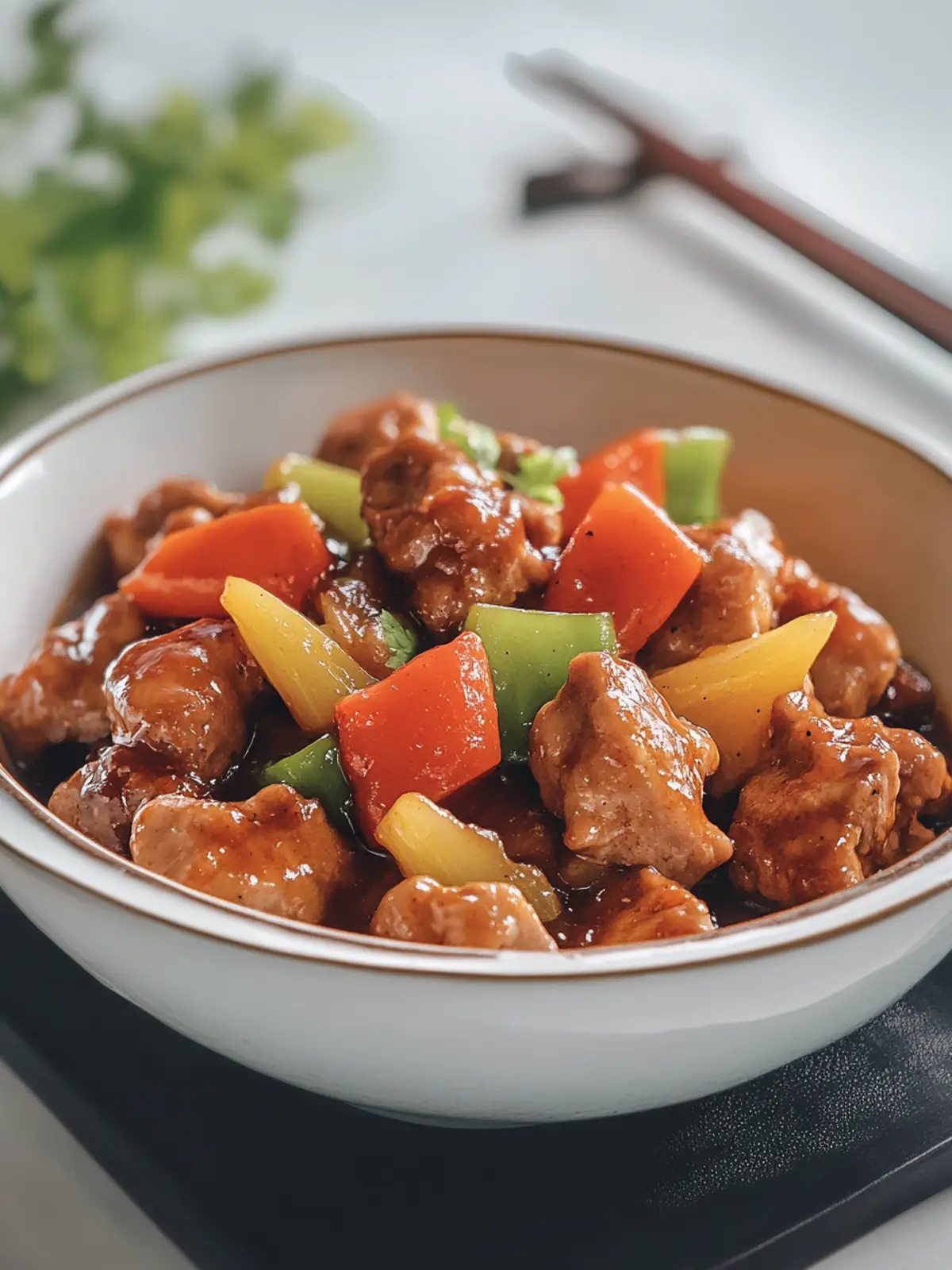
What to Serve with Chinese Sweet and Sour Pork?
Transform your dinner plate into a colorful feast that embraces a variety of flavors and textures.
-
Steamed Jasmine Rice: This classic pairing soaks up the delightful sauce, offering a fragrant and soft counterbalance to crispy pork.
-
Stir-Fried Vegetables: A vibrant mix of broccoli, carrots, and snap peas adds a fresh crunch, enhancing the overall flavor experience while keeping your meal light.
-
Egg Fried Rice: The savory taste of eggs and soy sauce elevates the dish, providing a satisfying, complementary base that captures the essence of Chinese cuisine.
-
Asian Slaw: A crunchy salad of cabbage, carrots, and sesame dressing introduces a refreshing contrast, brightening every bite with a tangy zing.
-
Sweet Chili Sauce: Serve on the side for those who love an extra kick; this sauce perfectly balances the sweetness of the pork with spicy heat.
-
Chrysanthemum Tea: Offering a floral and slightly sweet flavor, this soothing drink pairs beautifully with the dish, cleansing the palate and enhancing the dining experience.
-
Mango Pudding: A silky and sweet dessert that rounds off your meal, its tropical brightness complements the flavors of the main course perfectly.
-
Fortune Cookies: End your meal on a whimsical note with these crispy treats; a fun way to add a touch of tradition to your dinner.
Expert Tips for Chinese Sweet and Sour Pork
-
Fry Twice for Crispiness: Ensure maximum crunch by frying the pork twice; this technique locks in the moisture and creates a satisfying texture.
-
Avoid Overcrowding: Fry pork in small batches to prevent steaming. Overcrowding can result in soggy meat instead of crispy bites.
-
Rest After Frying: Allow the fried pork to rest briefly on a wire rack or paper towel to drain excess oil and maintain that crunchy exterior.
-
Savory Sauce Balance: Taste your sauce as you prepare it; adjust sugar or vinegar levels to achieve the perfect sweet-and-sour balance that complements the pork beautifully.
-
Reheating Right: When reheating leftovers, use an oven or air fryer for crispy results instead of the microwave, which can dampen the texture.
-
Ingredient Quality Matters: Choose fresh vegetables and high-quality sauces for a more vibrant and flavorful Chinese Sweet and Sour Pork that truly shines.
Make Ahead Options
These Chinese Sweet and Sour Pork (Tang Cu Li Ji) are perfect for meal prep enthusiasts! You can marinate the pork up to 24 hours in advance, ensuring that the flavors penetrate deeply for a tender result. Additionally, you can prepare the sauce and chop the vegetables up to 3 days ahead—just store them in airtight containers in the refrigerator to maintain freshness. When you’re ready to serve, follow through with frying the pork and quickly stir-frying the veggies just before combining everything. This way, you’ll enjoy crispy pork coated in succulent sauce, all with minimal effort on busy weeknights!
Chinese Sweet and Sour Pork Variations
Feel free to explore and customize this recipe to match your cravings and dietary preferences!
-
Chicken:
Substitute pork with chicken breast for a leaner option that still delivers delightful crispiness. -
Tofu:
Opt for firm tofu, diced and seasoned, for a hearty vegetarian version that absorbs the sauce beautifully. -
Vegetable Boost:
Introduce more vegetables like broccoli, snap peas, or carrots to enhance flavor and nutrition. -
Spicy Kick:
Add sliced fresh chili peppers or a teaspoon of chili sauce to your stir-fry for an extra zing. -
Alternative Sweeteners:
Swap out regular sugar with honey or maple syrup for a different sweetening experience. -
Fruit Variations:
Make it tropical by adding mango or swap the pineapple for peaches for a new flavor twist. -
Gluten-Free:
Use tamari in place of soy sauce and gluten-free flour blends to make this dish celiac-friendly. -
Crispy Breading:
For a textured twist, try panko breadcrumbs in the batter for an even crunchier coating on the pork.
Storage Tips for Chinese Sweet and Sour Pork
Fridge: Store leftover Chinese Sweet and Sour Pork in an airtight container for up to 3 days. For best results, keep the sauce separate from the pork to maintain crispiness.
Freezer: Freeze the pork and sauce separately in airtight containers for up to 2 months. This keeps flavors intact and allows for easy reheating later.
Reheating: To revive the dish’s signature crunch, reheat the pork in an air fryer or oven at 200°C (400°F) for about 10 minutes. Avoid using the microwave, as it may make the pork soggy.
Thawing: When ready to eat, thaw the pork and sauce in the fridge overnight before reheating. This ensures safety and prevents texture degradation.
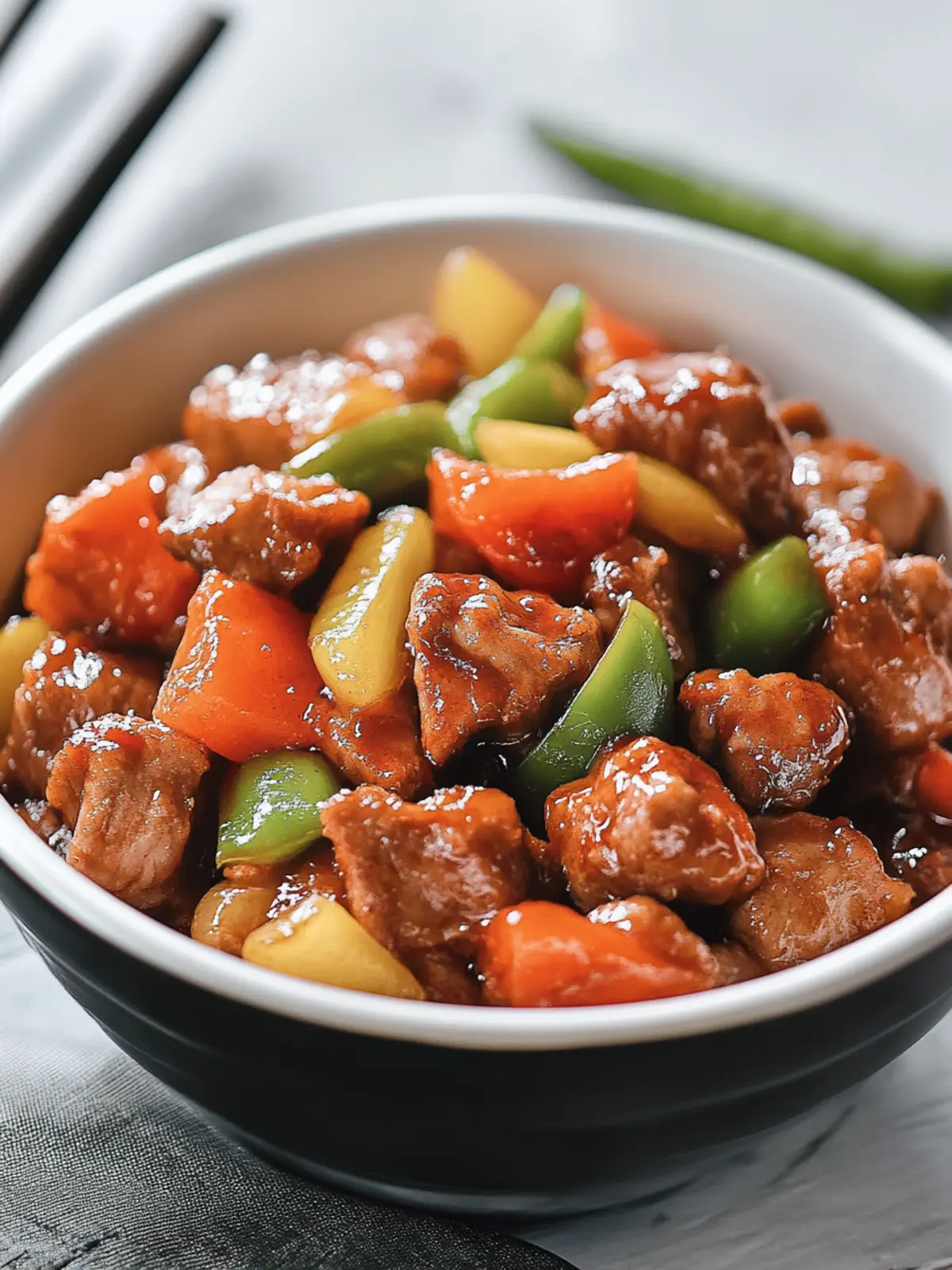
Chinese Sweet and Sour Pork (Tang Cu Li Ji) Recipe FAQs
What type of pork should I use for Sweet and Sour Pork?
I recommend using pork tenderloin for its tenderness after frying. If you’re looking for a richer flavor, pork shoulder is a fantastic alternative that brings more depth to the dish.
How should I store leftover Sweet and Sour Pork?
Leftovers can be stored in an airtight container in the fridge for up to 3 days. For the best texture, it’s wise to store the sauce and pork separately, preventing the pork from becoming soggy.
Can I freeze Sweet and Sour Pork?
Absolutely! You can freeze the pork and sauce separately in airtight containers for up to 2 months. To reheat, thaw overnight in the fridge, then place the pork in an air fryer or oven at 200°C (400°F) for about 10 minutes for that crispy goodness!
What should I do if the pork isn’t crispy enough?
If you find your pork isn’t crispy, ensure you’re frying it twice at the right temperatures. The first fry should aim for a light golden color (3–4 minutes), while the second fry is crucial to achieve that golden, crunchy finish (1–2 minutes). If previously fried pork is stored and reheated, use an oven or air fryer rather than a microwave to retain the crispy texture.
Are there any dietary considerations for this recipe?
Yes! If you’re vegetarian or vegan, consider substituting pork with tofu or jackfruit. Ensure you replace the egg with a flax or chia seed mixture for binding. Additionally, swap out the oyster sauce for soy sauce for a completely plant-based dish.
How can I tell if the vegetables are fresh for my dish?
When selecting bell peppers and onions, look for ones that are firm and vibrant in color, avoiding any with dark spots or wrinkles. Pineapple should be fragrant and slightly soft to the touch. Fresh ingredients will elevate your Sweet and Sour Pork to new heights!
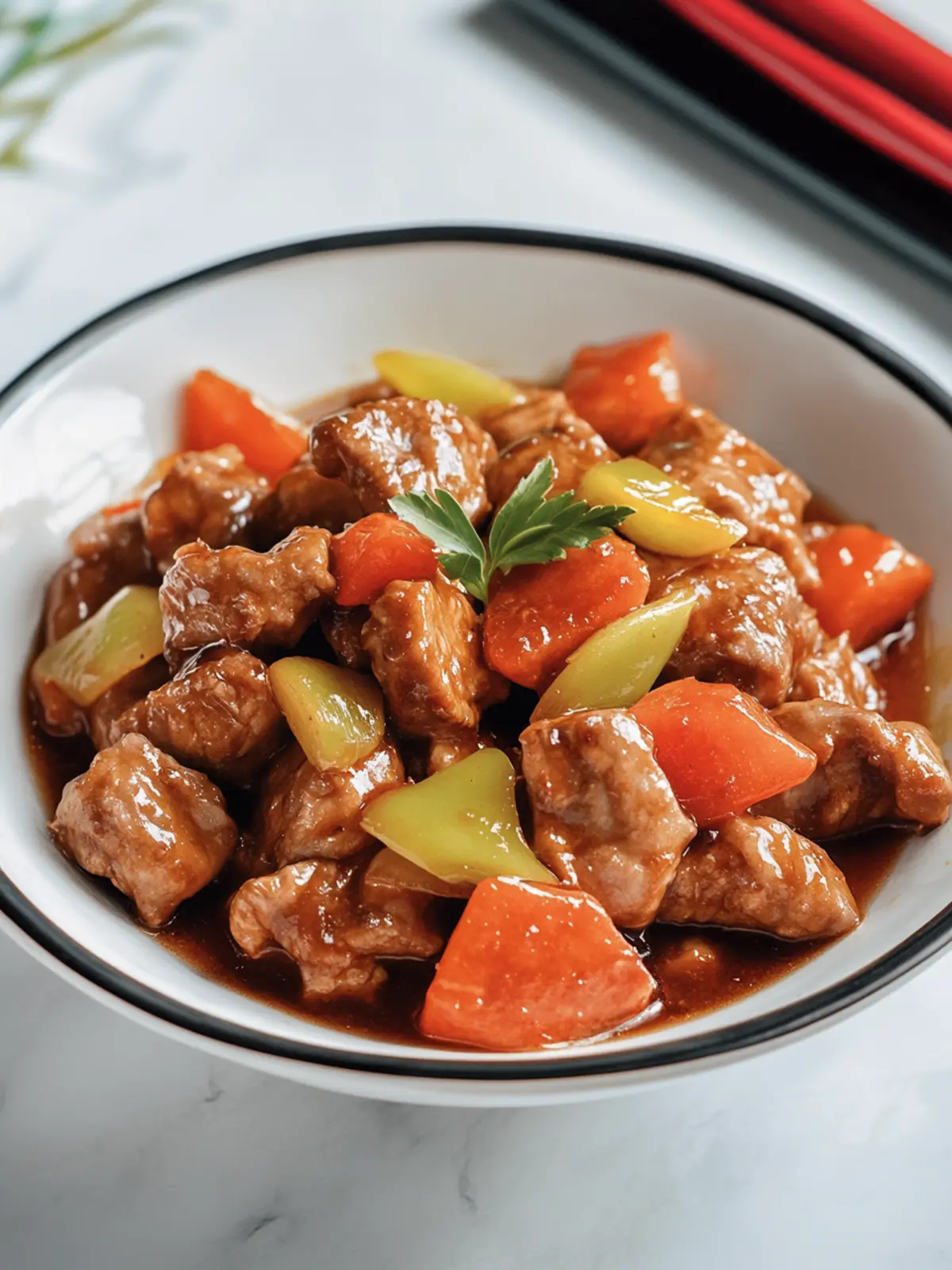
Crispy Chinese Sweet and Sour Pork Tang Cu Li Ji Made Easy
Ingredients
Equipment
Method
- Marinate Pork: In a bowl, combine the pork with light soy sauce, Shaoxing wine, salt, white pepper, and egg. Allow it to marinate for at least 20 minutes to absorb the flavors.
- Prepare Batter: In a separate bowl, mix cornflour and plain flour. Dredge the marinated pork pieces in this mixture until well-coated, ensuring a crispy finish.
- Heat Oil: Pour enough oil into a wok or deep pan and heat it to 180°C (350°F). You’ll know it's ready when a drop of batter sizzles upon contact.
- First Fry: Carefully add the pork in batches, frying until the pieces turn light golden (about 3–4 minutes). Drain on a wire rack or paper towel to eliminate excess oil.
- Second Fry: Increase the oil temperature slightly, then fry the pork once more until deep golden and super crispy (1–2 minutes). Drain again and set aside.
- Make Sauce: In a bowl, whisk together ketchup, Chinkiang vinegar, sugar, soy sauce, oyster sauce, sesame oil, and water until smooth and well combined.
- Stir Fry Vegetables: In a clean wok, heat a small amount of oil and quickly stir fry the onions and bell peppers for a couple of minutes, then add the pineapple chunks.
- Combine Sauce: Pour the prepared sauce into the wok, letting it simmer. Mix in a cornflour slurry to thicken it, simmering just until it coats the back of a spoon.
- Combine Everything: Toss the fried pork into the wok, ensuring each piece is thoroughly coated in the luscious sauce.
- Serve: Transfer your crispy Chinese Sweet and Sour Pork to a serving dish and garnish as desired. Serve immediately over a bed of fluffy steamed rice.