
When the summer heat kicks in, I find myself craving something more than just a quick meal. That’s when I turn to the heartwarming embrace of Korean Samgyetang, a soothing ginseng chicken soup that feels like a warm hug in a bowl. This traditional dish, with its tender chicken and aromatic herbs, isn’t just about nourishment; it’s a culinary experience that revives both body and spirit.
Picture this: the subtle aroma of ginseng wafting through your kitchen as the soup simmers, mingling with the rich flavors of garlic and ginger. Each spoonful reveals a delightful balance of savory with a hint of sweetness from jujubes, making every bite feel special. It’s not only easy to prepare but also a high-protein, low-carb meal that can impress anyone who steps foot in your kitchen. Let’s dive into this revitalizing recipe and embrace the tradition that makes it not just a meal, but a celebration of summer itself!
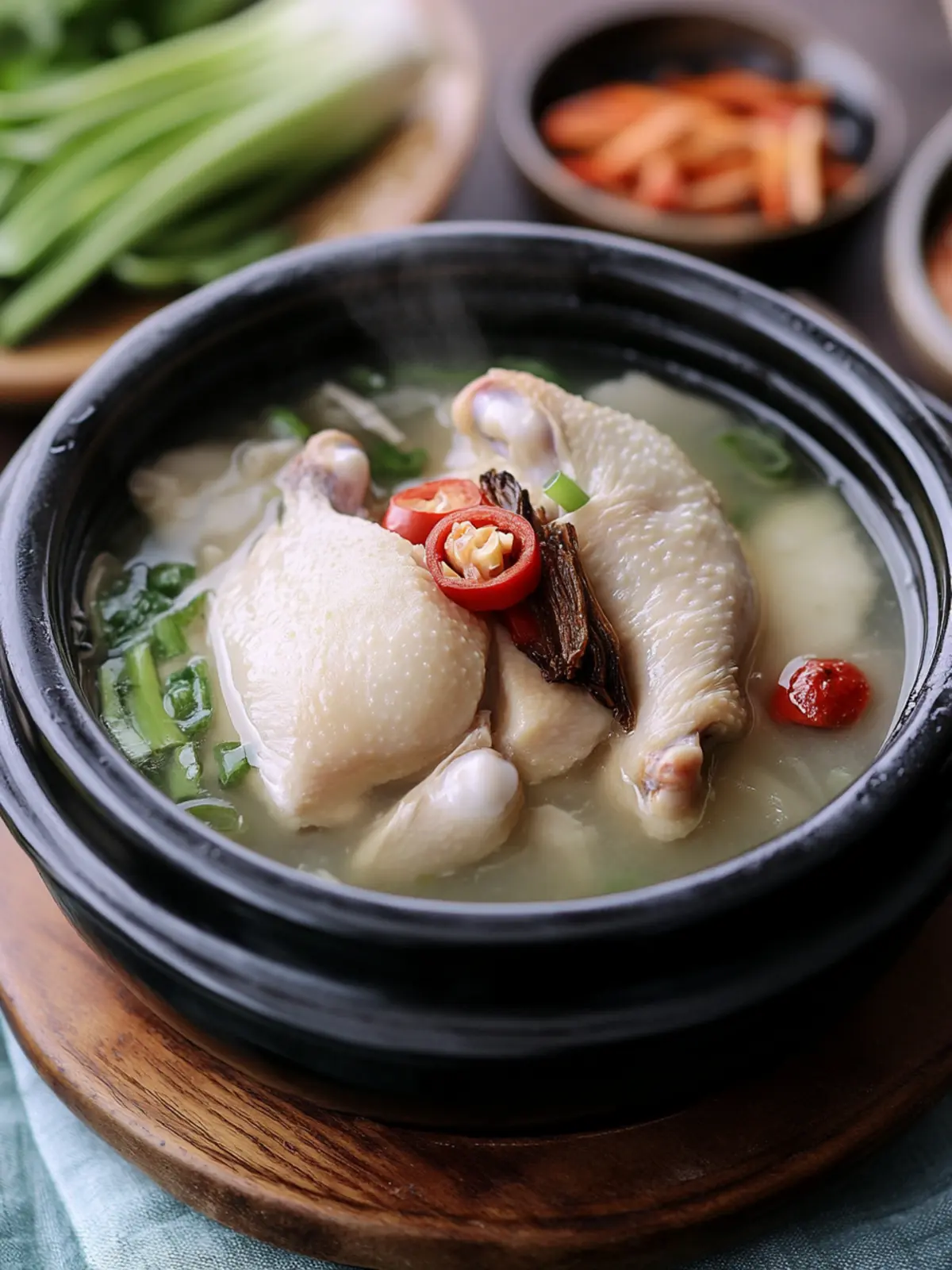
Why Choose Korean Samgyetang (Ginseng Chicken Soup)?
Comforting and nourishing, this soup is perfect for beating the summer heat while offering a delightful culinary escape. Simple preparation means you can whip it up easily, even on busy days. Rich flavors come from tender chicken and aromatic ginseng, making each sip a delight. High in protein and low in carbs, it fits dietary needs without sacrificing taste. Crowd-pleaser? Absolutely! Your family and friends will cherish every bowl, making it an ideal dish for any occasion. Explore more ways to create unforgettable meals with my guide on how to make comforting soups.
Korean Samgyetang (Ginseng Chicken Soup) Ingredients
For the Chicken
• Whole Chickens – A tender foundation; choose young, small chickens for the best flavor (500-600g each).
For the Soup Base
• Water – The essential liquid for cooking; you’ll need 2 liters for a rich broth.
• Korean Ginseng Roots – The star flavoring agent that adds earthiness; substitute with 2 tbsp ginseng powder if needed.
• Fresh Ginger – Provides aromatic warmth; use a 2-inch piece, thinly sliced.
• Garlic – Enhances the savory depth; approximately 8 peeled cloves will do.
• Jujubes – They bring sweetness to balance savory elements; dried red dates can be a handy substitute.
• Scallions – For a fresh garnish and added flavor; slice into large pieces for infusion in the broth.
For the Stuffing
• Glutinous Rice – Adds thickness to the soup; make sure to soak in water for 1 hour before using.
For Garnish
• Ginkgo Nuts – Optional for a delicious nutty aroma; feel free to omit if unavailable.
• Salt and Pepper – Essentials for seasoning; add to taste before serving.
This Korean Samgyetang not only warms your heart but also fills your soul with nourishment, making it a lovely dish for those hot summer days!
How to Make Korean Samgyetang
-
Prepare Chickens: Start by cleaning the whole chickens thoroughly under cold water. Pat them dry with a paper towel and trim any excess fat to ensure they’re ready for stuffing.
-
Make Stuffing: Combine the soaked glutinous rice with half of the peeled garlic cloves and a pinch of salt in a bowl. Stuff this mixture carefully into each chicken and tie their legs with twine to keep everything secure.
-
Prepare Broth Base: In a large pot, bring 2 liters of water to a boil. Once boiling, add in the Korean ginseng roots, jujubes, sliced ginger, remaining garlic cloves, and scallions. Let it simmer for about 5-7 minutes to infuse the flavors.
-
Cook Chickens: Gently submerge the stuffed chickens into the boiling broth. Bring it back to a boil, then reduce the heat to low, cover, and let it simmer for 1 hour. Remember to skim off any impurities from the surface for a clear broth.
-
Check Doneness: After simmering, check the chickens’ doneness by inserting a skewer into the meat; the juices should run clear. Season the broth with salt and pepper according to your taste and let it simmer for another 10-15 minutes.
-
Garnish and Serve: Carefully transfer the cooked chickens into bowls. Ladle the aromatic broth and included ingredients over the top. Finish by garnishing with sliced scallions and a sprinkle of black pepper before serving hot.
Optional: Consider adding a drizzle of sesame oil for an extra layer of flavor.
Exact quantities are listed in the recipe card below.
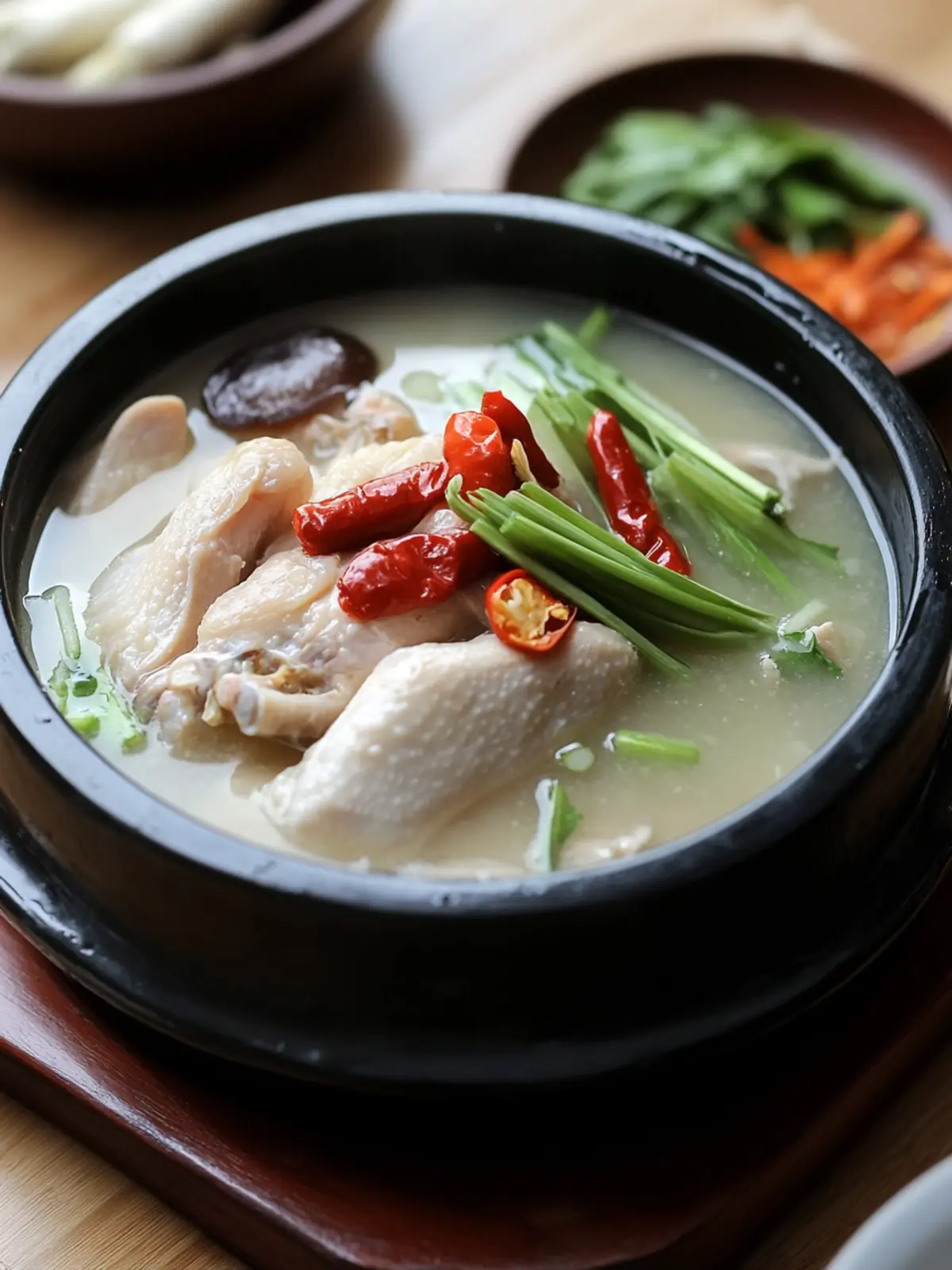
How to Store and Freeze Korean Samgyetang
• Fridge: Store leftover Korean Samgyetang in an airtight container for up to 3 days. Make sure it’s cooled before sealing to maintain freshness.
• Freezer: For longer storage, freeze the soup in individual portions using freezer-safe containers. It can be kept for up to 3 months without losing flavor.
• Reheating: When ready to enjoy, thaw frozen samgyetang overnight in the fridge. Reheat gently on the stove over low heat, stirring occasionally to prevent sticking.
• Avoid Food Waste: If you have any leftover glutinous rice, you can freeze that separately (in an airtight bag) to use later as well!
Expert Tips for Korean Samgyetang
• Choose Quality Chicken: Use young, small whole chickens for the best taste and tenderness; larger birds may result in tougher meat.
• Properly Stuff Chickens: Avoid overfilling the chickens with glutinous rice to prevent them from bursting during cooking; a snug fit is ideal.
• Simmer Gently: Once boiling, reduce the heat and let the soup simmer on low; this ensures a clear broth and prevents the chicken from becoming tough.
• Taste as You Go: Sample the broth and adjust the seasoning with salt and pepper towards the end of cooking to enhance flavors for your perfect Korean Samgyetang.
• Skim for Clarity: Regularly skim off any foam that forms on the surface while simmering; this keeps your soup visually appealing and clean-tasting.
• Customize Ingredients: Feel free to adjust or omit ginkgo nuts based on availability or personal preference; deliciousness remains with the core ingredients!
Variations & Substitutions for Korean Samgyetang (Ginseng Chicken Soup)
Get creative with this comforting soup by exploring exciting twists and alternatives to suit your taste buds!
-
Duck Delight: Use a whole duck instead of chicken for a richer flavor and deeper broth. The result is a heartier soup that’s equally succulent.
-
Ginseng Alternatives: Don’t have ginseng roots? Swap in 2 tbsp of astragalus root powder for a different herbal angle with similar health benefits.
-
Vegetarian Version: Replace chicken with firm tofu for a plant-based take. Use vegetable broth instead of water for a rich, satisfying soup.
-
Mushroom Magic: Toss in some shiitake or enoki mushrooms to enhance umami flavors while adding delightful texture.
-
More Heat: For a spicy boost, add sliced jalapeños or Korean gochugaru (red pepper flakes) to the broth; adjust the amount to your heat preference.
-
Nutty Notes: If you’re a fan of nuttiness, try incorporating toasted sesame oil at the end for a fragrant twist that elevates the dish.
-
Extra Sweetness: If you want a touch more sweetness, increase the number of jujubes or add a bit of coconut sugar; it balances the savory notes beautifully.
-
Gingery Goodness: For an extra kick, include more fresh ginger slices or even ginger juice for that warm, spicy zing that comforts the soul.
What to Serve with Korean Samgyetang (Ginseng Chicken Soup)?
Elevate your meal experience by complementing your comforting bowl of samgyetang with delightful side dishes and beverages.
-
Steamed Rice: Fluffy white rice is a classic accompaniment, perfect for soaking up the rich, savory broth.
-
Kimchi: This spicy, fermented side dish adds a tangy crunch that harmonizes beautifully with the warmth of the soup.
-
Banchan: A selection of small, flavorful sides like pickled radishes or seasoned greens can enhance your meal’s variety and texture.
-
Korean Scallion Pancakes: Their crispy exterior and soft interior create a lovely contrast to the silky soup, offering a savory bite.
-
Crisp Salad: A fresh cucumber salad dressed lightly with sesame oil provides a refreshing crunch to balance the rich soup.
-
Herbal Tea: Pour a cup of traditional ginseng or barley tea to further immerse yourself in the Asian culinary experience with every sip.
-
Tropical Fruit Dessert: Slices of chilled mango or fresh berries can serve as a sweet and refreshing end to your meal.
Create a vibrant dining experience by mixing these flavors and textures alongside your nourishing Korean Samgyetang!
Make Ahead Options
These Korean Samgyetang (Ginseng Chicken Soup) are perfect for busy home cooks looking to save time on weeknights! You can prep the whole chickens by cleaning and stuffing them with the soaked glutinous rice, garlic, and a pinch of salt up to 24 hours in advance. Simply refrigerate the prepared chickens in a sealed container to maintain freshness. Additionally, you can prepare the broth base (water, ginseng, ginger, garlic, jujubes, and scallions) and refrigerate it for up to 3 days. When you’re ready to serve, bring the broth to a boil and add the stuffed chickens, simmering until cooked through. This way, you’ll enjoy a comforting and nourishing meal with minimal effort!
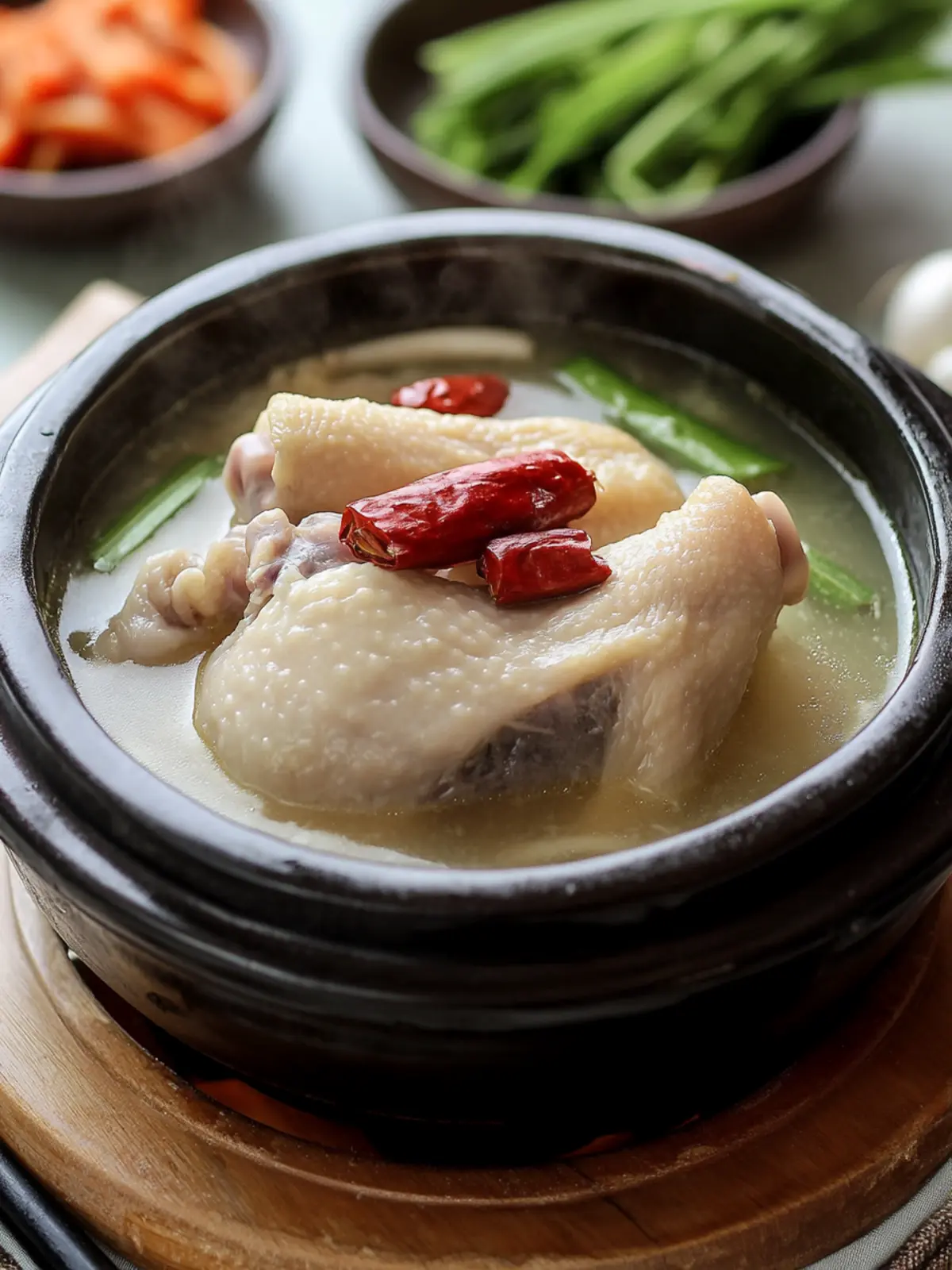
Korean Samgyetang (Ginseng Chicken Soup) Recipe FAQs
What type of chicken should I use for Korean Samgyetang?
Absolutely! For the best flavor and tenderness, choose young, small whole chickens weighing between 500-600g each. This ensures the meat stays juicy and flavorful.
How should I store leftover Korean Samgyetang?
You can store leftover Korean Samgyetang in an airtight container in the refrigerator for up to 3 days. Remember to let the soup cool before sealing, which helps maintain its freshness.
Can I freeze Korean Samgyetang, and if so, how?
Very much! To freeze Korean Samgyetang, let it cool completely, then pour the soup into freezer-safe containers or heavy-duty freezer bags. Make sure to leave some space at the top for expansion. It can be stored for up to 3 months. When you’re ready to enjoy it, thaw in the refrigerator overnight and reheat gently on the stove.
What if the soup is too salty or bland?
If you find your Korean Samgyetang too salty, you can dilute it with additional water or low-sodium broth and simmer for a few minutes. On the other hand, if it’s bland, try adding more garlic, a pinch of salt, or a splash of soy sauce for an umami boost before the final simmer.
Can I make Korean Samgyetang if I have dietary restrictions or allergies?
Certainly! This recipe is flexible. If you have allergies to certain ingredients, such as ginkgo nuts, feel free to omit them. Additionally, for those avoiding chicken, you can use a whole duck, which provides a richer flavor, while keeping the essential elements of the soup intact. Adjust the ingredients to suit your dietary preferences while still enjoying the soulful goodness of Korean Samgyetang!
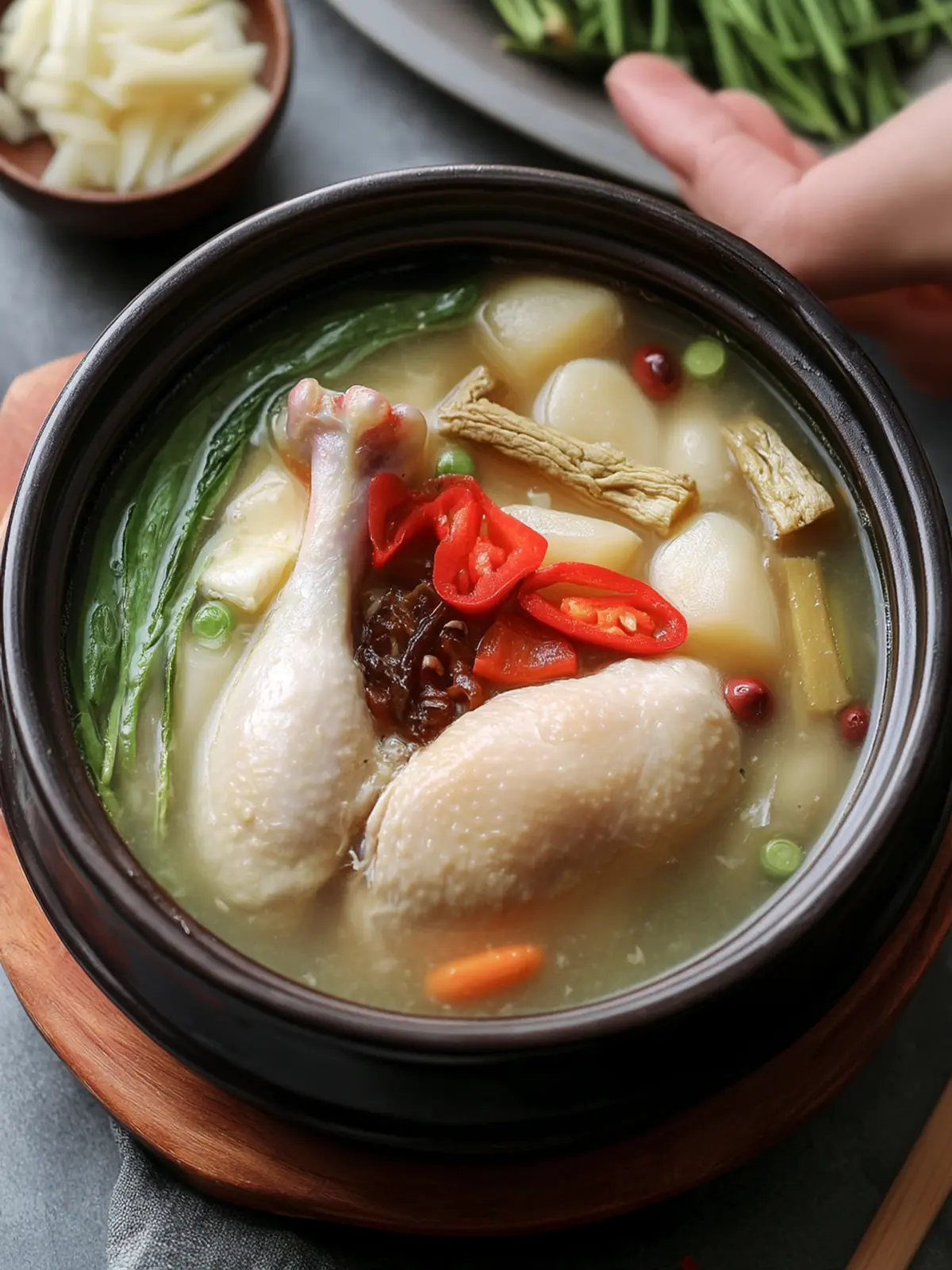
Nourish Your Soul with Korean Samgyetang Ginseng Chicken Soup
Ingredients
Equipment
Method
- Prepare Chickens: Clean the whole chickens thoroughly under cold water. Pat dry and trim excess fat.
- Make Stuffing: Combine soaked glutinous rice, half of the peeled garlic, and a pinch of salt. Stuff into chickens and tie legs with twine.
- Prepare Broth Base: Boil water in a large pot. Add ginseng, jujubes, ginger, remaining garlic, and scallions. Simmer for 5-7 minutes.
- Cook Chickens: Submerge stuffed chickens in boiling broth. Reduce heat to low, cover, and simmer for 1 hour, skimming impurities.
- Check Doneness: Insert skewer into chicken; juices should run clear. Season broth with salt and pepper, then simmer for another 10-15 minutes.
- Garnish and Serve: Transfer chickens to bowls, ladle broth and ingredients over. Garnish with sliced scallions and black pepper.