
When the winter chill sets in, there’s nothing quite like the comforting embrace of a steaming bowl of homemade Japanese udon noodles. The thick, chewy texture of these noodles—crafted from simple ingredients—transports me to bustling streets in Japan, where noodle shops serve warm bowls of joy. Just the thought of them brings back memories of slurping up those irresistible strands, bathed in a savory dashi broth infused with soy sauce and mirin.
In this recipe, I’ll share my take on traditional udon, perfect for anyone craving a nutritious, filling meal that’s remarkably easy to prepare. Whether you’re an aspiring chef or just looking to get away from fast food, this dish will elevate your cooking repertoire and satisfy your taste buds. Plus, it’s a wonderful opportunity to experiment with various toppings, making each bowl uniquely yours. Let’s dive into the art of crafting these delightful noodles and savor the essence of homemade comfort food!
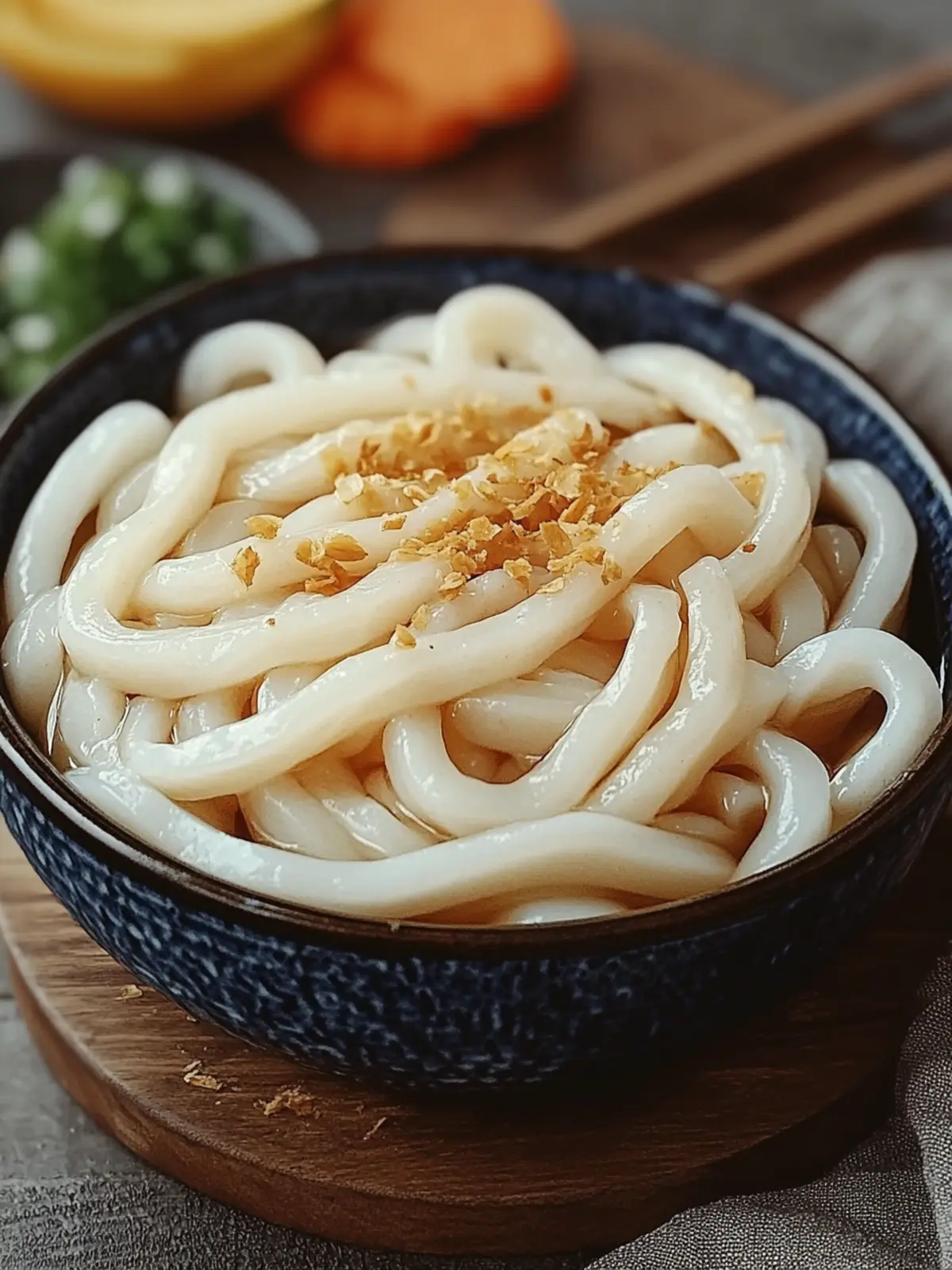
Why choose Japanese Udon (Thick Wheat Noodles)?
Comforting, Hearty Meal: One bowl of this dish delivers a sense of warmth, perfect for chilly nights.
Simple Ingredients: Crafted from just a few pantry staples, it lets flavors shine without fuss.
Customizable Options: Experiment with toppings like tempura or seasonal veggies to suit your cravings.
Quick to Prepare: Enjoy homemade noodles in less time than a takeout order.
Satisfying Texture: Each bite offers a delightful chewiness that pairs beautifully with the umami-rich broth.
Trust me, your family and friends will be asking for seconds!
Japanese Udon Ingredients
For the Noodles
• Wheat Flour – Ideal high-gluten flour creates the perfect chewy texture for homemade udon.
• Salt – Essential for seasoning the dough and enhancing overall flavor.
• Water – Use room temperature to optimize gluten development during mixing.
• Cornflour or Potato Starch – Prevents sticking during the rolling and cutting process.
For the Broth
• Dashi Stock – A flavorful base made from kombu seaweed and bonito flakes for classic umami.
• Soy Sauce – Provides savory depth and enhances the overall broth experience.
• Mirin – Adds a touch of sweetness to balance the saltiness of the soy sauce.
• Sugar – A hint of sweetness that elevates the flavor of the broth.
For the Garnish
• Spring Onions – Brightly colored, fresh garnish that adds a nice crunch and flavor burst.
• Nori Seaweed – Shredded for a crispy texture and an extra layer of flavor.
• Shichimi Togarashi – Optional spice mix that adds warmth and complexity to the dish.
With these ingredients, you can create delightful Japanese udon that brings comfort and warmth to your kitchen. Happy cooking!
How to Make Japanese Udon (Thick Wheat Noodles)
-
Prepare the Dough: Dissolve salt in room temperature water, then gradually combine with high-gluten flour. Knead the mixture until it’s elastic and smooth, then let it rest for 30 minutes to relax the gluten.
-
Rest and Knead Again: After resting, knead the dough again for a few minutes until it achieves a smooth consistency. Cover it and allow it to rest for another 2 hours to further relax the gluten, making it easier to roll out.
-
Roll and Cut Noodles: Dust your work surface lightly with cornflour or potato starch. Roll the dough out to about 3 mm thick, then cut it into strips that are 3-4 mm wide. Gently separate the noodles to prevent sticking.
-
Cook Noodles: Bring a large pot of salted water to a boil. Add the noodles and stir occasionally to keep them apart. Cook for 10–12 minutes, or until they are tender yet chewy. Drain the noodles and rinse them under cold water to stop the cooking process.
-
Prepare Broth: In a saucepan, combine dashi stock, soy sauce, mirin, and sugar. Heat the mixture over medium heat, simmering gently until the sugar is completely dissolved and the flavors meld beautifully.
-
Assemble Dish: Divide the cooked udon noodles evenly between bowls. Pour the hot broth over the noodles and garnish with chopped spring onions and shredded nori. If you enjoy a bit of heat, sprinkle shichimi togarashi on top.
Optional: Add tempura or lightly sautéed vegetables for an extra flavor boost!
Exact quantities are listed in the recipe card below.
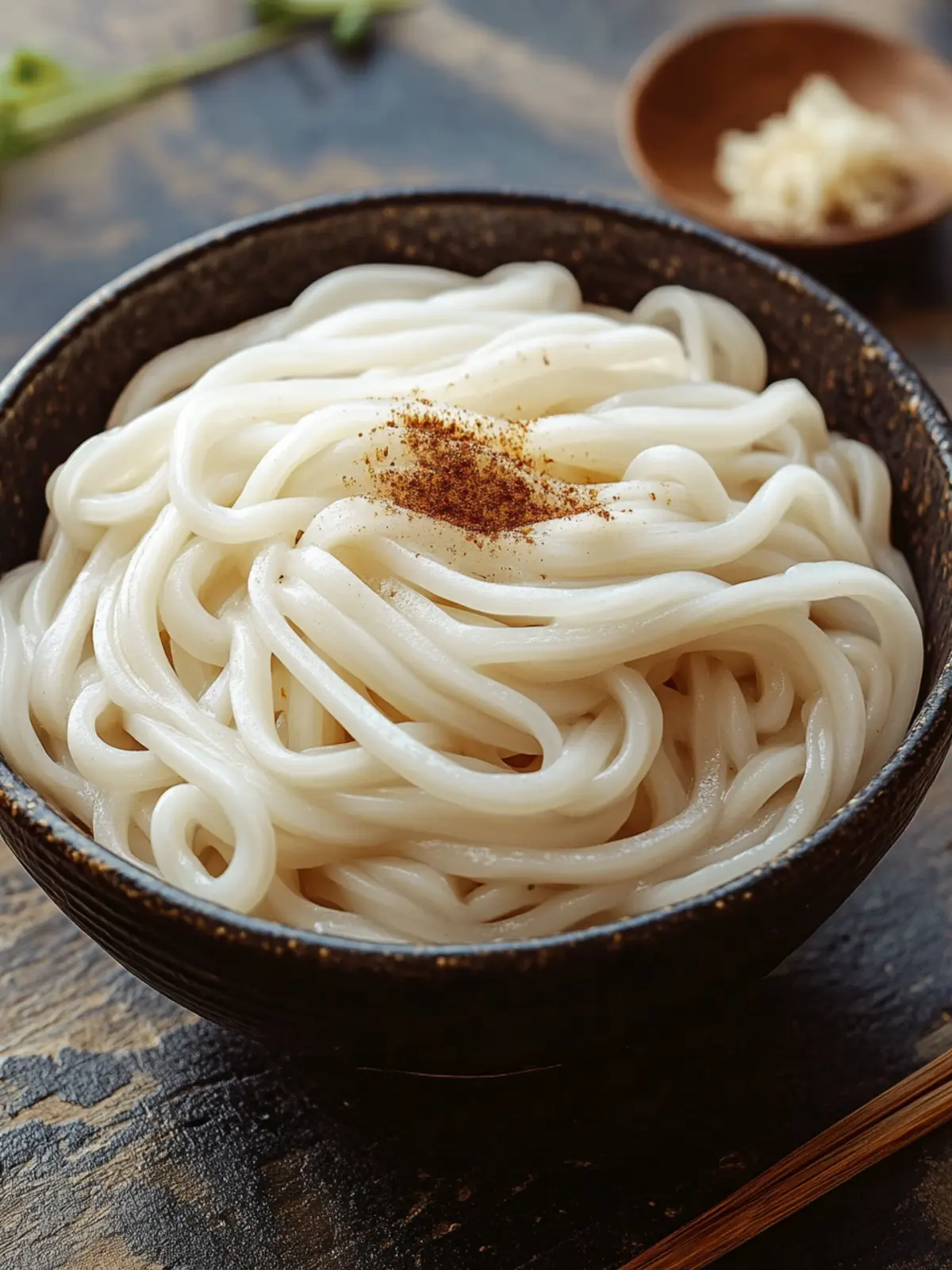
Expert Tips for Japanese Udon
-
Perfect Kneading: Knead until elastic: Good kneading develops gluten, which is crucial for that delightful chewy texture in your Japanese udon noodles.
-
Avoid Overcooking: Taste test noodles: Check for doneness a couple of minutes before the time is up to avoid mushy noodles, ensuring they retain their perfect chewiness.
-
Gentle Broth Simmering: Simmer to enhance clarity: Avoid boiling your broth vigorously. A gentle simmer maintains the broth’s clarity while allowing flavors to meld beautifully.
-
Proper Storage: Rinse and oil cooked noodles: After cooking, rinse the noodles to remove excess starch and toss them with a bit of oil to prevent sticking when stored.
-
Experiment with Toppings: Personalize your bowl: Elevate your udon experience by adding unique toppings like tempura, sautéed mushrooms, or any seasonal veggies you enjoy for a creative twist.
Japanese Udon (Thick Wheat Noodles) Variations
Make your bowl of udon even more special by trying these fun and delicious variations!
-
Vegetarian Broth: Swap dashi for a rich vegetable broth for a delightful meat-free option. This brings a fresh perspective without losing the warmth of umami.
-
Gluten-Free Noodles: Use a gluten-free flour blend to cater to dietary needs while keeping delicious flavors intact. Just remember to adjust the water content, as it can differ from regular flour!
-
Heat It Up: Add a dash of chili oil or fresh sliced jalapeños for those who crave a little heat. The spice elevates the dish, giving it a kick and adding exciting complexity.
-
Noodle Alternatives: Instead of traditional udon, try using soba or rice noodles for a unique twist. Each type brings its special flavor and texture while still satisfying your noodle cravings.
-
Savory Toppings: Sauté some shiitake mushrooms or bok choy to enhance your udon experience. Incorporating these veggies not only adds nutrition but also layers of flavor and a unique twist in texture.
-
Sweet and Savory: Add a touch of sweetness by including sliced carrots or even a drizzle of honey in your broth. The slight contrast will create a flavor dance that surprises your taste buds!
-
Flavor Infusions: Marinate your nori in a mixture of soy sauce and sesame oil for added depth. This transforms your garnish into something truly extraordinary, enhancing the overall taste of every slurp.
-
Seasonal Variations: Embrace different seasons by incorporating whatever vegetables are fresh and in season. From spring peas to winter squash, each brings its character to your comforting bowl.
Make Ahead Options
These Japanese Udon (Thick Wheat Noodles) are fantastic for meal prep, allowing you to savor homemade goodness even on busy weeknights! You can prepare the udon noodles up to 24 hours in advance by rolling and cutting them, then dusting them lightly with cornflour or potato starch to prevent sticking. Store the noodles in an airtight container in the fridge. For the broth, make it ahead of time and refrigerate for up to 3 days; simply reheat before serving. To maintain the quality of your noodles, remember to rinse them under cold water after boiling and apply a light drizzle of oil if you’re storing any cooked portions. When you’re ready to enjoy, just warm the broth and follow the final assembly steps for a delightful, comforting meal!
How to Store and Freeze Japanese Udon
Room Temperature: Store freshly made noodles at room temperature for up to 1 hour. After that, they’re best refrigerated or cooked to prevent spoilage.
Fridge: Fresh uncooked udon noodles can be stored in the fridge for up to 3–5 days in an airtight container. Cooked noodles can last up to 2 days, but make sure to rinse them to remove excess starch.
Freezer: If you want to enjoy your Japanese udon later, freeze portions in an airtight container for up to 3 months. Make sure to separate the noodles to prevent sticking.
Reheating: To reheat, throw thawed noodles directly into boiling water for 1–2 minutes until warmed through. Alternatively, you can microwave with a splash of water covered in a damp paper towel for about 1 minute.
What to Serve with Japanese Udon (Thick Wheat Noodles)?
When crafting the perfect meal around your cozy bowl of udon, consider delightful accompaniments that elevate the dining experience.
- Tempura: Lightly battered and fried vegetables or shrimp add a crispy contrast to the chewy noodles and broth.
Pairing tempura with udon creates a wonderful textural balance; the crispy crunch against the soft noodles is heavenly.
- Pickled Vegetables: A zesty assortment of pickled cucumbers or daikon radish brings a bright, tangy flavor that cuts through the richness of the broth.
These little bites of brightness not only cleanse the palate but also add a splash of color and excitement to your meal.
- Miso Soup: This savory, umami-filled soup complements the udon, enhancing the depth of flavors with its rich, comforting notes.
Serving miso soup alongside your udon creates a warm, inviting atmosphere—perfect for cozy family meals.
- Steamed Edamame: Simple and nutritious, these protein-packed green pods are a great finger food, providing a satisfying snack before the main course.
Edamame adds a fun element to the meal; pop them open and enjoy their earthy freshness alongside your udon.
- Japanese Pickles (Tsukemono): These fermented delights add a crunchy texture and a hint of sweetness, perfectly balancing the savory noodles.
Their unique flavors can surprise your guests, making each bite of udon even more thrilling and layered.
- Sake or Green Tea: A glass of warm sake or a cup of refreshing green tea pairs beautifully, enhancing the overall dining experience with tasty sips.
Both drinks harmonize well with the umami notes in the broth, providing warmth and comfort with every taste.
Japanese Udon (Thick Wheat Noodles) Recipe FAQs
How do I choose the right wheat flour for udon?
Absolutely! For the best texture in your udon, look for high-gluten flour, which is key to developing that perfect chewy consistency. You can often find it labeled as “udon flour” or “bread flour” in your local grocery store.
How should I store uncooked and cooked udon noodles?
Uncooked udon noodles can be kept in the fridge for 3–5 days in an airtight container. If you’ve cooked the noodles, they should be refrigerated as well and consumed within 2 days. Make sure to rinse cooked noodles with cold water to prevent sticking before storage.
Can I freeze udon noodles for later use?
Very much so! To freeze, place uncooked udon noodles in an airtight container, ensuring they’re not stuck together. They can be frozen for up to 3 months. When ready to use, simply boil the frozen noodles for 1-2 minutes until heated through, or thaw them in the fridge overnight for best results.
What should I do if my udon noodles turn out too soft or mushy?
Don’t fret! If your noodles are too soft, it often means they were overcooked or the dough wasn’t kneaded sufficiently before resting. Next time, keep an eye on them during the last couple of minutes of cooking to test for that desired chewiness. Always remember that a good knead will improve the structure too!
Are there any dietary considerations for this udon recipe?
Absolutely! This Japanese udon recipe can be adjusted for various dietary needs. For a vegetarian option, swap the dashi stock with vegetable broth. If you have gluten sensitivities, you could try using a gluten-free flour blend, though the texture may differ. Always check for allergies in your toppings too, especially concerning seafood or nuts.
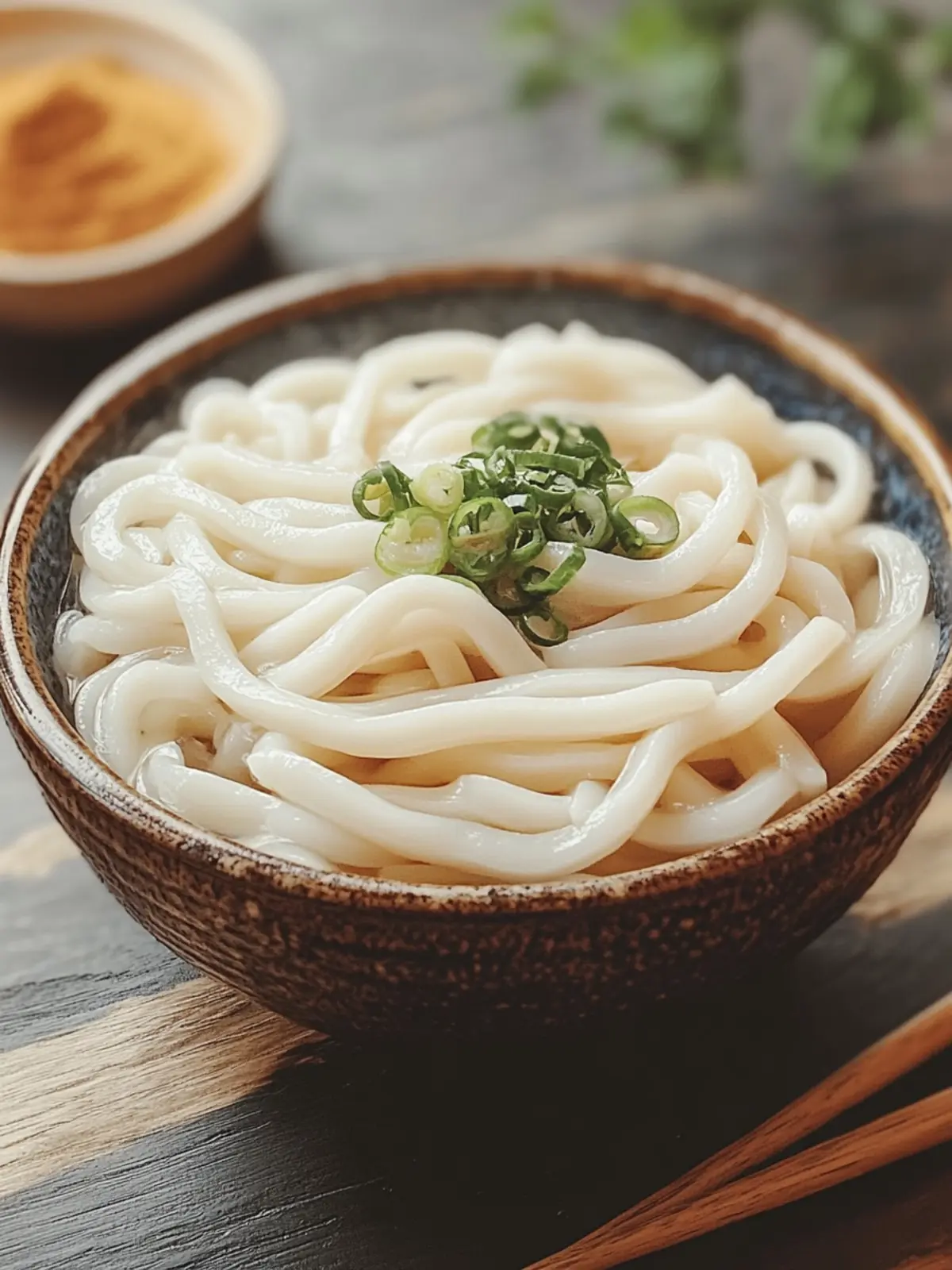
Savory Japanese Udon Noodles: A Homemade Comfort Bowl
Ingredients
Equipment
Method
- Dissolve salt in room temperature water, then gradually combine with high-gluten flour. Knead until elastic and smooth, then let rest for 30 minutes.
- After resting, knead the dough again for a few minutes until smooth. Cover and let rest for another 2 hours.
- Dust work surface with cornflour or potato starch, roll dough to about 3 mm thick, cut into strips 3-4 mm wide.
- Cook in a large pot of salted boiling water for 10-12 minutes until tender. Drain and rinse under cold water.
- In a saucepan, combine dashi stock, soy sauce, mirin, and sugar. Heat over medium heat until sugar dissolves.
- Divide cooked noodles between bowls, pour hot broth over noodles, garnish with spring onions and nori. Sprinkle shichimi togarashi if desired.