
There’s a moment in every cook’s journey when a dish wraps you in warmth and nostalgia, and for me, that dish is Mohinga—Burmese fish noodle soup. The first time I tasted this delightful soup, the symphony of aromatic lemongrass, zesty ginger, and the comforting essence of catfish transported me straight to the bustling streets of Myanmar. You know that feeling when a dish not only nourishes your belly but also sparks memories and connections? Mohinga does just that, making it a beloved staple for breakfast or any time you crave a hearty meal.
With tender rice vermicelli swimming in a rich, herb-laden broth and topped with crispy shallots and fresh herbs, this recipe celebrates the vibrant flavors of Burmese cuisine. Whether you’re a seasoned chef looking to try something new or a home cook eager to escape the fast-food routine, this Mohinga recipe is here to impress both your taste buds and your guests. Let’s dive into creating this comforting bowl of happiness that’s as versatile as it is delicious!

Why is Burmese Mohinga a must-try?
Unparalleled flavor: The aromatic blend of lemongrass, ginger, and catfish creates a taste that’s both exotic and comforting.
Nostalgic experience: Each spoonful transports you to the vibrant streets of Myanmar, evoking warm memories and cultural heritage.
Versatile dish: Enjoy it for breakfast, lunch, or dinner; its hearty nature makes it perfect any time of day.
Simple prep: With straightforward steps, you can whip up this masterpiece quickly, even on busy mornings.
Crowd-pleaser: Guests will be wowed by this unique dish, making it an impressive addition to any meal.
If gluten-free comfort is what you’re after, this is definitely the recipe you don’t want to miss!
Burmese Mohinga Ingredients
• Dive into the vibrant flavors with these essential ingredients for an authentic Burmese Mohinga experience!
For the Soup Base
- Catfish – The main protein source, providing a rich flavor and texture; feel free to substitute with any firm white fish if desired.
- Water – Essential for forming the broth; ensures a depth of flavor that is characteristic of this comforting soup.
- Lemongrass – Adds a delightful citrusy aroma; bruise it before use for the best infusion of flavors.
- Garlic (3 cloves, minced) – Imparts pungency and depth to the broth, creating a beautifully aromatic base.
- Onion (1 small, finely chopped) – Introduces a sweet undertone to balance the flavors seamlessly.
- Ginger (1-inch piece, grated) – Offers warmth and a zesty kick that enhances the overall profile of the dish.
- Turmeric Powder (1 teaspoon) – Contributes earthiness and gives the broth its signature golden hue.
- Fish Sauce (1 tablespoon) – A staple for umami flavor, essential for that authentic taste; adjust to your salt preference.
- Shrimp Paste (1 teaspoon, ngapi) – Delivers a distinct depth; can be omitted for a milder version if necessary.
- Chickpea Flour or Rice Flour (1 tablespoon mixed with ¼ cup water) – Thickens the broth to achieve the desired texture for your Burmese Mohinga.
For Cooking
- Vegetable Oil (2 tablespoons) – Used for sautéing spices and enhancing flavors when cooking the fish paste.
- Paprika (1 teaspoon, optional) – For a vibrant color enhancement; add it based on personal preference.
- Chili Powder (1 teaspoon, adjust to taste) – Infuses heat; tailor it to your liking for a spicy kick.
For Serving
- Rice Vermicelli (400 g) – The base for this delicious soup, providing a soft texture that beautifully absorbs the broth.
- Boiled Eggs (2, halved) – Introduces richness and visual flair; an excellent garnish.
- Crispy Fried Shallots (½ cup) – Provides a delightful crunch that contrasts beautifully with the soup’s softness.
- Cilantro (2 tablespoons, chopped) – Fresh garnish that adds brightness and enhances the dish’s appeal.
- Green Onions (2 tablespoons, sliced) – Elevates freshness; sprinkle generously on top for added flavor.
- Lime (1, cut into wedges) – Serve on the side for a refreshing acidity that brightens each bite.
- Banana Stem (1 cup, optional) – Gives extra crunch, adding a unique flavor and texture to the soup.
This detailed breakdown ensures your journey into making Burmese Mohinga is as fulfilling as it is delicious. Get ready to savor every spoonful!
How to Make Burmese Mohinga
-
Boil the Broth: In a large pot, bring water to a boil. Add catfish, lemongrass, onion, garlic, ginger, and turmeric. Simmer for about 15 minutes until the fish is cooked through and fragrant.
-
Strain the Broth: Carefully remove the catfish from the pot and strain the broth to remove solids. Return the clear, aromatic broth to the pot for the next steps.
-
Flake the Fish: Lightly flake the cooked catfish into small pieces, mixing gently to retain texture, then set it aside for later.
-
Sauté the Spices: In a separate pan, heat vegetable oil over medium heat. Add paprika, chili powder, and shrimp paste. Sauté for about 30 seconds until fragrant, then add the flaked fish and cook for 2 minutes.
-
Combine Ingredients: Add the sautéed mixture back to the strained broth, stir in the fish sauce, and let it simmer for another 10 minutes to meld flavors.
-
Thicken the Broth: Gradually mix in the chickpea flour slurry, stirring continuously to avoid lumps. Simmer for about 5 minutes until the broth thickens.
-
Prepare the Noodles: Cook the rice vermicelli according to package instructions. Once cooked, drain and rinse under cold water to stop the cooking process.
-
Adjust Seasoning: Take a moment to taste the broth and adjust any seasonings as needed for flavor balance.
-
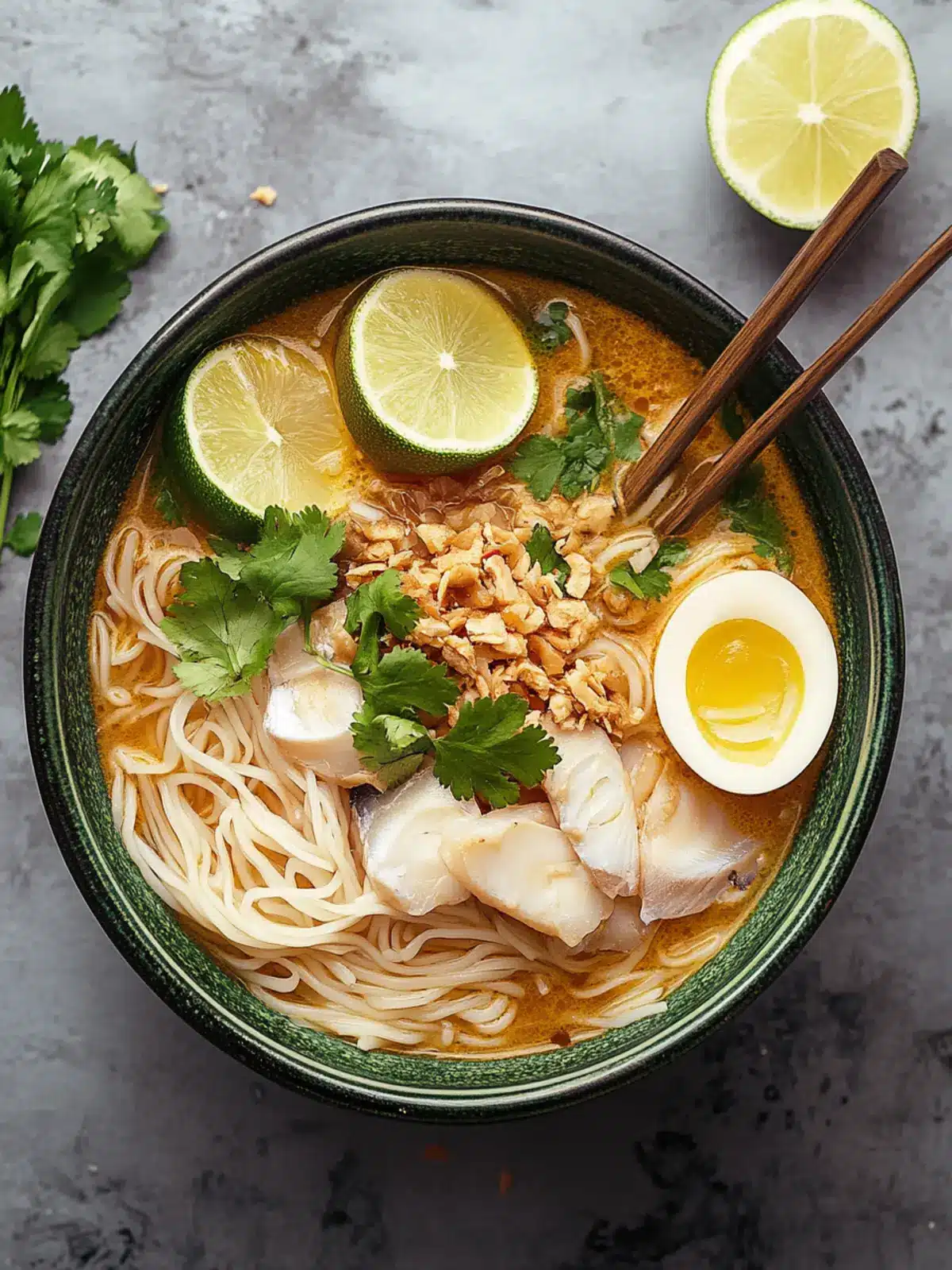
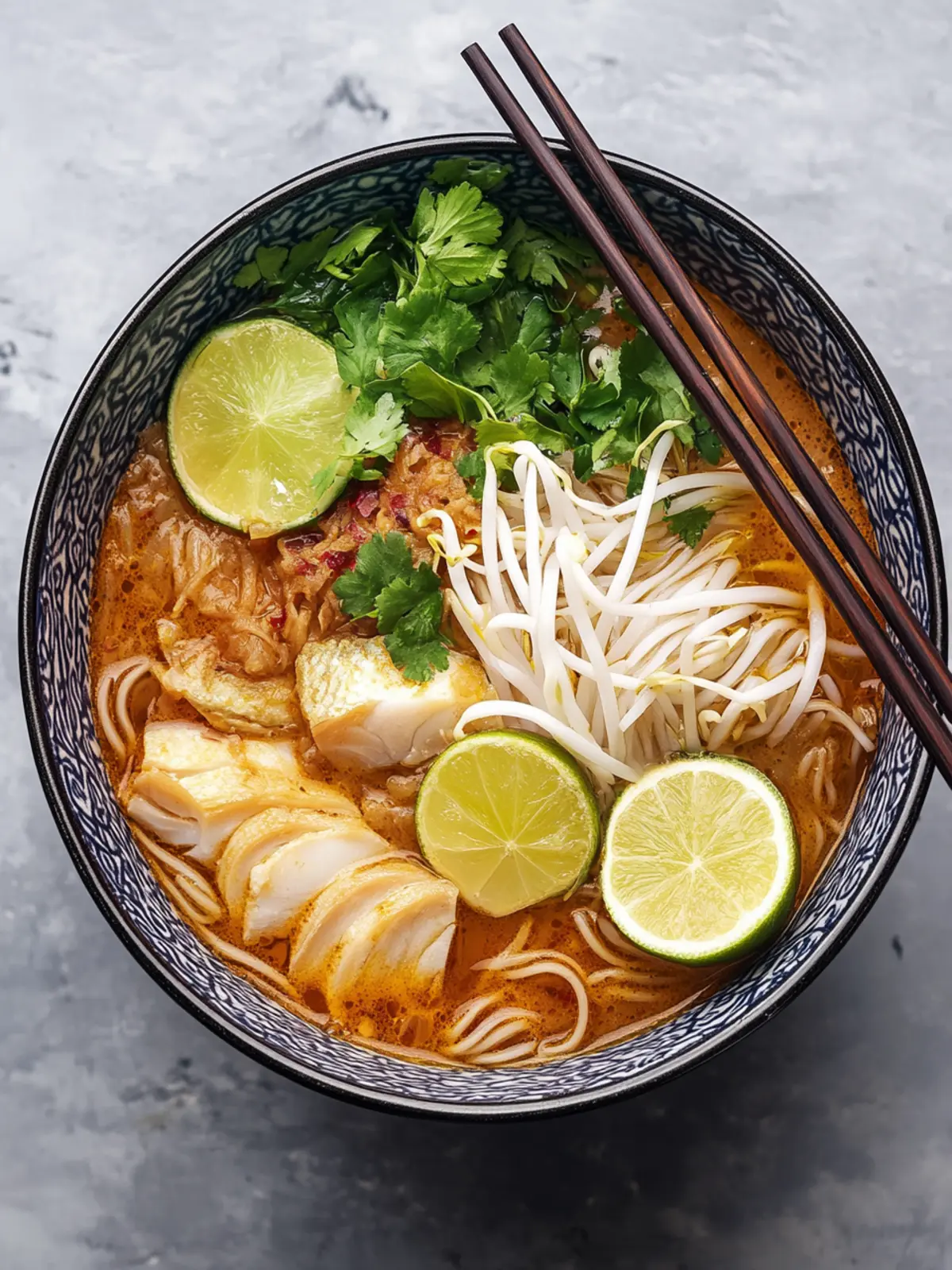
Serve and Garnish: In serving bowls, divide the noodles and ladle the hot broth over them. Garnish each bowl with halves of boiled eggs, crispy fried shallots, chopped cilantro, and sliced green onions. Don’t forget to provide lime wedges on the side for zest!
Optional: For an extra flavor boost, add some pickled vegetables on top.
Exact quantities are listed in the recipe card below.
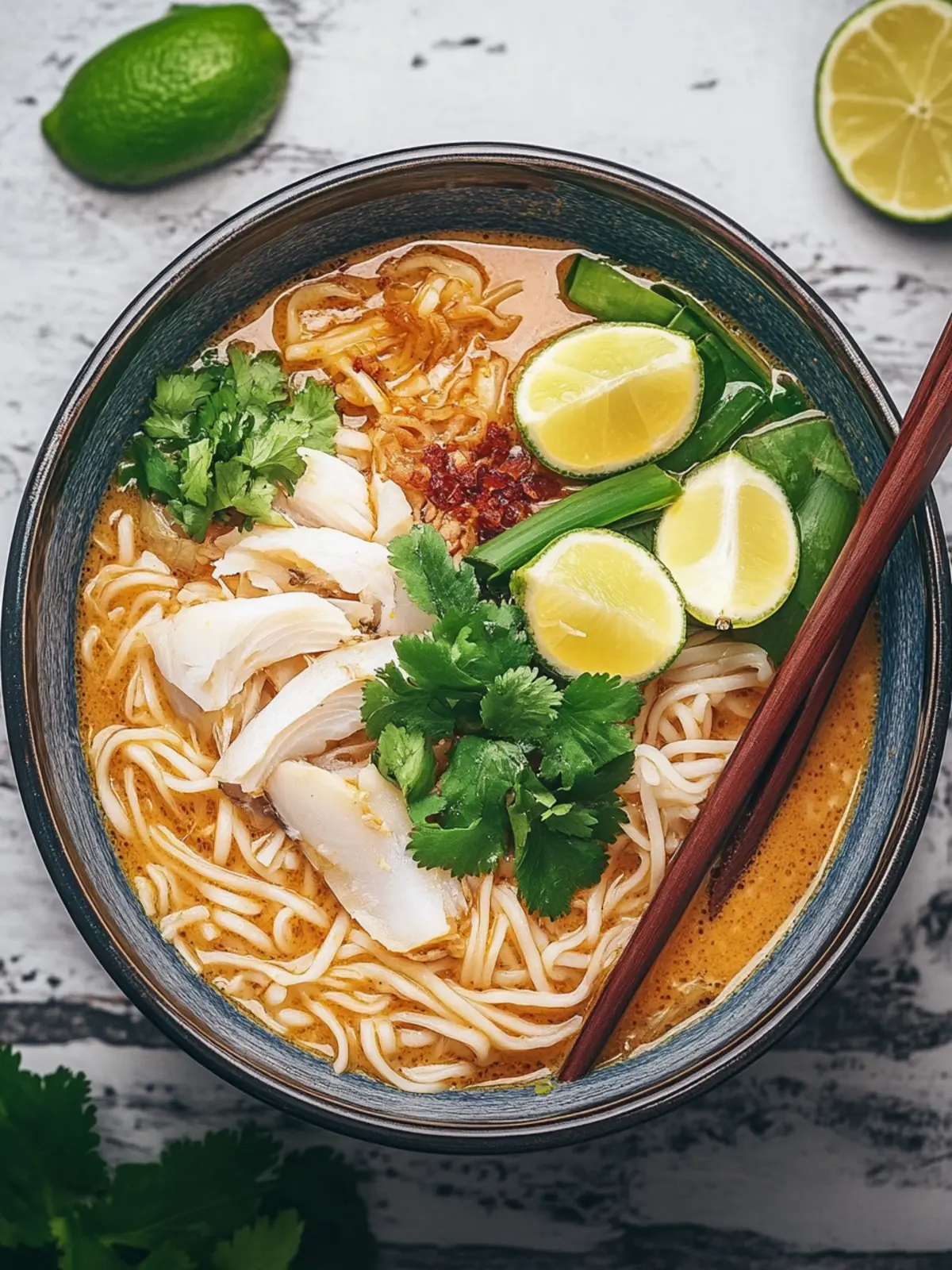
Expert Tips for Burmese Mohinga
• Skim the Foam: Ensure to skim any foam off the broth as it simmers; this helps achieve a clear, beautiful soup.
• Balance Flavors: Adjust the shrimp paste and fish sauce based on your salt preference to avoid overpowering the dish.
• Perfect Slurry: For the best texture, mix the chickpea flour slurry well before adding it to the broth; lumps can ruin the silky finish of your Burmese Mohinga.
• Enjoy Fresh: Serve the soup immediately after preparing to maximize the flavors and warmth, providing a comforting bowl of happiness.
• Noodle Care: Rinse the cooked rice vermicelli under cold water right after draining; this prevents the noodles from becoming sticky.
Burmese Mohinga Variations
Feel free to put your own spin on this heartwarming dish and explore flavors that excite your palate!
-
Fish Swap: Replace catfish with tilapia or cod for a different texture and taste experience. Both alternatives maintain the soup’s heartiness and flavor profile wonderfully.
-
Vegetarian Delight: For a meat-free version, substitute fish with tofu or mushrooms, and enhance the broth with miso for that umami flavor boost.
-
Coconut Cream: Add a splash of coconut milk for a rich, creamy texture that complements the spices beautifully, creating a comforting dish that’s as indulgent as it is delicious.
-
Gluten-Free Option: Use gluten-free rice noodles or glass noodles to keep this dish accessible for those with dietary restrictions without sacrificing flavor.
-
Heat Level: Spice it up by adding fresh chili slices or sriracha for a fiery kick. Adjust the amount to your taste and turn up the heat according to your preference.
-
Herb Twist: Experiment with adding Thai basil or mint alongside cilantro for a refreshing herb twist and an extra layer of flavor intrigue.
-
Crunchy Toppings: Introduce variety with toppings like toasted peanuts or sesame seeds for extra crunch and a nutty flavor that complements the broth.
-
Tropical Flair: Mix in some diced pineapple or mango chunks for a surprising burst of sweetness that will delight your taste buds in each savory bite.
Each variation is a small journey into creativity, so don’t hesitate to explore these delightful options!
How to Store and Freeze Burmese Mohinga
Fridge: Store leftover Burmese Mohinga in an airtight container for up to 3 days. Reheat gently on the stove or in the microwave, adding a splash of water if needed.
Freezer: Freeze the broth and noodles separately for up to 2 months. Thaw in the fridge overnight, then reheat the broth and cook fresh noodles.
Reheating: When reheating, be cautious not to boil the soup vigorously to preserve the texture of the noodles and fish.
Make-Ahead Tips: Prepare the broth in advance and keep it in the fridge for up to 2 days, making for a quick assembly when you’re ready to enjoy your Mohinga.
Make Ahead Options
These Burmese Mohinga preparations are perfect for busy home cooks looking to save time! You can prepare the broth and flaked fish up to 3 days in advance. Simply simmer the broth and strain it, then refrigerate it in an airtight container. If you prefer, you can also cook the rice vermicelli and keep it in the fridge, but store it separately to avoid clumping. On the day of serving, reheat the broth and combine it with the sautéed fish mixture as instructed. This way, you’ll enjoy a delicious bowl of Mohinga that’s just as fresh and comforting, all while cutting down on your prep time!
What to Serve with Burmese Mohinga?
Elevate your dining experience by complementing this comforting bowl of fish noodle soup with delightful side dishes and beverages.
-
Crispy Spring Rolls: These golden bites with fresh vegetables provide a satisfying crunch that balances the soup’s rich flavors. They’re perfect for enjoying alongside a warm bowl of Mohinga.
-
Fresh Salad with Citrus Dressing: A light salad featuring vibrant greens and a zesty lime dressing adds a refreshing contrast to the hearty soup, cleansing the palate beautifully.
-
Steamed Jasmine Rice: A simple side of fluffy jasmine rice can soak up the delicious broth, making each spoonful even more indulgent.
-
Garlic Naan: Soft and buttery naan brings a lovely texture. Use it to scoop up the savory broth or as a delicious accompaniment to the fish and herbs.
-
Chili Oil: Drizzling a few drops of homemade chili oil, infused with garlic, spices, and herbs, gives an extra punch. It perfectly complements Mohinga’s flavors while allowing spice lovers to adjust the heat.
-
Thai Iced Tea: This sweet, creamy drink adds a delightful contrast to the spicy and savory elements of the soup. The richness beautifully balances the meal.
-
Banana Chips: Lightly salted and crispy, these chips make an excellent snack or side, mirroring the subtle crunch of the fried shallots atop your Mohinga.
Infusing each bite with additional flavors amplifies the experience of enjoying Burmese Mohinga, ensuring a memorable meal every time.
Burmese Mohinga Recipe FAQs
What type of catfish should I use for Burmese Mohinga?
For the best flavor and texture, I recommend using fresh catfish as it’s traditional in Burmese cuisine. However, you can substitute it with any firm white fish like tilapia or cod if catfish is unavailable. Look for fish fillets that are shiny, moist, and free from dark spots.
How long can I store leftover Burmese Mohinga in the refrigerator?
You can store leftover Burmese Mohinga in an airtight container for up to 3 days. Be sure to reheat it gently on the stove or in the microwave, adding a splash of water to prevent it from drying out.
Can I freeze Burmese Mohinga? How do I do it?
Absolutely! To freeze Burmese Mohinga, store the broth and noodles separately. The broth can be frozen for up to 2 months in a freezer-safe container, while the cooked rice vermicelli should also be stored in an airtight bag or container. To thaw, place them in the fridge overnight, reheat the broth gently, and cook fresh noodles when you’re ready to enjoy it.
What should I do if my broth is too salty?
If your broth turns out too salty, try adding some unsalted water or vegetable broth to balance the saltiness. You can also mix in a few sliced potatoes while simmering; they will absorb some of the excess salt. Allow it to simmer for another 10–15 minutes and then taste again to check the flavor.
Is Burmese Mohinga suitable for people with allergies?
If you’re concerned about allergies, pay attention to the shrimp paste and fish sauce, as these can contain shellfish and gluten. You can substitute shrimp paste with a mix of non-sweet miso and additional spices for depth, and use gluten-free soy sauce or tamari as an alternative to fish sauce. Always double-check labels for any hidden allergens in the ingredients used.
How do I achieve a clear broth for my Burmese Mohinga?
To achieve a clear broth, it’s crucial to skim any foam or impurities that rise to the surface while simmering. Use a ladle to gently remove these impurities as they appear. Additionally, straining the broth through a fine-mesh sieve before serving can help ensure a clean and silky texture in your final dish.
Burmese Mohinga: The Ultimate Comfort Fish Noodle Soup Recipe
Ingredients
Equipment
Method
- In a large pot, bring water to a boil. Add catfish, lemongrass, onion, garlic, ginger, and turmeric. Simmer for about 15 minutes until the fish is cooked through and fragrant.
- Carefully remove the catfish from the pot and strain the broth to remove solids. Return the clear, aromatic broth to the pot for the next steps.
- Lightly flake the cooked catfish into small pieces, mixing gently to retain texture, then set it aside for later.
- In a separate pan, heat vegetable oil over medium heat. Add paprika, chili powder, and shrimp paste. Sauté for about 30 seconds until fragrant, then add the flaked fish and cook for 2 minutes.
- Add the sautéed mixture back to the strained broth, stir in the fish sauce, and let it simmer for another 10 minutes to meld flavors.
- Gradually mix in the chickpea flour slurry, stirring continuously to avoid lumps. Simmer for about 5 minutes until the broth thickens.
- Cook the rice vermicelli according to package instructions. Once cooked, drain and rinse under cold water to stop the cooking process.
- Take a moment to taste the broth and adjust any seasonings as needed for flavor balance.
- In serving bowls, divide the noodles and ladle the hot broth over them. Garnish each bowl with halves of boiled eggs, crispy fried shallots, chopped cilantro, and sliced green onions. Don’t forget to provide lime wedges on the side for zest!