
On a rainy afternoon, my kitchen filled with the intoxicating aroma of simmering spices and tangy vinegar, I knew something special was coming together. This is how I discovered the magic of Filipino Dinuguan, a hearty pork blood stew that transforms simple ingredients into a comforting masterpiece. As the dark, glossy sauce enveloped tender chunks of pork and offal, I couldn’t help but be captivated by its rich flavors and warmth. Often paired with steaming rice or fluffy puto, this dish not only satisfies hunger but also celebrates the resourcefulness of Filipino cooking.
What makes Dinuguan extraordinary is its ability to meld bold flavors with familiar comforts, creating a meal that’s both celebratory and heartwarming. Its harmonious balance of savory, tangy, and spicy notes is an invitation to explore the vibrant traditions of Filipino cuisine. So, if you’re ready to venture away from fast food and dive into a dish that’s steeped in culture and history, roll up your sleeves and let’s craft this incredible Dinuguan together!

Why is Filipino Dinuguan so special?
Hearty Comfort: Dinuguan is not just a dish; it’s a warm hug on a plate, perfect for those rainy days.
Unique Ingredients: The use of fresh pork blood and offal gives it an authentic depth that you won’t find in typical stews.
Flavor Explosion: With a delightful balance of savory, tangy, and spicy notes, each bite tells a story of Filipino culinary tradition.
Versatile Dish: Whether served with rice or puto, it adapts to your personal taste, making it ideal for any occasion.
Cultural Heritage: Experience a dish that transforms often discarded ingredients into a celebration of resourcefulness.
Easy to Make: With straightforward steps, this recipe is perfect for both seasoned chefs and kitchen newcomers—let’s embrace this delicious journey together!
Filipino Dinuguan Ingredients
• Let’s gather the essentials for this hearty pork blood stew!
For the Meat
- Pork Shoulder – Use cut into bite-sized cubes for even cooking and tenderness.
- Pork Offal (Liver, Intestines, Heart) – Optional but adds traditional richness and authenticity to the dish.
For the Stew Base
- Fresh Pork Blood – Key ingredient that thickens the stew; must be fresh for the best flavor.
- Vinegar – Preferably cane vinegar to provide that tangy brightness essential in Dinuguan.
- Fish Sauce – Adds umami depth; use sparingly to avoid overpowering flavors.
- Onion – Finely chopped to provide a sweet, aromatic base for the stew.
- Garlic – Minced to amplify the flavor and aroma, enhancing the overall profile of the dish.
For the Spicy Kick
- Long Green Chillies (Siling Haba) – Whole chillies add heat and can be adjusted to your preference for spice level.
Other Essentials
- Cooking Oil – Any neutral oil works for sautéing the aromatics to perfection.
- Pork Stock or Water – Use stock for richer flavor while simmering the stew.
- Ground Black Pepper & Salt – Season to taste, adjusting according to your palate.
Gather these ingredients to create an unforgettable Filipino Dinuguan that’s bound to impress and delight!
How to Make Filipino Dinuguan
-
Prep Pork & Offal: Wash the pork shoulder and offal thoroughly, then drain and cut them into bite-sized cubes. Pat them dry with kitchen paper to ensure they brown well in the pot.
-
Sauté Aromatics: In a heavy pot, heat a few tablespoons of cooking oil over medium heat. Add the chopped onions and sauté until they are soft and translucent, then add the minced garlic and cook until fragrant, about 1-2 minutes.
-
Brown Meat: Add the pork shoulder and offal to the pot, browning them for 5-7 minutes. This step is crucial for developing depth of flavor in your stew.
-
Season: Stir in the fish sauce and ground black pepper, giving everything a good stir. Deglaze the pot with a splash of pork stock, scraping up any flavorful bits stuck to the bottom.
-
Simmer: Pour in the remaining stock or water, bringing it to a gentle boil. Lower the heat, cover with a lid, and let it simmer for 25-30 minutes, or until the pork is tender and the flavors have melded beautifully.
-
Prepare Blood Mixture: In a bowl, combine the fresh pork blood with vinegar. This mixture is essential as it helps prevent the blood from clotting when added to the stew.
-
Combine: Slowly pour the blood mixture into the simmering stew while stirring continuously. This helps achieve a smooth and velvety texture for your Dinuguan.
-
Add Chillies: Add the whole long green chillies to the pot and continue to simmer for another 10-15 minutes, allowing the stew to thicken beautifully.
-
Rest & Serve: Once done, let your Dinuguan rest for about 5 minutes. Then serve it hot, ladled over steamed rice or with fluffy puto, garnishing with extra chillies for a spicy kick if desired.
Optional: Serve with a sprinkle of chopped green onions for a fresh touch.
Exact quantities are listed in the recipe card below.
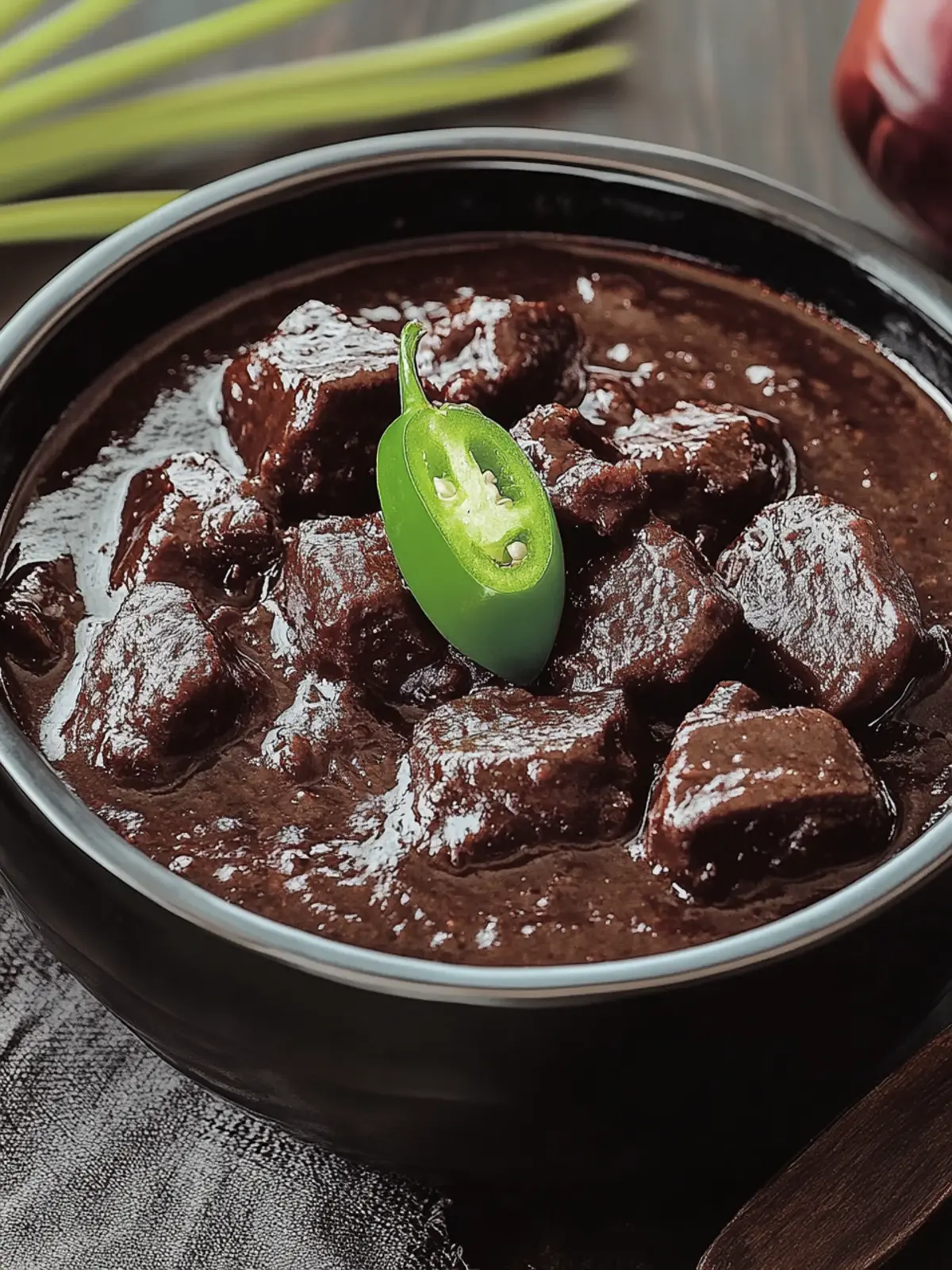
Filipino Dinuguan Variations
Feel free to get creative and customize your Dinuguan to match your taste preferences and dietary needs!
- Coconut Milk: Swap in a can of coconut milk for a creamier, richer stew that adds a delightful sweetness.
- Vegetarian Option: Use mushrooms or eggplant instead of pork for a plant-based version that still captures the essence of the dish.
- Different Offal: Experiment with other types of offal, such as tripe or kidney, to discover exciting flavor combinations that honor tradition.
- Spicy Upgrade: Add extra long green chillies or a dash of chili flakes for a fiery kick that will awaken your taste buds.
- Tangy Twist: Incorporate a spoonful of tamarind paste to introduce a sour note that complements the stew’s rich flavors beautifully.
- Herb Infusion: Toss in fresh herbs like basil or cilantro just before serving to add a bright and fragrant layer to your Dinuguan.
- Umami Boost: Try adding a spoonful of miso paste for an umami punch that deepens the savory notes of the stew.
- Pineapple Addition: Include chunks of pineapple for a sweet and tangy contrast that balances the richness of the pork blood stew.
Every variation creates a new experience, ensuring each bowl of Dinuguan is uniquely yours!
What to Serve with Filipino Dinuguan?
Enjoying a steaming bowl of savory stew opens the door to delightful side dishes that enhance your dining experience.
-
Steamed White Rice: The classic pairing, warm rice soaks up the rich sauce and balances the intensity of the Dinuguan beautifully.
-
Puto: These soft, fluffy rice cakes add a gentle sweetness that contrasts perfectly with the savory depth of the Dinuguan. Together, they create a harmonious meal that embodies comfort.
-
Stir-Fried Vegetables: A colorful mix of stir-fried vegetables introduces a refreshing crunch and vibrant nutrients, enriching the overall dish with texture and balance.
-
Pickled Vegetables (Achara): This tangy side offers a bright contrast, cutting through the richness with a delightful zing that elevates each bite.
-
Sinigang (Tamarind Soup): Serve alongside a bowl of this sour soup for a unique, layered experience that balances the hearty flavor of the Dinuguan with refreshing sour notes.
-
Beer or Rice Wine: (like Tanduay) The light bitterness and carbonation of beer or the mellow sweetness of rice wine create an enjoyable counterpoint to the stew’s depth.
-
Coconut Macaroons: For dessert, these sweet and chewy treats provide a delightful end to your meal, echoing the comforting coconut tones that some Dinuguan variations include.
-
Fresh Salad: A simple green salad drizzled with a tangy vinaigrette can cleanse the palate between each robust bite.
With these complementary dishes, you will create a meal that is not just filling, but a celebration of flavors that beautifully honor the spirit of Filipino cuisine.
Make Ahead Options
These savory Filipino Dinuguan bites are perfect for meal prep enthusiasts! You can chop your pork shoulder and offal up to 24 hours in advance; simply store them in an airtight container in the refrigerator to maintain freshness. Additionally, the blood and vinegar mixture can be prepared and refrigerated overnight, preventing any clotting issues. When ready to serve this hearty pork blood stew, sauté your aromatics, brown the meat, and simmer everything with the prepared mix. Just remember to stir continuously when adding the blood for a smooth consistency. This method saves you time on busy weeknights, allowing you to enjoy this delicious and comforting dish with minimal effort!
Storage Tips for Filipino Dinuguan
Fridge: Store leftover Filipino Dinuguan in an airtight container for up to 3 days. The flavors will deepen and develop further upon reheating.
Freezer: For longer storage, portion leftover Dinuguan into freezer-safe containers, ensuring it’s sealed tightly. It can be frozen for up to 3 months.
Reheating: Thaw frozen portions in the refrigerator overnight. Reheat gently on the stovetop over low heat, stirring occasionally, until warmed through.
Room Temperature: Avoid leaving cooked Dinuguan at room temperature for more than 2 hours to ensure food safety.
Expert Tips for Filipino Dinuguan
- Use Fresh Blood: Always opt for fresh pork blood to achieve the best flavor and texture in your Filipino Dinuguan. Don’t sacrifice quality!
- Continuous Stirring: When adding the blood mixture, stir continuously to prevent curdling. This ensures a smooth, velvety stew.
- Adjust Spice Levels: Customize the heat by adding more or fewer chillies based on your preference. Remember, you can always add heat, but you can’t take it away!
- Brown Meat Well: Ensure the pork and offal are browned properly before adding other ingredients. This step builds depth of flavor that enhances the overall dish.
- Let it Rest: Allow the Dinuguan to rest for a few minutes before serving. This helps the flavors meld and enhances the overall tasting experience.
- Experiment with Variations: Consider trying coconut milk for a creamier texture or experimenting with different offal types to add subtle flavor variations to your stew.
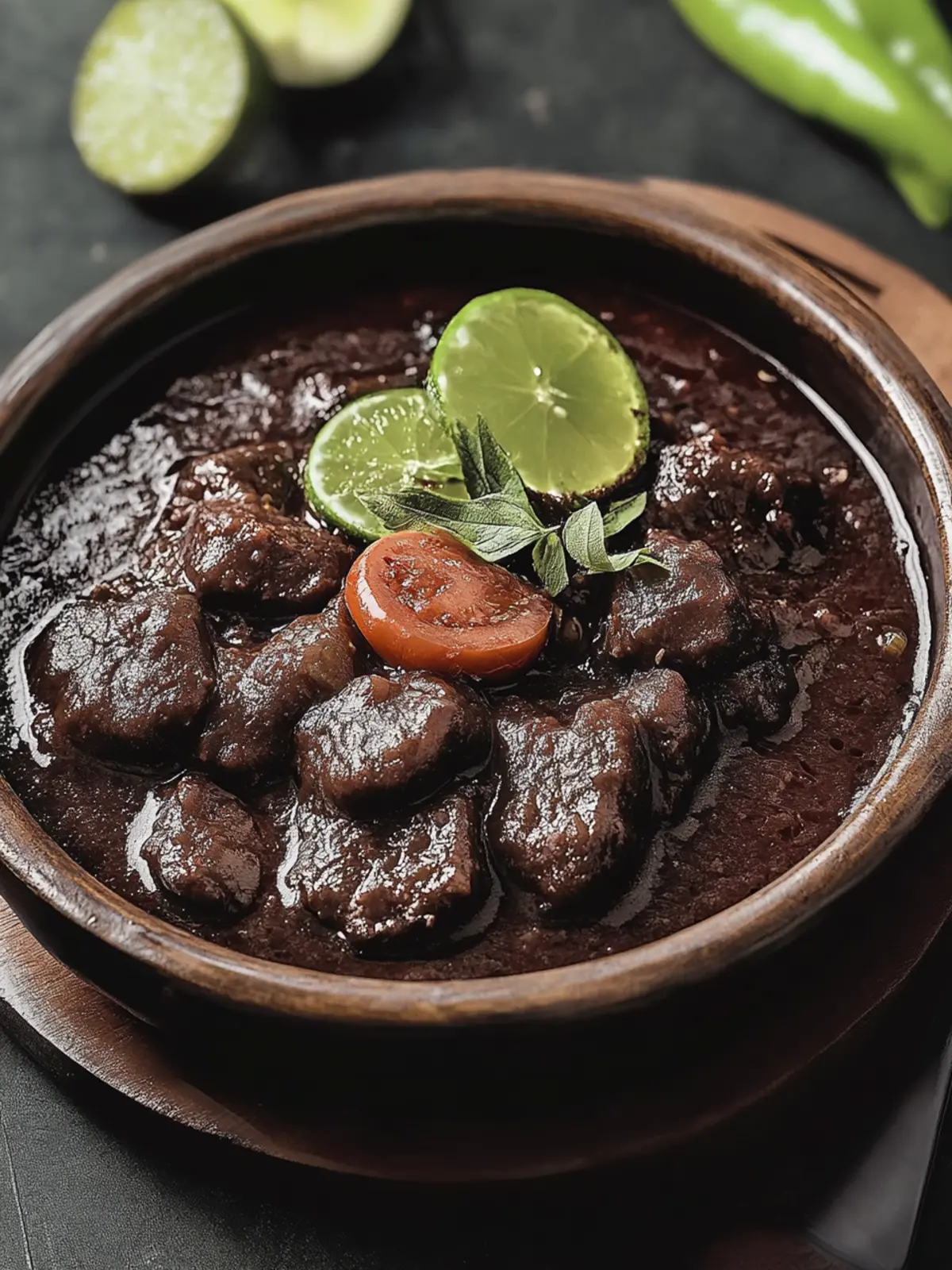
Filipino Dinuguan Recipe FAQs
What kind of pork should I use for Dinuguan?
For the best flavor and texture, use pork shoulder cut into bite-sized cubes. Incorporating optional pork offal like liver and heart adds authentic depth, making your Filipino Dinuguan even more delicious.
How can I tell if the pork blood is fresh?
Absolutely! Fresh pork blood should have a vibrant color and minimal odor. Avoid using blood that appears darkened or has an off-putting smell, as this indicates spoilage and can affect the overall taste of your dish.
How do I store leftover Dinuguan?
Store leftover Filipino Dinuguan in an airtight container in the fridge for up to 3 days. You’ll find that the flavors actually deepen when reheated, making it even more enjoyable!
Can I freeze Dinuguan?
Yes, you can! To freeze, portion your cooled Dinuguan into freezer-safe containers, ensuring they are tightly sealed. It can be stored for up to 3 months. When ready to enjoy, thaw overnight in the refrigerator and gently reheat on the stovetop.
What should I do if my Dinuguan becomes too thick?
If your Dinuguan gets too thick during cooking, don’t fret! Simply add a bit of warm pork stock or water to the mix while stirring continuously until you reach your desired consistency. This way, you maintain that delightful, velvety texture.
Is Dinuguan suitable for everyone?
Dinuguan is rich in protein but can be high in fat due to the cuts of pork used, so be mindful of portion sizes. Always ensure your guests are comfortable with offal and pork blood. Adjust spice levels too, keeping milder options for those who might prefer less heat.
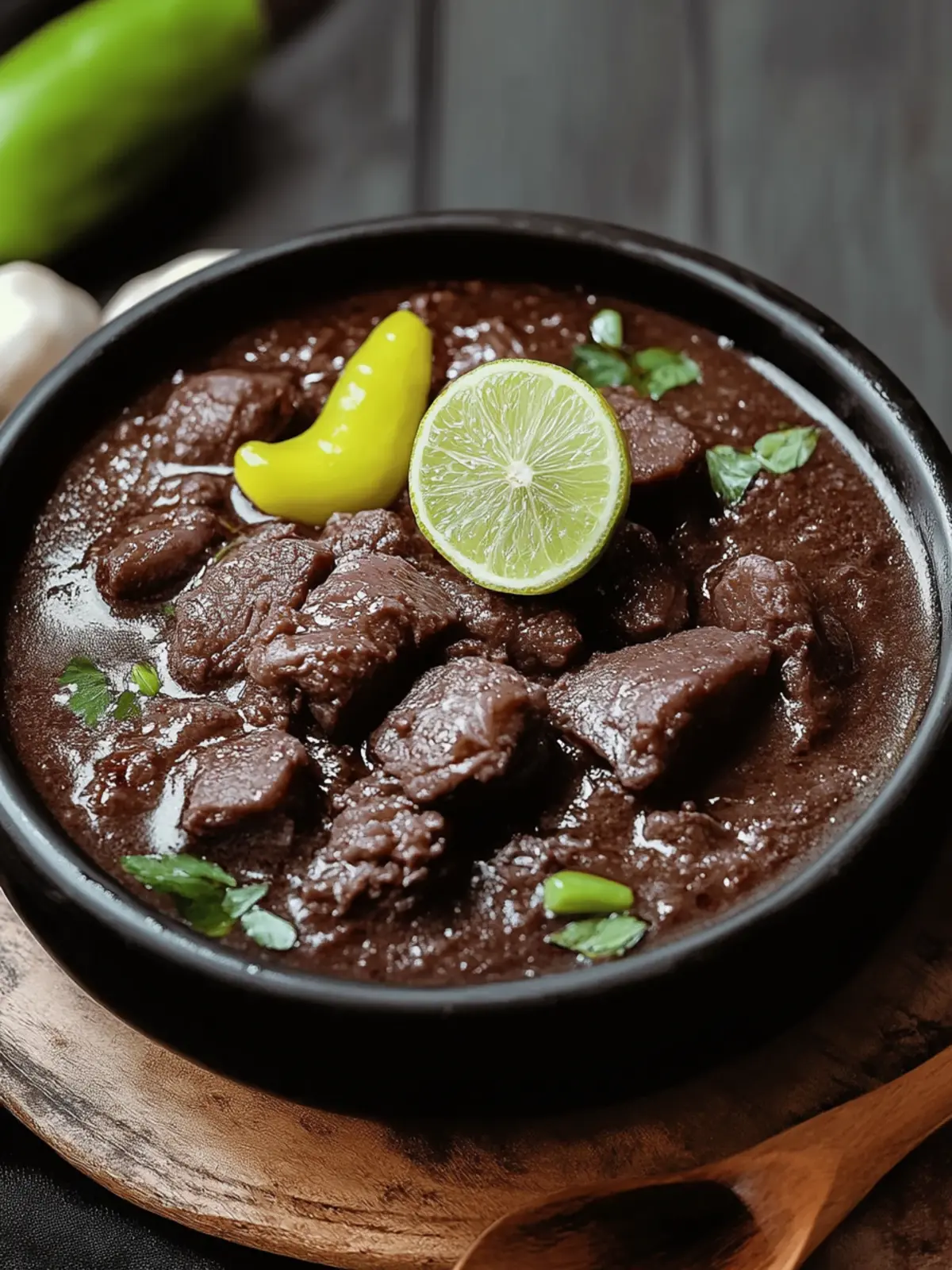
Savory Filipino Dinuguan: A Hearty Pork Blood Stew Delight
Ingredients
Equipment
Method
- Wash the pork shoulder and offal thoroughly, then drain and cut them into bite-sized cubes. Pat them dry with kitchen paper.
- In a heavy pot, heat a few tablespoons of cooking oil over medium heat. Add the chopped onions and sauté until they are soft and translucent.
- Add the minced garlic and cook until fragrant, about 1-2 minutes.
- Add the pork shoulder and offal to the pot, browning them for 5-7 minutes.
- Stir in the fish sauce and ground black pepper, deglazing the pot with a splash of pork stock.
- Pour in the remaining stock or water and bring it to a gentle boil. Lower the heat, cover with a lid, and let it simmer for 25-30 minutes.
- In a bowl, combine the fresh pork blood with vinegar.
- Slowly pour the blood mixture into the simmering stew while stirring continuously.
- Add the whole long green chillies and continue to simmer for another 10-15 minutes.
- Let your Dinuguan rest for about 5 minutes before serving.