
When a chilly breeze sweeps through the air, and the scent of freshly baked bread fills the house, nothing can elevate the mood quite like homemade German Brezels. The twisted shape and golden-brown crust beckon you to take a bite, while the warm, chewy texture and hint of salt instantly transport you to a cozy Bavarian biergarten. It’s a little ritual I adore: rolling out the dough, crafting those iconic twists, and then watching them transform in the oven into a crunchy masterpiece.
I remember a special gathering where these pretzels were the star of the show—with guests reaching for them, each dip in mustard turning the pretzel into a delicious experience. These traditional Brezels are not just a quick snack; they’re a delightful journey into Germany’s rich culinary heritage, perfect for those tired of fast food and craving something comforting. Plus, with variations like gooey cheese or nutty sesame seeds, you’ll find the possibilities are absolutely enticing. Let’s dive into the magic of making these beloved treats right in your own kitchen!

Why Will You Love German Brezel (Pretzel)?
Tradition at its finest: This recipe captures the essence of Bavarian culture, making it a delightful addition to your cooking repertoire.
Irresistible texture: Experience the soft, chewy center and golden, crunchy exterior that are impossible to resist.
Customizable flavors: From classic coarse salt to enticing cheese or sesame toppings, feel free to make it your own!
Impressive yet easy: Made with simple ingredients and straightforward instructions, it’s a crowd-pleaser that you can master with confidence.
Perfect for gatherings: Serve them warm at parties, and watch as they disappear—your guests will be clamoring for more!
Take your homemade snacks to a whole new level and enjoy the tradition of these delightful treats!
German Brezel (Pretzel) Ingredients
For the Dough
- All-purpose flour – Provides structure and body; substitute with bread flour for a chewier texture.
- Salt – Enhances flavor; be cautious with added salt in the lye solution.
- Sugar – Activates yeast and adds subtle sweetness; can be substituted with honey.
- Active dry yeast – Leavening agent that helps the dough rise; instant yeast can be used in the same amount.
- Warm water – Hydrates ingredients and activates the yeast; ideal temperature is around 110°F (43°C).
- Unsalted butter – Adds richness and flavor; for a dairy-free option, use margarine or omit if desired.
For the Lye Solution
- Water – Necessary for dissolving baking soda.
- Baking soda – Creates the signature crust and flavor; do not substitute as it’s essential for the lye glaze.
For the Topping
- Coarse salt – For a crunchy topping that enhances flavor; flaky sea salt can be substituted for a different texture.
- Optional melted butter – For brushing the pretzels post-baking to add extra richness.
Indulge in the art of making authentic German Brezel (Pretzel) with these simple yet delightful ingredients!
How to Make German Brezel
-
Prepare Dough: In a mixing bowl, combine warm water and sugar, then sprinkle the active dry yeast on top. Let this sit for about 5-10 minutes until frothy, which means your yeast is ready. Mix in melted butter, flour, and salt, kneading until smooth for about 8-10 minutes.
-
First Rise: Place the dough into a greased bowl, cover it with a kitchen towel, and allow it to rise in a warm spot for 1 hour, or until it has doubled in size.
-
Shape Brezels: Gently punch down the risen dough and divide it into 8 equal pieces. Roll each piece into a rope about 24 inches long, shape into pretzels, and let them rest for 15 minutes to maintain their shape.
-
Prepare Lye Solution: In a pot, bring water to a boil, then carefully stir in the baking soda. Reduce the heat to a simmer.
-
Lye Dip: Submerge each pretzel in the lye solution for 20-30 seconds. This important step ensures that iconic crust, so handle them gently and avoid breakage.
-
Bake: Transfer the pretzels to a parchment-lined baking sheet. Sprinkle with coarse salt and bake in a preheated oven at 220°C (430°F) for 12-15 minutes, or until golden brown. Brush with melted butter if desired for a richer finish.
Optional: Serve with spicy mustard for an authentic Bavarian experience.
Exact quantities are listed in the recipe card below.
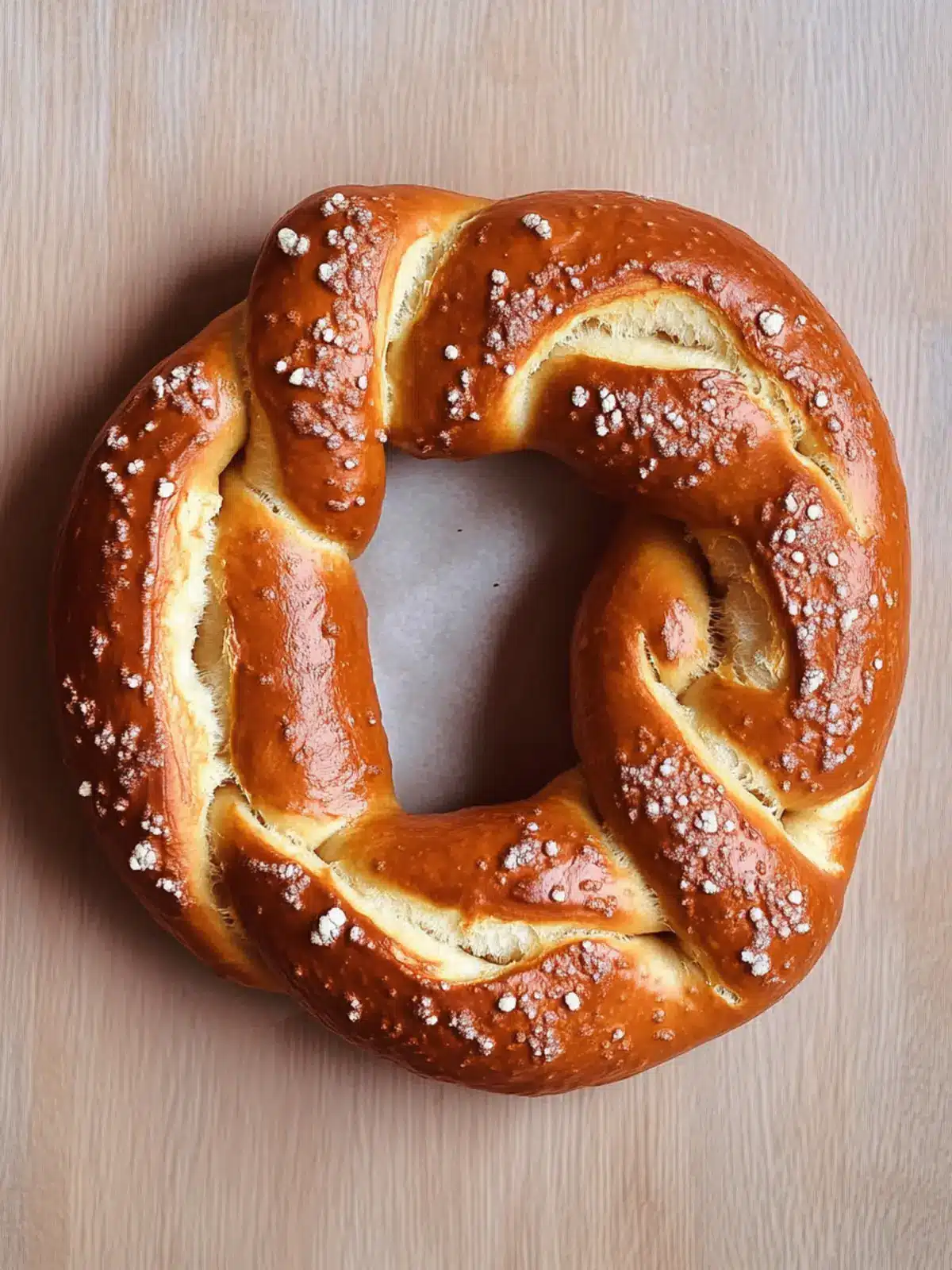
What to Serve with German Brezel (Pretzel)?
Imagine delighting in the warmth of freshly baked pretzels, complemented by perfect pairings that elevate the entire experience.
-
Spicy Mustard: A classic companion that delivers a tangy kick, enhancing the salty flavor of the Brezels with each dip.
-
Cheese Spread: Creamy spreads provide a rich and gooey contrast to the pretzel’s texture, making every bite indulgently satisfying. Consider a sharp cheddar for a memorable pairing.
-
Pint of Beer: The effervescence of a cold beer, especially a lager or wheat beer, cuts through the richness of the pretzel and offers a taste of Bavarian tradition.
-
Honey-Butter Dip: A sweet twist that pairs beautifully with the salty crunch, this dip adds a delightful contrast to your homemade treats.
-
Savory Herb Butter: Infuse melted butter with fresh herbs like rosemary or thyme, creating an aromatic topping that complements the Brezel’s chewy goodness.
-
Pickles: The cool, crisp bites of dill pickles offer a refreshing crunch that balances the warm, hearty nature of German Brezels perfectly.
-
Sweet Cinnamon Sugar: For a fun dessert twist, sprinkle warm Brezels with cinnamon sugar for a delightful sweet treat that feels indulgent yet playful.
Explore these pairings and elevate your pretzel joy into a cozy gathering that celebrates home-cooked love!
Storage Tips for German Brezel (Pretzel)
-
Room Temperature: Keep your German Brezel in an airtight container at room temperature for up to 2 days. This helps maintain their chewy texture and fresh flavor.
-
Freezer: For longer storage, wrap the pretzels individually in plastic wrap, and then place them in a freezer bag. They can be frozen for up to 3 months without sacrificing taste.
-
Reheating: To enjoy frozen Brezels, simply thaw them in the fridge overnight. Reheat in a preheated oven at 180°C (350°F) for about 5-10 minutes until warm and crusty.
-
Avoid Moisture: Always ensure the container is airtight; moisture can lead to a soggy texture, detracting from the delightful crunch of your freshly baked German Brezel.
Make Ahead Options
These German Brezels are a fantastic choice for meal prep aficionados! You can prepare the dough up to 24 hours in advance. Simply mix and knead the dough, then place it in a greased bowl, cover it tightly, and refrigerate. When you’re ready to bake, let the dough come to room temperature for about 30 minutes before shaping. The pretzels can also be shaped and placed on the baking sheet up to 3 days ahead; just cover them with plastic wrap to prevent drying out. Finally, the lye dipping step and baking should be done fresh to ensure that perfect crust, delivering delicious results that are just as satisfying with minimal effort!
German Brezel Variations
Embrace the joy of crafting your own twists on this beloved classic.
- Cheese-Topped: Sprinkle shredded cheese on top before baking for a gooey, savory finish. Cheddar or Gruyère works beautifully!
- Sesame Seeds: Add a handful of sesame seeds on top before baking for a nutty flavor and added crunch.
- Herb Infusion: Mix in dried herbs like oregano or thyme into the dough for a fragrant twist that will elevate each bite.
- Sweet Variants: Drizzle with melted chocolate post-baking or sprinkle with cinnamon sugar for a delightful dessert twist.
- Spicy Kick: Incorporate a dash of cayenne pepper or chili powder into the dough for those who crave a bit of heat!
- Dairy-Free Delight: Replace butter with margarine and use a dairy-free milk alternative to keep this recipe friendly for vegans.
- Whole Wheat Option: Substitute half the all-purpose flour with whole wheat flour for a heartier, nutritious version.
- Flavored Lye Solution: Add malt syrup to the lye solution for an even deeper flavor, reminiscent of traditional German pretzels.
Get creative with these ideas, and you’ll discover a world of flavors that will leave everyone asking for your secret recipes!
Expert Tips for Making German Brezel
-
Check Yeast Activation: Make sure your yeast is active by letting it bloom in warm water without salt for the right texture in your German Brezel.
-
Careful Dipping: When dipping in the lye solution, use a slotted spatula for gentle handling—this prevents breakage and helps maintain shape during cooking.
-
Rotating Bakes: To achieve an even golden brown color, rotate your baking sheet halfway through the baking process—this simple step enhances presentation.
-
Experiment with Toppings: Don’t hesitate to get creative! Try adding cheese or sesame seeds before baking for unique flavors that can transform your traditional German Brezel.
-
Storage Savvy: For optimal freshness, store any leftovers in an airtight container. They’re best enjoyed within two days, but freezing extends their deliciousness even longer!

German Brezel (Pretzel) Recipe FAQs
How can I tell if my yeast is active?
Absolutely! To check if your yeast is active, combine warm water (around 110°F or 43°C) with a teaspoon of sugar and sprinkle the active dry yeast on top. Let it sit for about 5-10 minutes. You’ll know it’s good to go when the mixture becomes frothy and bubbly, indicating that the yeast is alive and ready to help your dough rise.
What’s the best way to store leftover German Brezel?
For sure! Store your leftover German Brezel in an airtight container at room temperature for up to 2 days to keep their chewy texture and fresh flavor. If you want to enjoy them longer, you can freeze them by wrapping each pretzel in plastic wrap and placing them in a freezer bag. They can be stored this way for up to 3 months.
Can I freeze German Brezel, and how should I reheat them?
Of course! To freeze your German Brezel, wrap each pretzel individually in plastic wrap, then store them in a freezer bag. When you’re ready to enjoy them, thaw the pretzels in the refrigerator overnight. To reheat, preheat your oven to 180°C (350°F) and warm them for about 5-10 minutes until they’re crispy and delicious again.
What should I do if my dough doesn’t rise?
Very! If your dough doesn’t rise, it might be due to inactive yeast. Make sure your yeast is bloomed properly by using warm water (around 110°F or 43°C), and remember to avoid salt during the blooming process. If the dough still doesn’t rise, consider finding a new packet of yeast, as it may be expired or improperly stored—always check the expiration date!
Can I make German Brezel for pets?
I recommend against it! While the ingredients in German Brezel are safe for humans, they may not be suitable for pets. The dough is high in salt and may include things like sugar that aren’t healthful for animals. Stick to pet-friendly treats to keep your furry friends safe and happy!
What types of toppings or variations can I try on my German Brezel?
Absolutely delightful! You can get creative with your toppings! Classic coarse salt is always a favorite, but why not sprinkle on some sesame seeds or shredded cheese before baking? You could even brush them with flavored oils or melted butter for an extra punch of taste. Experimenting here can really elevate your Brezel game!
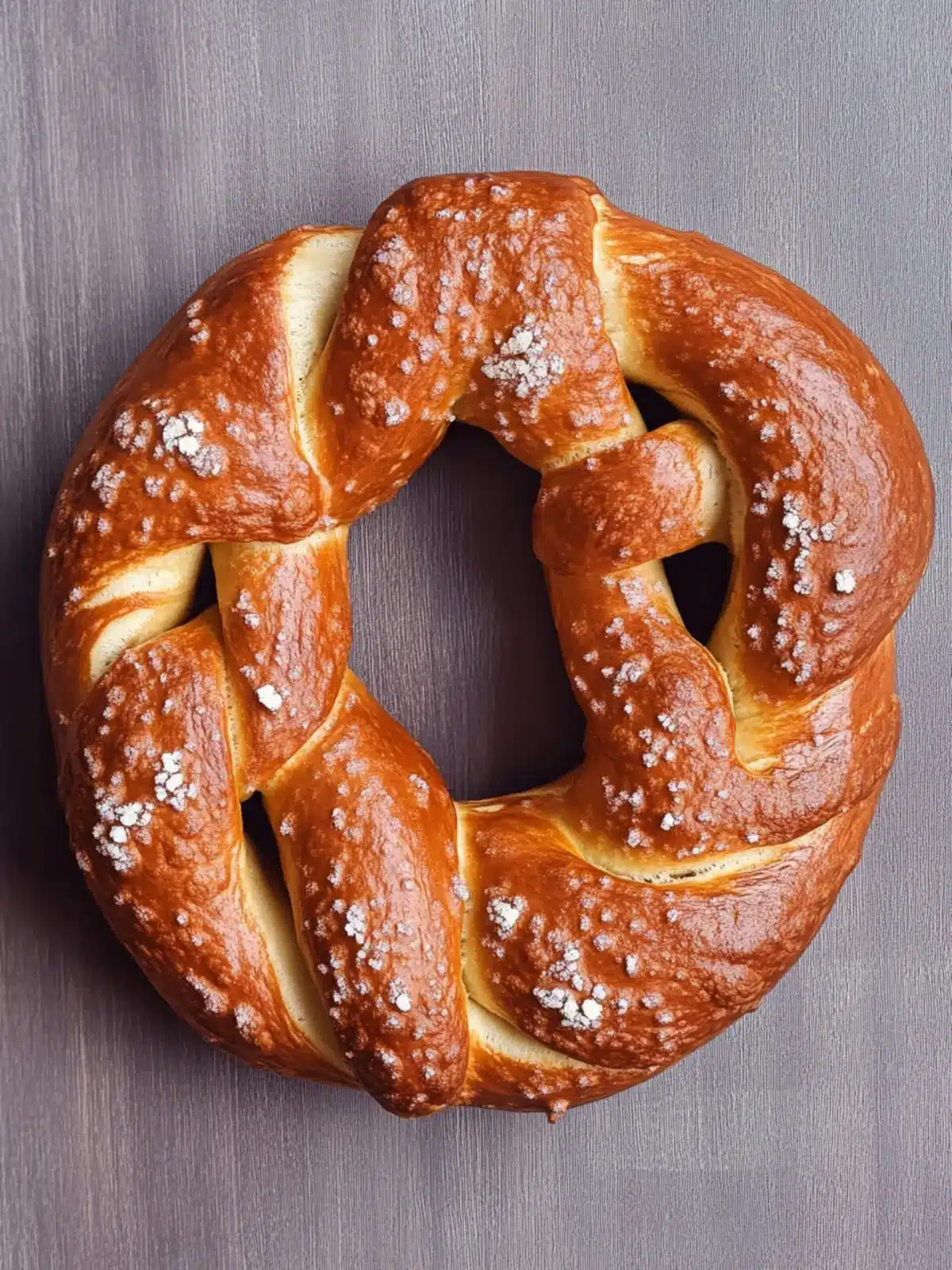
Master the Art of German Brezel: Soft, Chewy Perfection
Ingredients
Equipment
Method
- In a mixing bowl, combine warm water and sugar, then sprinkle the active dry yeast on top. Let sit for about 5-10 minutes until frothy.
- Mix in melted butter, flour, and salt, kneading until smooth for about 8-10 minutes.
- Place the dough into a greased bowl, cover it with a kitchen towel, and allow it to rise in a warm spot for 1 hour, or until it has doubled in size.
- Gently punch down the risen dough and divide it into 8 equal pieces. Roll each piece into a rope about 24 inches long, shape into pretzels, and let them rest for 15 minutes.
- In a pot, bring water to a boil, then carefully stir in the baking soda. Reduce the heat to a simmer.
- Submerge each pretzel in the lye solution for 20-30 seconds, ensuring the iconic crust.
- Transfer the pretzels to a parchment-lined baking sheet, sprinkle with coarse salt, and bake in a preheated oven at 220°C (430°F) for 12-15 minutes.
- Brush with melted butter if desired for a richer finish.