
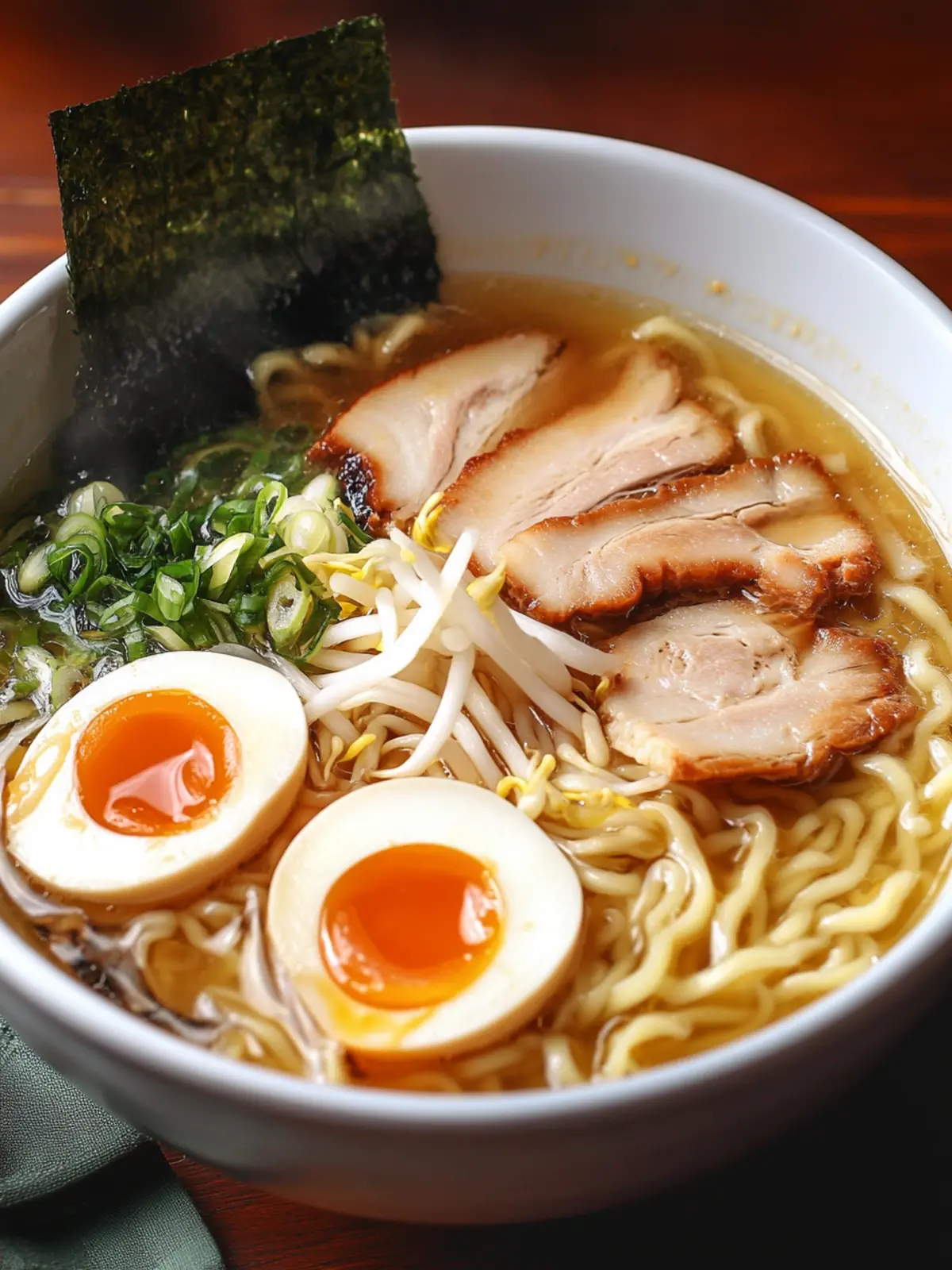
The first time I made homemade Japanese ramen, I was swept away by the intoxicating aroma of simmering broth mingled with hints of garlic and ginger. It transformed my cozy kitchen into a bustling izakaya, where each ingredient contributed to an orchestra of flavors, inviting friends and family to gather around the table. This classic noodle soup is comfort food at its finest, featuring delicate, springy noodles basking in a rich, savory broth, topped generously with tender pork belly and a perfectly soft-boiled egg.
As I explored this traditional dish, I marveled at its versatility—whether you want to create a lighter chicken version or a hearty vegetarian ramen, the possibilities are endless. With simple yet far-from-basic ingredients, this recipe will brighten your weeknight dinners and have you happily slurping away. So, grab your chopsticks and let’s dive into this culinary journey that promises to bring warmth and joy to your dinner table!

Why is Japanese Ramen a must-try?
Comforting Warmth: Each bowl of this ramen embraces you with its rich, savory broth, perfect for chilly evenings.
Easy to Customize: Opt for pork belly, chicken, or even tofu to suit your taste and dietary needs.
Aromatic Bliss: The intoxicating blend of garlic and ginger creates an irresistible aroma that fills your kitchen.
Perfect for Gatherings: Impress your friends and family—this dish brings everyone together over delicious, homemade flavors.
Nutrient-Rich: Packed with balanced macros and optional veggies, it’s a hearty and wholesome meal.
For a special touch, check out my easy tips to refresh your ramen experience with unique toppings in the variation ideas.
Japanese Ramen Ingredients
For the Broth
• Chicken or Pork Broth – Forms the rich soup base; homemade will give the best flavor, but store-bought works in a pinch.
• Water – Used to balance the broth’s richness; essential for the perfect consistency.
• Soy Sauce – Adds depth and saltiness to the broth; tamari is a great gluten-free alternative.
• Miso Paste – Provides umami richness; red miso offers a bolder taste, while white is milder.
• Sake and Mirin (optional) – Enhance the broth’s complexity; feel free to skip if not on hand.
• Garlic – Fresh cloves amplify the flavor; ensure it’s sautéed, not burned, for the best results.
• Ginger – Works harmoniously with garlic for a fragrant broth; use fresh for maximum impact.
For the Noodles and Toppings
• Fresh Ramen Noodles – The heart of your noodle soup, offering delightful texture; if unavailable, dried ramen can be a quick substitute.
• Eggs – Soft-boiled adds a creamy richness; adjust cooking time for hard-boiled if you prefer.
• Pork Belly – The primary protein that brings indulgence; roast for tender bliss.
• Nori Seaweed – A flavorful topping that complements the broth’s depth; other seaweeds can work in a pinch.
• Green Onions – Bright, fresh garnish that adds a nice contrast; chives can be a suitable substitute.
• Bamboo Shoots (optional) – Adds delightful texture; remove if you prefer a simpler dish.
• Toasted Sesame Seeds (optional) – Adds a nutty crunch; swap with other seeds for a twist.
For Finishing Touches
• Vegetable Oil – Necessary for sautéing your garlic and ginger; any neutral oil like canola works well.
• Salt and Pepper – Essential for seasoning your ramen soup to perfection; adjust amounts to your taste preferences.
Get ready for a flavorful experience as you create your very own homemade Japanese ramen noodle soup!
How to Make Japanese Ramen
-
Marinate Pork: Start by combining the pork belly with soy sauce, mirin, and a pinch of salt. Let it rest for about 10 minutes to absorb those delicious flavors.
-
Sear Pork: Heat vegetable oil in a skillet over medium-high heat. Sear the pork belly for 3 minutes on each side until it’s beautifully browned. Then, transfer it to an oven-safe dish and roast at 300°F for 90 minutes until tender.
-
Prepare Eggs: While the pork is roasting, gently boil the eggs in salted water for exactly 7 minutes. Afterward, chill them in an ice bath, peel, and set them aside for topping later.
-
Make Broth: In the same skillet, sauté garlic and ginger in the oil until fragrant, about 2 minutes. Next, add the broth, water, soy sauce, sake, and miso to the pan, and let it simmer on low heat for 20-30 minutes until the flavors meld beautifully.
-
Cook Noodles: When the broth is simmering, bring another pot of water to boil and cook the fresh ramen noodles until they reach al dente perfection, which should take about 4-5 minutes. Rinse them briefly under cold water to prevent sticking.
-
Slice Pork: Once the pork is cool enough to handle, slice it thinly against the grain—the goal is tender pieces that melt in your mouth.
-
Finish Broth: During the last 5 minutes of simmering, add bamboo shoots if you’re using them. Taste and adjust the seasoning if necessary, adding salt or pepper as needed.
-
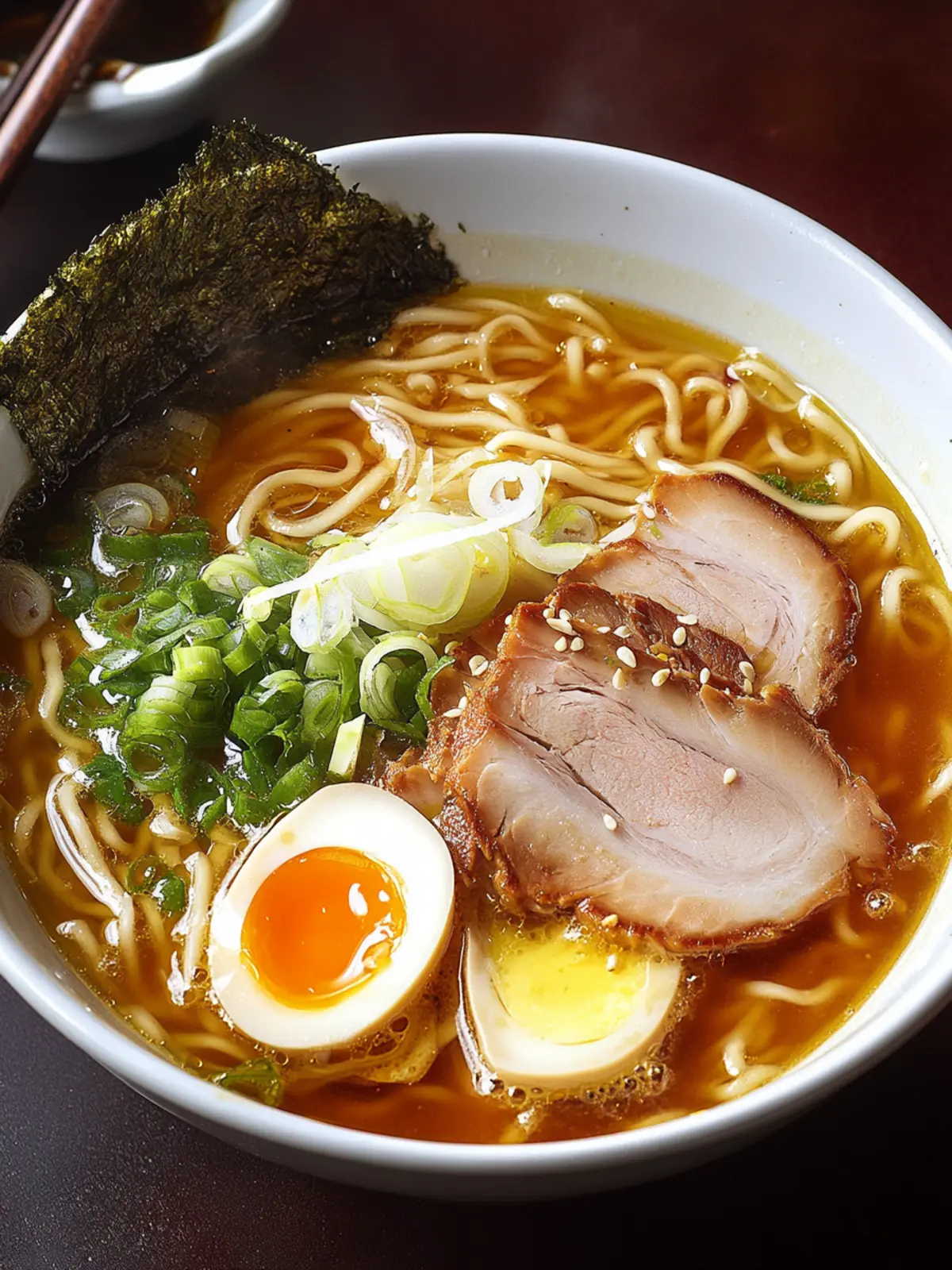
Serve: In bowls, divide the cooked noodles, pour the savory broth over the top, and beautifully arrange the pork slices and halved eggs. Finish with a sprinkle of green onions, a piece of nori, and toasted sesame seeds for that restaurant-quality finish.
Optional: Drizzle with chili oil for a spicy kick!
Exact quantities are listed in the recipe card below.
What to Serve with Japanese Ramen?
Creating a delightful meal revolves around the warmth and satisfaction found in each bowl of ramen.
- Spicy Edamame: These vibrant, lightly salted pods bring a delightful crunch and spice that perfectly complements the savory broth.
- Gyoza: Crispy pan-fried dumplings filled with juicy pork or vegetables provide a lovely crunch to contrast the soft noodles.
- Seaweed Salad: A refreshing, tangy salad highlights umami flavors while adding freshness to balance the richness of the ramen.
- Japanese Pickles: Serve as a zesty side that cuts through the hearty flavors, providing a burst of tangy goodness with every bite.
- Sake or Japanese Beer: A chilled glass of sake or a light beer beautifully complements the ramen’s umami notes, providing a perfect pairing.
- Mochi Ice Cream: End your meal on a sweet note with these chewy, creamy bites that offer a delightful texture contrast to your savory dishes.
- Napa Cabbage Slaw: Crunchy and slightly sweet, this slaw brings freshness that brightens up the meal and adds a nice crunch.
- Chili Oil on the Side: For those who enjoy a spicy kick, serve chili oil for drizzling over the ramen to awaken all the flavors.
How to Store and Freeze Japanese Ramen
Fridge: Store leftover broth and toppings separately in airtight containers for up to 3 days to maintain freshness and flavor.
Freezer: Freeze broth in portion-sized containers for up to 3 months. Thaw overnight in the fridge before reheating to serve with fresh noodles.
Noodles: Fresh ramen noodles can be refrigerated for up to 2 days. If you have excess cooked noodles, store them in an airtight container, ready to reheat in boiling water.
Reheating: Reheat broth gently on the stovetop until steaming, and cook the noodles just before serving for an authentic experience. Enjoy your homemade Japanese ramen!
Make Ahead Options
These Japanese Ramen bowls are perfect for meal prep enthusiasts! You can prepare the broth up to 3 days in advance; simply simmer it, let it cool, and store it in the refrigerator. The pork belly can be marinated and roasted, then sliced and refrigerated for up to 3 days as well, ensuring it stays just as tasty and tender. When you’re ready to serve, reheat the broth gently and cook the fresh ramen noodles for about 4-5 minutes—you’ll have a restaurant-quality meal in no time. Don’t forget to top each bowl with freshly halved soft-boiled eggs, as they should be prepared on the day of serving for optimal creaminess!
Japanese Ramen Variations & Substitutions
Feel free to explore these delightful twists and turns, letting your creativity shine in each bowl!
- Vegetarian: Swap pork belly for tofu or tempeh; simply sauté until golden for a satisfying bite.
- Gluten-Free: Use gluten-free ramen noodles and tamari instead of soy sauce for a delicious alternative.
- Spicy Kick: Add chili paste or sliced fresh chilies to the broth for that extra zing that warms you right up.
- Broth Boost: Experiment with chicken broth infused with herbs or a touch of miso for deeper flavor.
- Veggie Delight: Toss in fresh bok choy, zucchini, or mushrooms during the last few minutes of broth simmering for added nutrition.
- Flavor Adventure: Try different types of miso (red, white, or even black) to create a unique depth and aroma.
- Noodle Fun: Substitute traditional ramen with udon or soba noodles for a different texture to delight your palate.
- Umami Explosion: Incorporate dried shiitake mushrooms into the broth while simmering for a robust umami essence that elevates your dish.
Expert Tips for Japanese Ramen
- Perfect Pork: Ensure the pork belly is marinated and cooked slowly to achieve that melt-in-your-mouth tenderness. This is key for a delicious Japanese ramen.
- Control Seasoning: Miso and soy sauce can vary in saltiness; start with less and gradually adjust the broth to your taste to avoid over-salting.
- Fresh Noodles: Use fresh ramen noodles if possible, as they deliver the best texture. For a quick option, dried ramen works but adjust cooking times.
- Aromatics Care: Don’t overcook garlic and ginger while sautéing, as burning them can lead to bitterness that alters the broth’s flavor.
- Garnish Wisely: Fresh ingredients like green onions and sesame seeds add brightness and crunch—don’t skip these elements for a well-rounded bowl.
Japanese Ramen Recipe FAQs
What type of fresh ramen noodles should I use?
Absolutely! Fresh ramen noodles are ideal for this recipe as they provide the perfect texture and chewiness. If fresh is unavailable, you can use dried ramen noodles—just be sure to adjust the cooking time according to the package directions, typically boiling for 3-5 minutes.
How should I store leftover ramen broth?
Very important! Store leftover broth and toppings separately in airtight containers in the fridge for up to 3 days. This will help maintain freshness and flavor. When storing, make sure the broth is cooled to room temperature before sealing it, so it doesn’t trap steam and make it watery.
Can I freeze the broth?
Absolutely! You can freeze the ramen broth in portion-sized containers for up to 3 months. Let it cool completely, then pour it into containers, leaving some space at the top for expansion once frozen. When you’re ready to use it, thaw the broth overnight in the fridge, then reheat on the stovetop until steaming.
I’m having trouble with the broth’s saltiness; what should I do?
No worries! If your broth ends up too salty, try adding a bit of water to dilute it, starting with a quarter cup and tasting as you go. You can also add more aromatics like garlic or ginger to balance the flavor. If you have time, a pinch of sugar can help mitigate the saltiness as well!
Is this ramen recipe suitable for a gluten-free diet?
Yes! To make this noodles soup gluten-free, use gluten-free soy sauce or tamari instead of regular soy sauce. Additionally, ensure that your ramen noodles are made from buckwheat or a gluten-free alternative, as traditional ramen contains wheat.
What toppings can I add or substitute in this ramen?
The more the merrier! Feel free to customize your ramen with a variety of toppings. Instead of bamboo shoots, you could add fresh vegetables like bok choy or pea sprouts. If you’re vegetarian, swap the pork belly for tofu or mushrooms for added flavor!
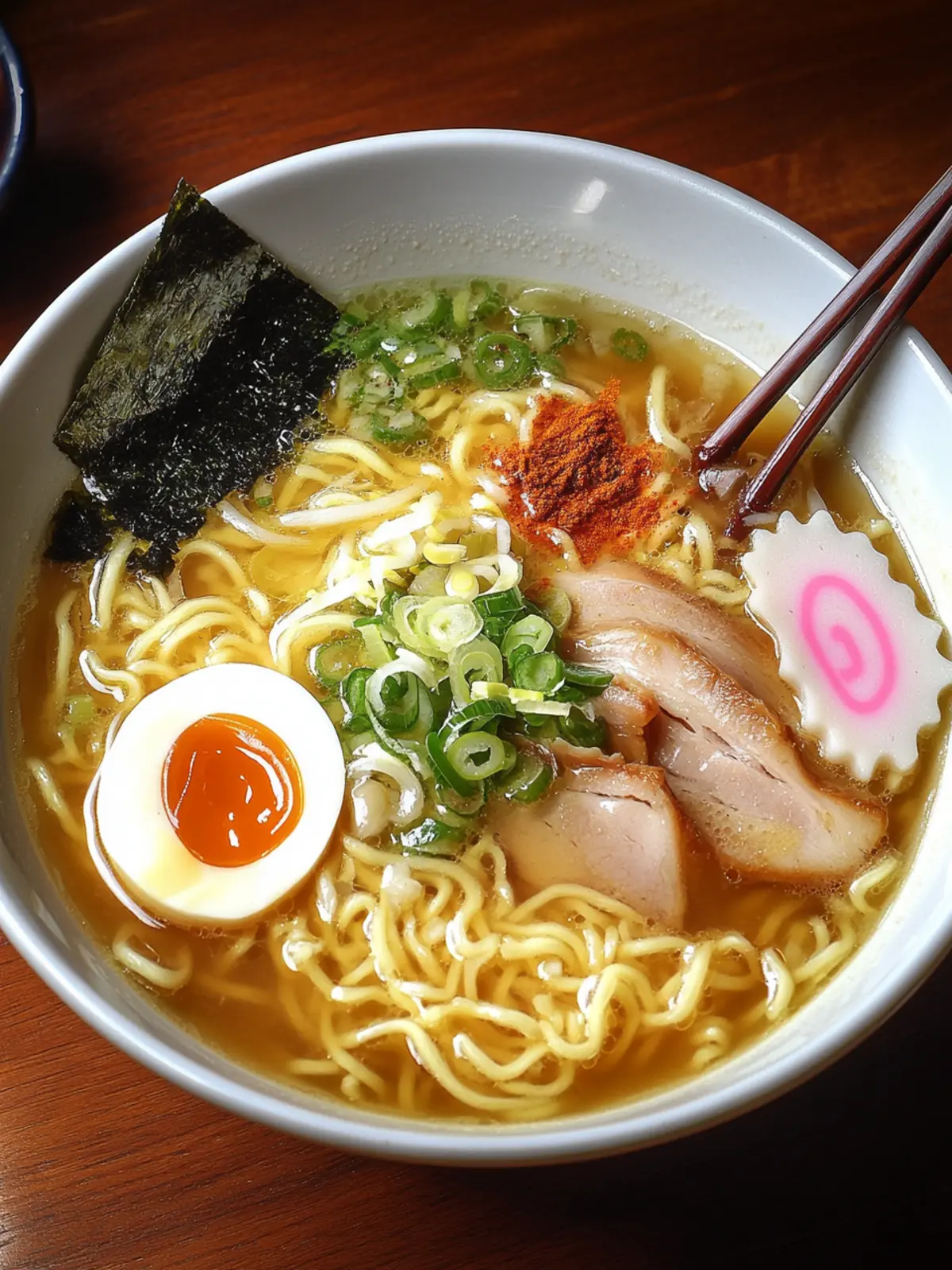
Savory Japanese Ramen Noodle Soup with Pork Belly Bliss
Ingredients
Equipment
Method
- Marinate Pork: Combine pork belly with soy sauce, mirin, and a pinch of salt. Let it rest for 10 minutes.
- Sear Pork: Heat vegetable oil in a skillet over medium-high heat. Sear pork belly for 3 minutes each side. Transfer to oven-safe dish and roast at 300°F for 90 minutes.
- Prepare Eggs: Boil eggs in salted water for 7 minutes. Chill in ice bath, peel, and set aside.
- Make Broth: Sauté garlic and ginger in oil in the same skillet for 2 minutes. Add broth, water, soy sauce, sake, and miso. Simmer on low for 20-30 minutes.
- Cook Noodles: Boil another pot of water and cook fresh ramen until al dente, about 4-5 minutes. Rinse under cold water.
- Slice Pork: Slice the roasted pork thinly.
- Finish Broth: Add bamboo shoots in the last 5 minutes of simmering. Adjust seasoning with salt and pepper.
- Serve: In bowls, place noodles, pour broth over, and arrange pork and halved eggs. Garnish with green onions, nori, and sesame seeds.