
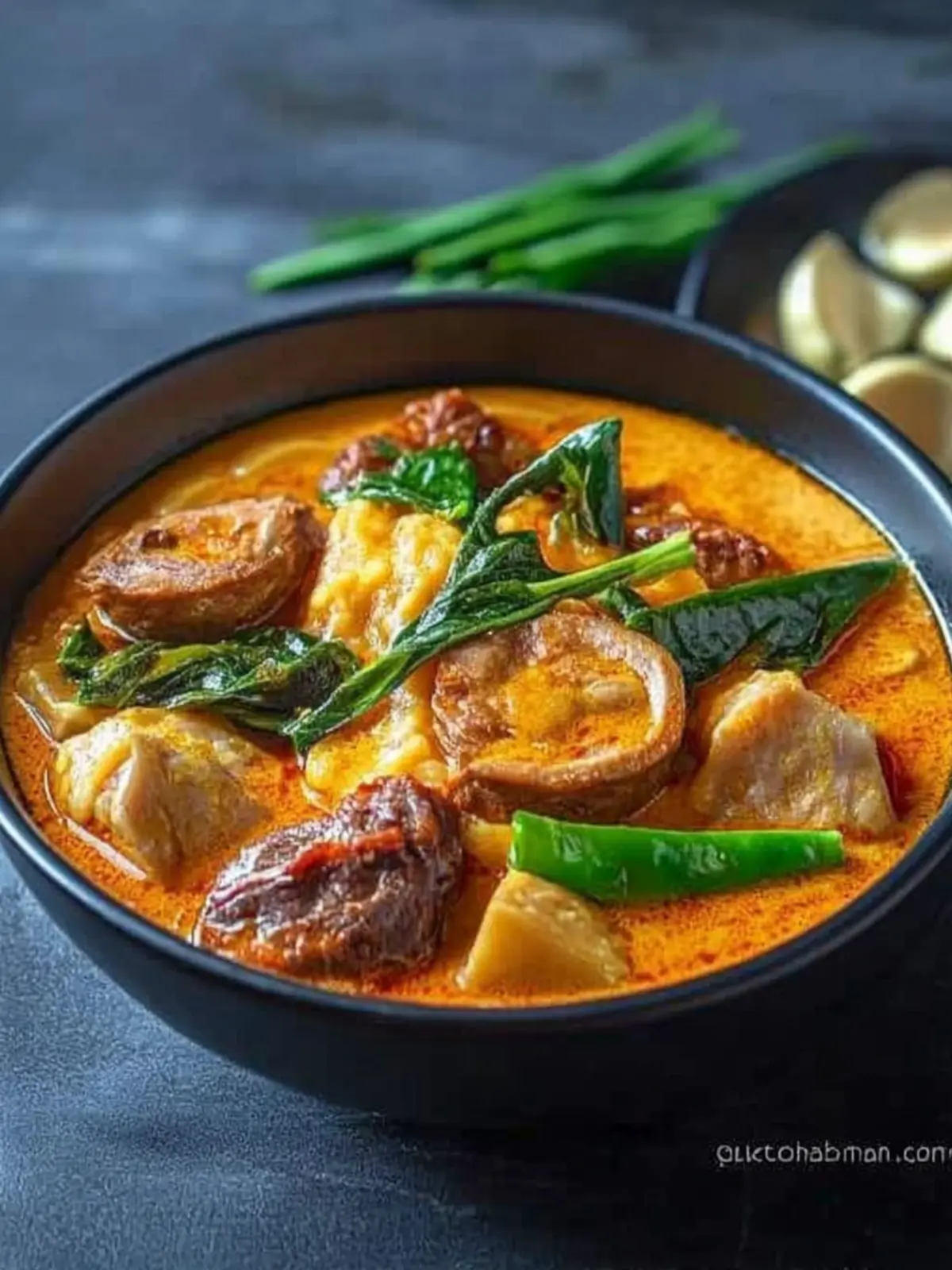
There’s something truly heartwarming about sharing a dish steeped in tradition, and Kare-Kare is no exception. I vividly remember the first time I welcomed the vibrant scent of this Filipino Peanut Stew into my kitchen—an enticing mix of tender beef tripe and a luscious peanut sauce that wraps around your senses like a warm hug. As the savory aroma filled the air, I knew I was in for a treat that balanced comfort and culinary delight.
This Kare-Kare recipe transforms simple ingredients into an impressive celebration of flavor. Perfect for cozy family dinners or a gathering with friends, this dish brings people together, inviting everyone to savor its rich depths. Trust me, once you take a bite, you’ll be hooked on its blend of nutty undertones and fresh, vibrant veggies, while feeling good about indulging in a high-protein, low-carb meal. Let’s dive into this beloved classic—you’ll never look at comfort food the same way again!

Why is Kare-Kare Recipe (Beef Tripe) unforgettable?
Heartwarming Flavors: Indulge in the rich, nutty essence of Kare-Kare that warms your soul.
Comforting Dish: This stew brings family and friends together, perfect for sharing.
Nutritious Value: Packed with protein and healthy fats, it’s a guilt-free pleasure.
Cooking Adventure: Master the art of Filipino cuisine while enjoying a fun cooking session!
Flexible Ingredients: Easily swap components, like using oxtail or a veggie mix, for your desired taste.
Dive into this culinary experience and elevate your comfort food game!
Kare-Kare Recipe (Beef Tripe) Ingredients
For the Stew
• Beef Tripe – Make sure to slice thinly for better tenderness.
• Knorr Beef Cube – Enhances the flavor; can be substituted with any beef bouillon.
• Baby Bok Choy – Offers freshness and crunch; replace with leafy greens like spinach if preferred.
• Snake Beans – Adds texture and nutrition; green beans are a great substitute if unavailable.
• Chinese Eggplant – Provides a soft texture and absorbs flavors well; regular eggplant works too.
• Peanut Paste – This is the star ingredient creating the creamy sauce; choose between store-bought or homemade.
• Annatto Seeds – Essential for that vibrant color and flavor; you can use turmeric as an alternative for coloring.
• Onion (minced) – Aromatic base; shallots can add a sweeter touch instead.
• Garlic (minced) – Adds depth and aroma; always opt for fresh over powder.
• Glutinous Rice Flour – Used to thicken the sauce; cornstarch can work as a substitute.
• Cooking Oil – For sautéing; you can use any neutral oil.
• Ground Black Pepper – Season to taste for that perfect kick.
• Shrimp Paste (Bagoong Alamang) – Traditionally served on the side as a condiment; this is optional for those who prefer not to use seafood.
Now you have everything to create your very own delicious Kare-Kare! Enjoy this comforting dish that reflects the warmth of Filipino cooking and adds a delightful twist to your meal menu.
How to Make Kare-Kare
-
Prepare the Tripe: Boil the beef tripe in 4 cups of water for 1 hour until tender, then discard the cooking water. This process softens the tripe for a delightful texture.
-
Make Annatto Water: In a small pot, bring 1 ½ cups of water to a gentle boil, then add the annatto seeds. Let it boil for 2 minutes before setting aside to infuse.
-
Sauté Aromatics: Heat a generous amount of cooking oil in a large pot over medium heat. Sauté the minced onion and garlic until the onion turns translucent and fragrant, about 3-5 minutes.
-
Combine Tripe and Aromatics: Introduce the boiled tripe to the pot, sautéing it together for about 1 minute to absorb those delicious flavors.
-
Add Annatto Water: Pour in the prepared annatto water, filtering out the seeds to keep the mixture smooth. Allow the blend to come to a gentle boil, which brings out a vibrant color.
-
Flavor the Stew: Stir in the Knorr Beef Cube and the peanut paste, mixing well. Gradually add the remaining water to achieve your desired consistency. Let it boil for 8 minutes to meld all the flavors.
-
Thicken the Sauce: Create a slurry by combining glutinous rice flour and ¼ cup of water, then pour this into the pot. Stir well to thicken the sauce to your liking, adjusting as needed.
-
Add Vegetables: Mix in the snake beans and eggplant, cooking for about 5 minutes. Finally, stir in the baby bok choy and let it cook for another minute for that fresh crunch.
-
Season to Taste: Sprinkle ground black pepper for a touch of warmth and flavor. Serve your Kare-Kare hot alongside a portion of steaming rice and a dish of shrimp paste if desired.
Optional: Garnish with fresh cilantro for an extra burst of flavor.
Exact quantities are listed in the recipe card below.
Kare-Kare Recipe (Beef Tripe) Variations
Feel free to experiment with these delightful twists to make this classic dish your own!
-
Oxtail Substitute: Swap beef tripe for tender oxtail to create a richer, meatier flavor. The slow-cooked oxtail melts beautifully, enriching the stew.
-
Vegetarian Delight: For a plant-based version, replace the meat with a medley of vegetables, like eggplant, zucchini, and mushrooms, and use a nut-free alternative for the peanut paste.
-
Spicy Kick: Add chopped green chilies for a spicy twist! This gives the dish an alluring heat that complements the silky peanut sauce wonderfully.
-
Nuts for Crunch: Stir in roasted peanuts at the end for an added crunch. The texture creates a delightful contrast against the creamy sauce, elevating every bite.
-
Seafood Twist: Incorporate shrimp or fish for a seafood variant! The addition of seafood enhances the flavor profile while keeping it light and savory.
-
Thai Fusion: Infuse some Thai flavors by using coconut milk instead of water for a creamy sauce base. This adds a tropical sweetness that harmonizes beautifully with the peanut flavor.
-
Lemon Zest: Elevate the dish by adding a splash of lemon juice or zesty lemon peel just before serving. This brightens the flavors and adds a refreshing balance to the rich stew.
-
Herb-Infused: Fresh herbs like cilantro or parsley can be stirred in for a burst of freshness. This accentuates the dish and elevates its presentation.
With these variations, the possibilities are limitless! Embrace your creativity and enjoy crafting a unique Kare-Kare experience perfect for your palate.
Make Ahead Options
These Kare-Kare preparations are perfect for busy home cooks looking to save time during meal prep! You can boil and prepare the beef tripe up to 24 hours in advance; just refrigerate it once cooled. Additionally, make the annatto water and sauté the aromatics (onions and garlic) ahead of time—these can also sit in the fridge for up to 3 days. When it’s time to enjoy your Kare-Kare, simply combine all components, stirring in the peanut paste and vegetables, and bring it to a gentle boil. This way, you ensure that every bite retains its rich flavor and comforting essence, making it just as delicious as if freshly made!
Storage Tips for Kare-Kare
Fridge: Leftover Kare-Kare can be stored in an airtight container in the refrigerator for up to 3 days. Make sure it cools to room temperature before sealing to maintain freshness.
Freezer: If you want to store Kare-Kare for longer, freeze it in a freezer-safe container for up to 2 months. Label the container with the date to keep track of storage time.
Reheating: When ready to enjoy again, thaw frozen Kare-Kare in the fridge overnight. Gently reheat on the stove over low heat, adding a splash of water if the sauce thickens too much.
Quality Check: Always check for any off smells or changes in texture when using previously stored Kare-Kare. If it looks or smells off, it’s best to discard.
Tips for the Best Kare-Kare
-
Choose Tender Tripe: Cook the beef tripe thoroughly for a melt-in-your-mouth texture; undercooking can lead to a chewy dish.
-
Perfect Sauce Thickness: Adjust the amount of slurry in your Kare-Kare recipe to achieve your desired consistency. Add gradually for best results.
-
Infuse Annatto Flavor: Always filter the annatto water through a sieve to ensure a smooth, rich peanut sauce without seed residue.
-
Vegetable Variations: Feel free to swap in seasonal vegetables, like zucchini or bell peppers, to customize your Kare-Kare while maintaining its classic essence.
-
Serve with Care: Pair your Kare-Kare with steamed jasmine rice and a side of shrimp paste for an authentic Filipino dining experience.
What to Serve with Kare-Kare (Filipino Peanut Stew with Beef Tripe)?
Elevate your dining experience by pairing this scrumptious stew with delightful accompaniments that complement its rich flavors.
-
Steamed Jasmine Rice: The perfect base to soak up the luscious peanut sauce, offering a fragrant and fluffy side.
-
Sweet and Sour Cucumber Salad: Adding a bright, refreshing contrast to the hearty Kare-Kare, this salad enhances every bite with its tangy crunch.
-
Grilled Eggplant: Smoky and tender, grilled eggplant adds delicious depth and a delightful textural contrast to the creamy stew.
-
Fresh Tomato Salsa: The burst of acidity and freshness from tomatoes brightens the dish, balancing the richness of the peanut sauce beautifully.
-
Bagoong Alamang: Serve with this traditional shrimp paste for those who love that umami kick, enhancing the overall flavor profile.
-
Crispy Prawn Crackers: Add a delightful crunch with these crispy snacks that bring texture and satisfyingly salty bites alongside the stew.
-
Coconut Milkshake: A creamy, sweet beverage that’s both soothing and delicious, perfect for washing down the savory stew with a hint of tropical delight.
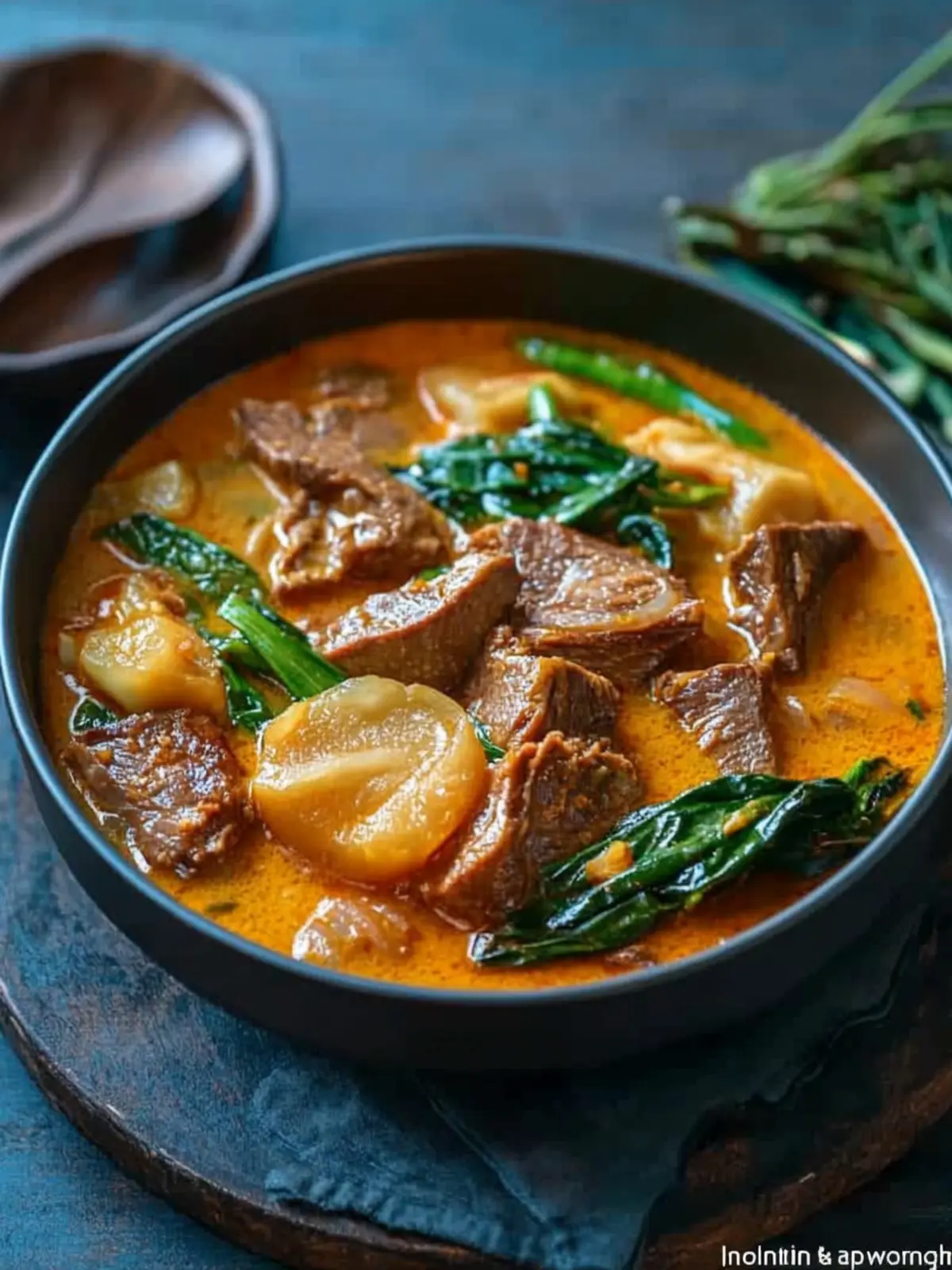
Enjoy the comforting embrace of Kare-Kare as you share it with loved ones, creating memories that are as rich as the meal itself!
Kare-Kare Recipe (Beef Tripe) Recipe FAQs
How do I choose the right beef tripe for Kare-Kare?
Absolutely! When selecting beef tripe, look for fresh, white tripe without any dark spots or strong odors. It should feel firm to the touch. Thinly sliced tripe generally cooks more tenderly, so ask your butcher to slice it appropriately if possible. If you’re uncertain, always opt for tripe that appears clean and bright.
How do I store leftover Kare-Kare?
Leftover Kare-Kare can be stored in an airtight container in the refrigerator for up to 3 days. Allow it to cool to room temperature before sealing to keep it fresh. When reheating, warm it gently over medium heat on the stove, and feel free to add a splash of water for desired consistency.
Can I freeze Kare-Kare for later use?
Yes, you can certainly freeze Kare-Kare! To do this, allow the stew to cool before transferring it to a freezer-safe container. It can be kept in the freezer for up to 2 months. Just be sure to label it with the date for tracking. When you’re ready to enjoy it again, thaw it overnight in the fridge before reheating gently on the stove.
What should I do if my peanut sauce is too thick?
If your peanut sauce turns out too thick, don’t worry! Start by adding a little water (about a tablespoon at a time) to the pot while gently stirring over low heat. Keep adding until the sauce reaches your desired consistency. Remember, it’s all about balance and adjusting to your preference.
Are there any dietary considerations I should keep in mind for Kare-Kare?
Very much so! If you’re preparing Kare-Kare for guests with dietary restrictions, note that the traditional shrimp paste (bagoong alamang) is optional, so you can serve it on the side for those who prefer not to use seafood. Additionally, for those with peanut allergies, substituting the peanut paste with sunflower seed butter might provide a safe alternative, although the flavor will differ. Always be mindful of your ingredients to ensure everyone can enjoy this dish!
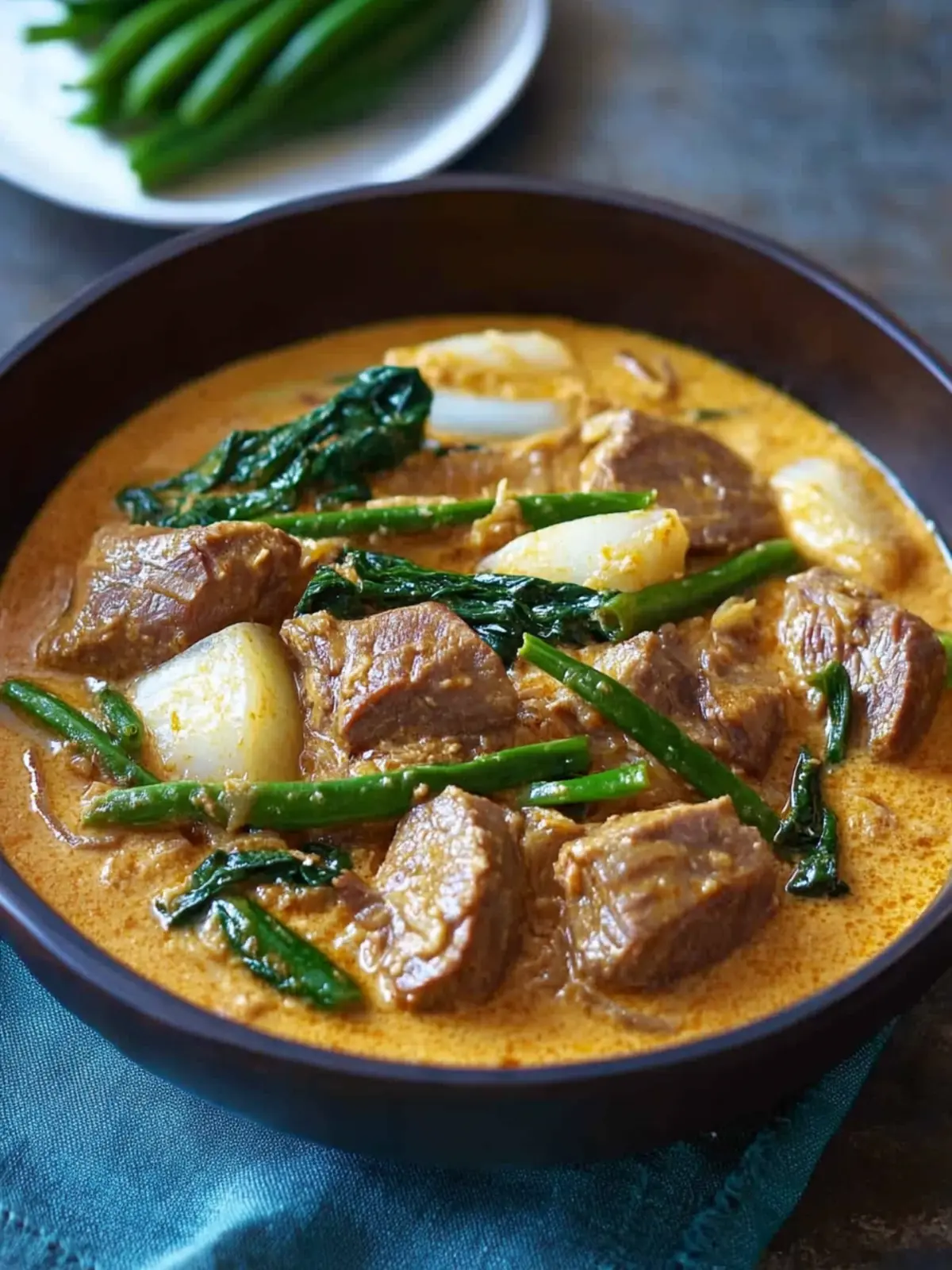
Savory Kare-Kare Recipe: Authentic Beef Tripe Delight
Ingredients
Equipment
Method
- Boil the beef tripe in 4 cups of water for 1 hour until tender, then discard the cooking water.
- In a small pot, bring 1 ½ cups of water to a gentle boil, then add the annatto seeds. Let it boil for 2 minutes before setting aside to infuse.
- Heat a generous amount of cooking oil in a large pot over medium heat. Sauté the minced onion and garlic until the onion turns translucent and fragrant, about 3-5 minutes.
- Introduce the boiled tripe to the pot, sautéing it together for about 1 minute to absorb those delicious flavors.
- Pour in the prepared annatto water, filtering out the seeds to keep the mixture smooth. Allow the blend to come to a gentle boil.
- Stir in the Knorr Beef Cube and the peanut paste, mixing well. Gradually add the remaining water to achieve your desired consistency. Let it boil for 8 minutes.
- Create a slurry by combining glutinous rice flour and ¼ cup of water, then pour this into the pot. Stir well to thicken the sauce.
- Mix in the snake beans and eggplant, cooking for about 5 minutes. Finally, stir in the baby bok choy and let it cook for another minute.
- Sprinkle ground black pepper for a touch of warmth and flavor. Serve hot alongside rice and shrimp paste.