
When I first tasted Malaysian Char Kway Teow from a bustling street vendor, I was immediately captivated by the intoxicating aroma of smoky stir-fried noodles mingling with fresh prawns and Chinese sausage. It was love at first bite—the silky flat rice noodles danced on my palate, delivering a perfect balance of savory and slightly sweet flavors. This iconic dish isn’t just a meal; it’s a celebration of Malaysian culinary heritage, providing comfort and satisfaction with every forkful.
Whether you’re looking for a quick lunch idea or a late-night snack that feels indulgent yet homely, this stir-fried noodle delight is the answer to your cravings. With its rich umami profile and the satisfying crunch of bean sprouts, Char Kway Teow is versatile enough to cater to various tastes—feel free to adjust the protein or spice levels to your liking. Let’s dive into this mouthwatering recipe and discover how to bring a taste of Malaysia right to your kitchen!

Why is Malaysian Char Kway Teow so loved?
Unforgettable flavors: Each bite of Malaysian Char Kway Teow introduces you to aromatic notes of garlic and smoked sausage, mingling seamlessly with the delicate shrimp and fresh crunch of bean sprouts.
Cooking made easy: This straightforward recipe uses simple ingredients and techniques, making it accessible for both seasoned chefs and home cooks alike.
Endless customizations: Feel free to swap proteins or load up on vegetables, ensuring it caters to every dietary preference—whether you choose prawns, tofu, or earthy mushrooms!
Perfect for any occasion: Whether it’s a casual family meal or a festive gathering, this dish always impresses and delights, making it a crowd-pleaser.
Dive into this delicious journey by following the easy steps and bringing vibrant Malaysian flavors right into your home!
Malaysian Char Kway Teow Ingredients
- Discover the key elements for this iconic dish!
For the Noodles
- Flat Rice Noodles – The heart of the dish; fresh varieties are best for texture.
- Bean Sprouts – Adds a delightful crunch; swap with shredded carrots for a different taste.
For the Protein
- Prawns – Natural sweetness and a tender bite; chicken or tofu can be substituted for variety.
- Chinese Sausage (Lap Cheong) – Offers a sweet, smoky depth; omit for a lighter dish.
For Flavor
- Garlic – Essential for that aromatic punch; freshly minced garlic elevates any stir fry.
- Soy Sauce/Dark Soy Sauce – Adds umami richness; adjust for preferred saltiness, or use tamari for gluten-free.
- Oyster Sauce – Deep, savory flavor; substitute with mushroom sauce for a vegetarian twist.
- Sugar – Balances the savory notes; brown sugar enhances depth with its caramel undertones.
- White Pepper – Delivers a gentle heat; can swap with black pepper for a different flavor profile.
For Cooking
- Cooking Oil (Vegetable/Peanut) – Required for stir-frying; peanut oil provides an authentic taste with a high smoke point.
- Chili Paste – For those who enjoy a kick; omit if serving to those sensitive to spice.
For Garnish
- Chives – Fresh flavor and a lovely touch of color; scallions work well as a substitute.
- Eggs – Adds richness and a silky texture; leaving them out can create a lighter, egg-free option.
How to Make Malaysian Char Kway Teow
-
Prepare Sauce: In a bowl, mix the soy sauces, oyster sauce, sugar, white pepper, and water. Stir until the sugar fully dissolves to create a flavorful base for your noodles.
-
Noodle Prep: If using dried noodles, soak them in warm water for about 30 minutes until softened. For fresh noodles, gently separate them to ensure they don’t clump during cooking.
-
Cook Sausage: Heat a generous amount of oil in a wok over high heat. Add the Chinese sausage and stir-fry until it becomes fragrant, then set it aside for later.
-
Cook Prawns: Keeping the wok’s heat, add minced garlic first, stir for just a few seconds until aromatic, then add the prawns. Cook until they turn pink, which usually takes about 2-3 minutes. Remove and set aside.
-
Stir-Fry Noodles: Pour in the remaining oil and, once hot, add the soaked noodles. Stir-fry briefly, then add the prepared sauce. Mix thoroughly, ensuring the noodles are evenly coated.
-
Incorporate Eggs: Push the noodles to one side of the wok, crack in the eggs, and scramble them lightly. Once slightly set, mix them into the noodles for that creamy texture.
-
Combine & Finish: Return the cooked prawns and sausage to the wok. Toss in bean sprouts and chives, stir-frying for another 1-2 minutes until the vegetables are still crunchy but warmed through.
-
Serve: Serve your Malaysian Char Kway Teow hot, garnished with extra chives or lime wedges on the side, and don’t forget sambal for an added kick!
Optional: Add a squeeze of lime juice right before serving for extra freshness.
Exact quantities are listed in the recipe card below.
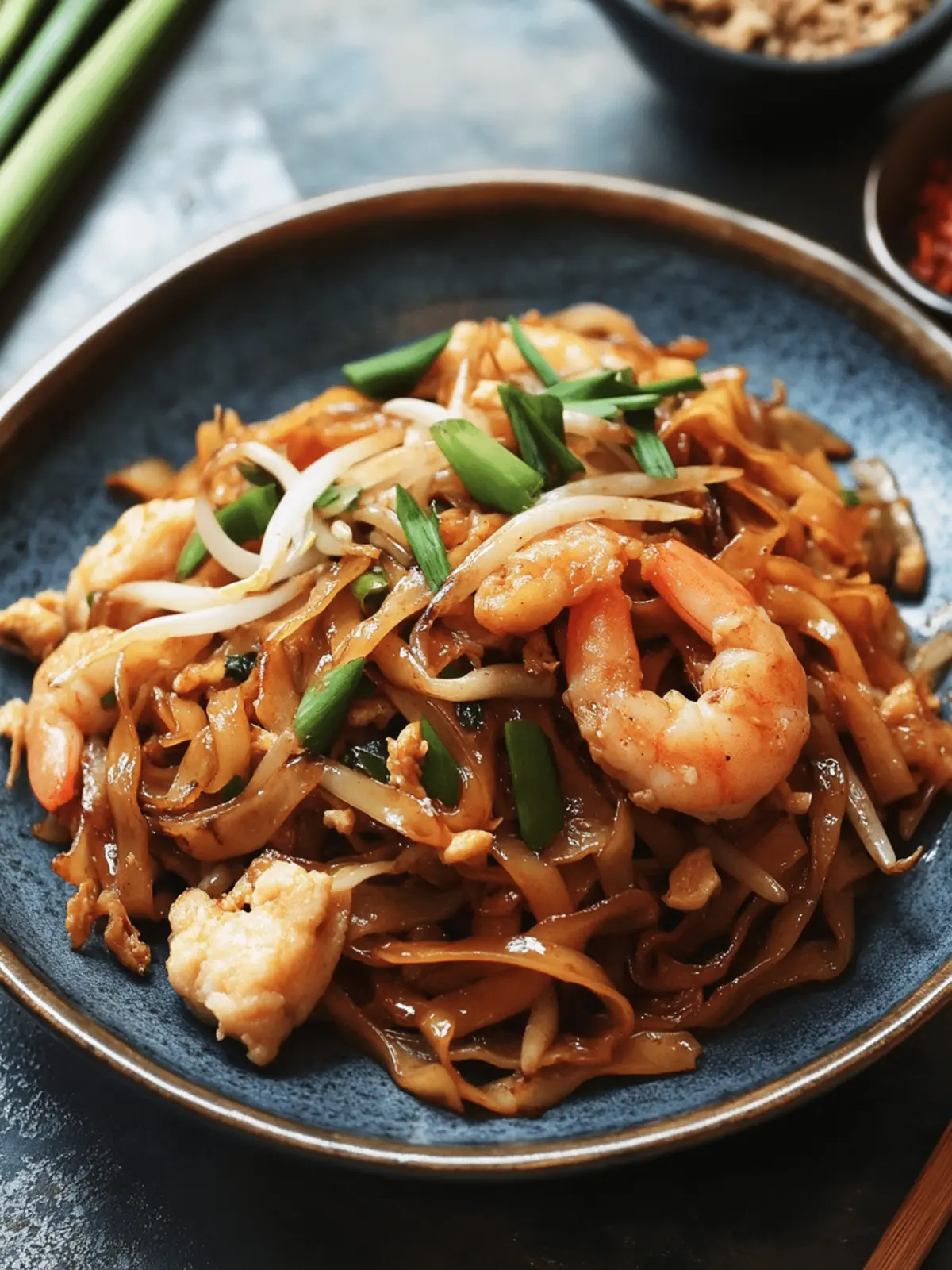
What to Serve with Malaysian Char Kway Teow?
Elevate your dining experience with perfect pairings that complement this smoky, savory noodle delight.
-
Crispy Spring Rolls: These delightful appetizers provide a crunchy contrast to the silky noodles, making each bite a textural adventure.
-
Fragrant Coconut Rice: Offering a subtle sweetness, this dish enhances the flavors of Char Kway Teow, making for a satisfying and aromatic meal.
-
Chili Garlic Green Beans: The spicy crunch of fresh green beans sautéed with garlic adds a delightful kick and bright color to your plate.
-
Pineapple Salad: A refreshing mix of sweet and tangy pineapple with a hint of lime will cleanse your palate beautifully between bites of rich noodles.
-
Thai Iced Tea: This smooth, sweetened beverage balances the savory notes of Char Kway Teow, rounding out your meal with a soothing finish.
-
Mango Sticky Rice: End your meal on a sweet note with this classic dessert; the creamy coconut and ripe mango harmonize perfectly after the bold flavors of the noodles.
Expert Tips for Malaysian Char Kway Teow
- Wok Temperature: Start with a very hot wok to achieve the authentic wok hei flavor; this smoky taste is essential to great Char Kway Teow.
- Ingredient Prep: Ensure all ingredients are prepped and ready before starting; stir-frying happens quickly and needs your full attention.
- Noodle Soaking: Don’t skip soaking your dried rice noodles sufficiently; this prevents clumping and promotes even cooking in the dish.
- Avoid Overcrowding: Cook proteins in batches if necessary; overcrowding the wok can lead to steaming rather than getting that perfect char.
- Fresh Ingredients: Use fresh garlic and vegetables for the best aroma and flavor in your Malaysian Char Kway Teow—these make all the difference!
How to Store and Freeze Malaysian Char Kway Teow
Fridge: Store leftovers in an airtight container in the fridge for up to 2 days. To maintain texture, reheat gently in a wok or skillet over low heat.
Freezer: You can freeze Malaysian Char Kway Teow for up to 1 month. Portion it into airtight freezer bags, making sure to remove as much air as possible.
Reheating: When ready to eat, thaw in the refrigerator overnight and reheat in a hot wok; add a splash of water or oil to prevent drying out.
Freshness Tip: While it’s tempting to save some for later, this dish is best enjoyed fresh for the ultimate flavor and texture experience!
Malaysian Char Kway Teow Variations
Feel free to let your creativity shine by customizing this delightful dish with exciting twists and substitutions!
-
Chicken Swap: Replace prawns with diced chicken breast; cook it thoroughly for a hearty option that still satisfies.
-
Tofu Twist: For a vegetarian option, substitute prawns with firm tofu, cubed and pan-fried until golden for added texture.
-
Spicy Kick: Increase the heat by adding extra chili paste or fresh red chilies; you can always adjust back if you prefer a milder flavor.
-
Veggie Boost: Incorporate colorful vegetables like bell peppers, carrots, or snap peas to ramp up the nutrition and add a delightful crunch.
-
Authentic Mushroom: Swap out oyster sauce for mushroom sauce to maintain that umami flavor, making it perfect for a vegetarian meal.
-
Gluten-Free Option: Use tamari instead of regular soy sauce and ensure your noodles are gluten-free for a delicious meal that everyone can enjoy.
-
Egg-Free Version: Omit the eggs entirely for a lighter dish; consider enhancing the flavor with extra garlic or aromatics instead.
-
Saucy Variation: For more sauciness, add a splash of chicken or vegetable broth when stir-frying to create a slightly more decadent noodle dish.
Explore these variations and find your favorite way to make this Malaysian classic uniquely yours!
Make Ahead Options
Preparing Malaysian Char Kway Teow ahead of time is a fantastic way to simplify your weeknight cooking while still enjoying this delicious dish! You can soak the rice noodles and make the sauce up to 24 hours in advance; just store them separately in airtight containers in the refrigerator to maintain freshness. Additionally, you can chop the garlic, slice the Chinese sausage, and prep the vegetables, keeping them ready for quick assembly. When you’re ready to serve, simply stir-fry the prepped ingredients in a hot wok, adding your prawns and noodles along with the sauce. This ensures you get that delightful smoky flavor while saving precious time during busy mealtimes.
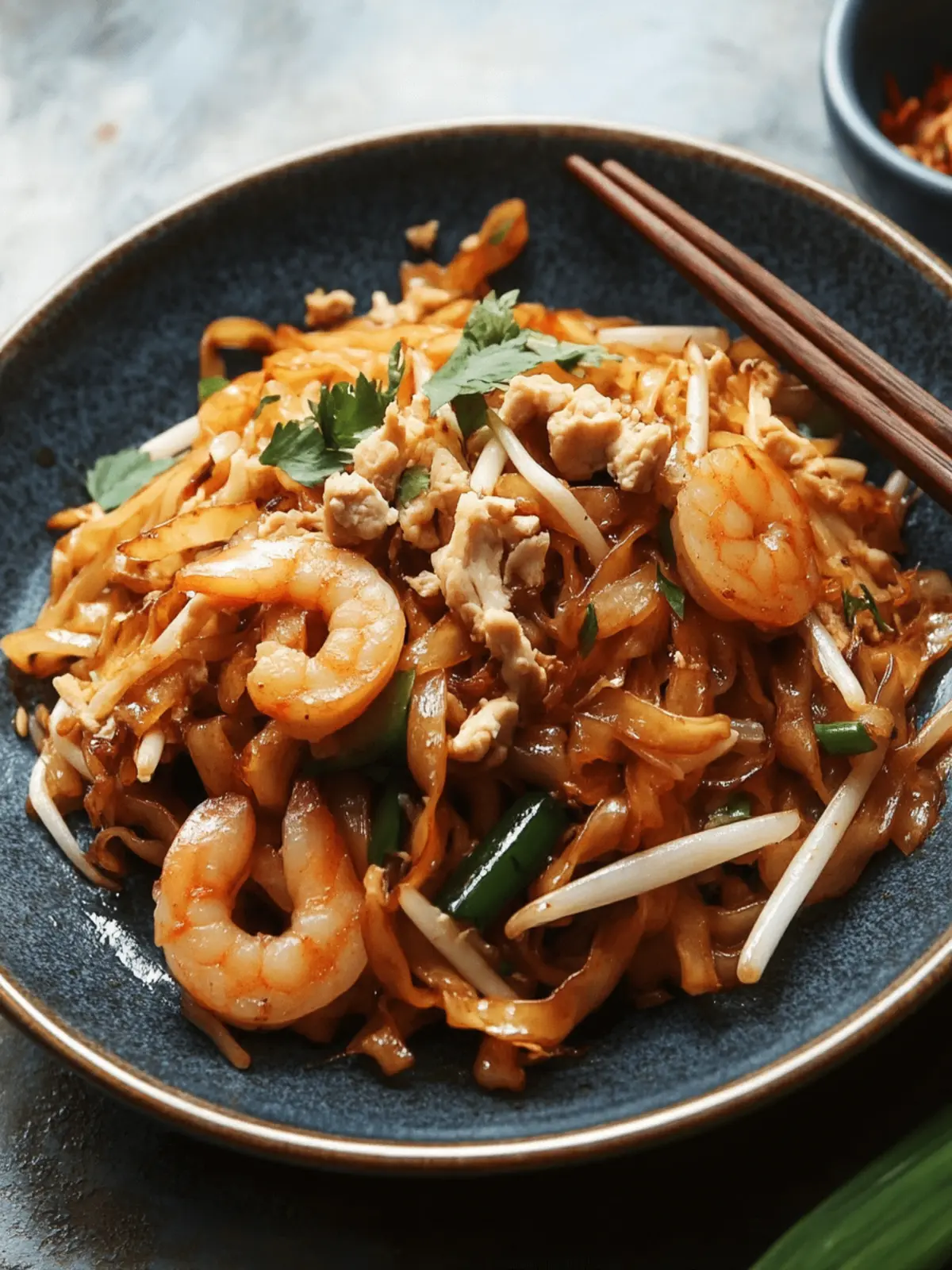
Malaysian Char Kway Teow Recipe FAQs
What type of flat rice noodles should I use for Malaysian Char Kway Teow?
I recommend using fresh flat rice noodles for the best texture, but if you only have dried ones, soak them in warm water for about 30 minutes until softened before cooking. When selecting noodles, look for those that are smooth and free of hard clumps for optimal cooking results.
How should I store leftover Malaysian Char Kway Teow?
Store any leftovers in an airtight container in the fridge for up to 2 days. When reheating, use a wok or skillet over low heat to gently warm it through, which helps retain the noodles’ texture and flavor. You may need to add a dash of water to avoid it drying out.
Can I freeze Malaysian Char Kway Teow?
Absolutely! You can freeze it for up to 1 month. Portion the dish into airtight freezer bags, squeezing out as much air as possible before sealing. When you’re ready to enjoy it again, thaw overnight in the fridge, then reheat in a hot wok with a splash of water or oil to keep it from becoming dry.
What if my noodles clump together while cooking?
If you notice your noodles clumping, it may be because they weren’t soaked long enough or were too crowded in the wok. To prevent this, make sure to soak dried noodles adequately and ensure your wok is hot before adding them. Stir-frying in smaller batches can also help maintain that perfect texture.
Are there any dietary considerations for Malaysian Char Kway Teow?
Yes, if you’re cooking for those with dietary restrictions, feel free to substitute ingredients! For a vegetarian option, swap prawns and oyster sauce with tofu and mushroom sauce respectively. Additionally, make sure to check labels on soy sauce or chili paste for gluten-free alternatives if needed.
Can I add more vegetables to my Char Kway Teow?
The more, the merrier! Adding more vegetables like bell peppers, bok choy, or cabbage not only enhances the dish’s color but also boosts nutritional value. Just remember to adjust the cooking time for these extra ingredients to ensure everything is evenly cooked but still crunchy.
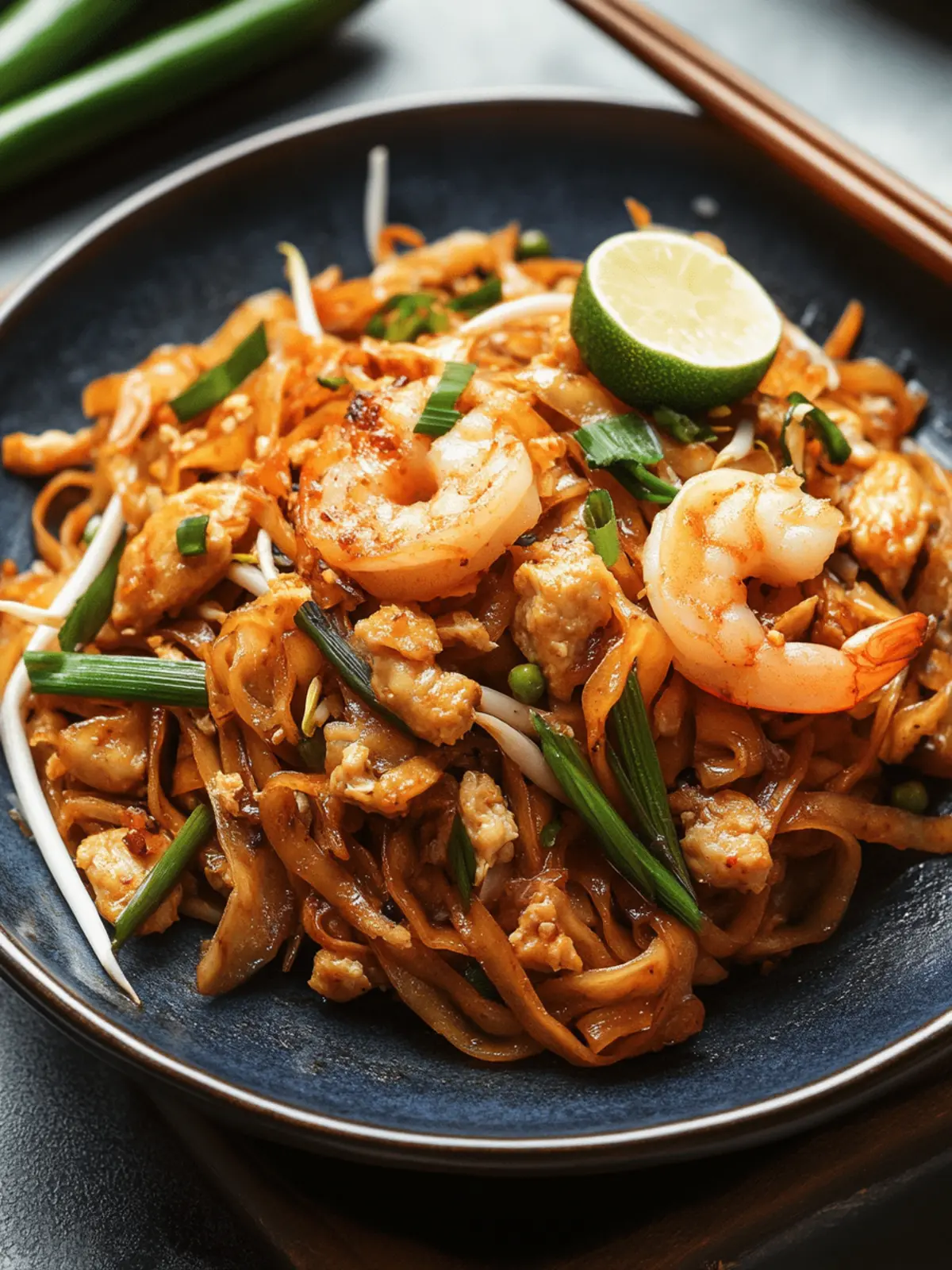
Mouthwatering Malaysian Char Kway Teow: Your New Favorite Noodle Dish
Ingredients
Equipment
Method
- In a bowl, mix the soy sauces, oyster sauce, sugar, white pepper, and water. Stir until the sugar fully dissolves.
- If using dried noodles, soak them in warm water for about 30 minutes until softened. For fresh noodles, gently separate them.
- Heat a generous amount of oil in a wok over high heat. Add the Chinese sausage and stir-fry until fragrant, then set aside.
- Add minced garlic to the wok, stir for a few seconds until aromatic, then add the prawns. Cook until pink, about 2-3 minutes, then set aside.
- Pour in the remaining oil, add the soaked noodles, and stir-fry briefly. Add the prepared sauce and mix thoroughly.
- Push the noodles to one side of the wok, crack in the eggs, and scramble lightly. Mix the eggs into the noodles.
- Return the cooked prawns and sausage to the wok. Toss in bean sprouts and chives, stir-frying until vegetables are crunchy but warm.
- Serve hot, garnished with extra chives or lime wedges, with sambal on the side.