
There’s a certain warmth that envelops me when I think of making Kuih Dadar, those delightful Malaysian pandan crepes that evoke memories of sun-soaked tropical afternoons. The vibrant green hue beckons to me, promising a sweet adventure filled with the intoxicating aroma of coconut. Just recently, I found myself craving something different after back-to-back takeout meals. As I rummaged through my pantry, I stumbled upon the ingredients for this traditional dessert, and suddenly my kitchen felt alive with the sounds of sizzling crepes and the sweet melodies of caramelizing palm sugar.
With each bite of these soft, chewy crepes, filled with warm sweetened coconut, I was transported to the bustling markets of Malaysia. Perfect for breakfast, an afternoon snack, or a festive gathering, Kuih Dadar is not just a dish; it’s an experience waiting to be shared. Trust me, once you try this recipe, you’ll find it difficult to resist the tropical flavors that linger long after the last bite. Let’s dive into this culinary journey together!

Why is Malaysian Kuih Dadar so special?
Uniqueness: Kuih Dadar is not just any dessert; it’s a beautiful blend of tropical flavors that transports you to Malaysia with every bite.
Easy to Make: With simple ingredients and straightforward steps, this recipe makes it easy to indulge in a homemade treat without the fuss.
Versatile Delight: Enjoy it as a delightful breakfast, afternoon snack, or a centerpiece at festive gatherings—there’s a place for Kuih Dadar in every meal!
Aromatic Experience: The fragrant pandan and sweet coconut filling create an inviting aroma that fills your kitchen with warmth and nostalgia.
Crowd-Pleaser: Whether you’re hosting friends or just treating yourself, this dish is sure to impress and delight all who taste it! For more irresistible recipes, check out my guide on Malaysian desserts.
Malaysian Kuih Dadar Ingredients
• For the Crepes
- Plain Flour – Essential for structure; you can use gluten-free flour for a lighter batter.
- Egg – Adds richness; substitute with a flax egg for a vegan-friendly option.
- Coconut Milk – Brings a creamy texture; almond milk works if you prefer a lighter base.
- Pandan Juice – Infuses a lovely fragrance; pandan extract can be a suitable alternative if fresh juice isn’t available.
- Salt – Enhances flavor; don’t skip this essential ingredient!
• For the Filling
- Grated Coconut – Provides the delightful, chewy texture; frozen coconut works if fresh isn’t available, just thaw it first.
- Gula Melaka (Palm Sugar) – Adds deep caramel flavors; brown sugar can be used in a pinch.
- White Sugar – Balances sweetness; adjust to taste depending on your preference.
- Pandan Leaf – A traditional addition for extra fragrance; it’s optional and should be removed post-cooking.
• For the Syrup
- Water – Needed to create the perfect syrup for the coconut filling, and no substitutes are necessary.
Embrace the vibrant flavors of Malaysian Kuih Dadar and let your kitchen become a haven of tropical delights!
How to Make Malaysian Kuih Dadar
-
Prepare pandan juice: Start by blending fresh pandan leaves with water until well mixed. Strain the mixture to extract the vibrant green juice, which gives the crepes their distinct color and flavor.
-
Mix the batter: In a bowl, whisk together plain flour, egg, coconut milk, pandan juice, and a pinch of salt. Stir until the batter is smooth and lump-free, then let it rest for about 15 minutes to hydrate.
-
Make the filling: In a saucepan over low heat, combine gula Melaka, white sugar, and water. Stir until the sugars dissolve, then add the grated coconut. Cook the mixture for 8–10 minutes until it’s sticky and caramelized.
-
Cook the crepes: Heat a greased frying pan over medium heat. Pour a ladle of the batter into the pan, tilting it to form a thin layer. Cook for about 1–2 minutes until the top looks dry, then remove the crepe.
-
Stack the crepes: Place the cooked crepes on a plate, layering them with parchment paper in between to prevent sticking.
-
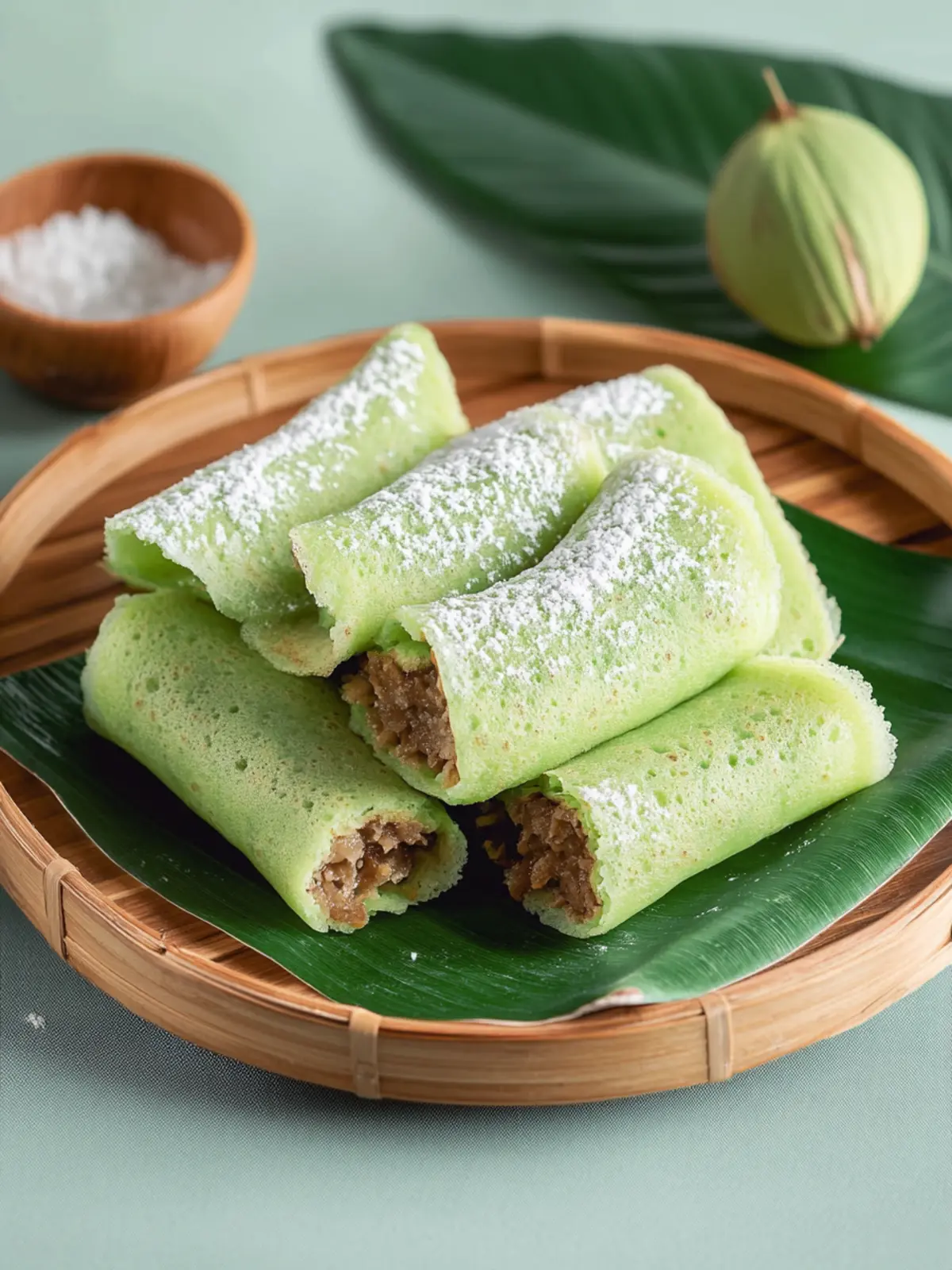
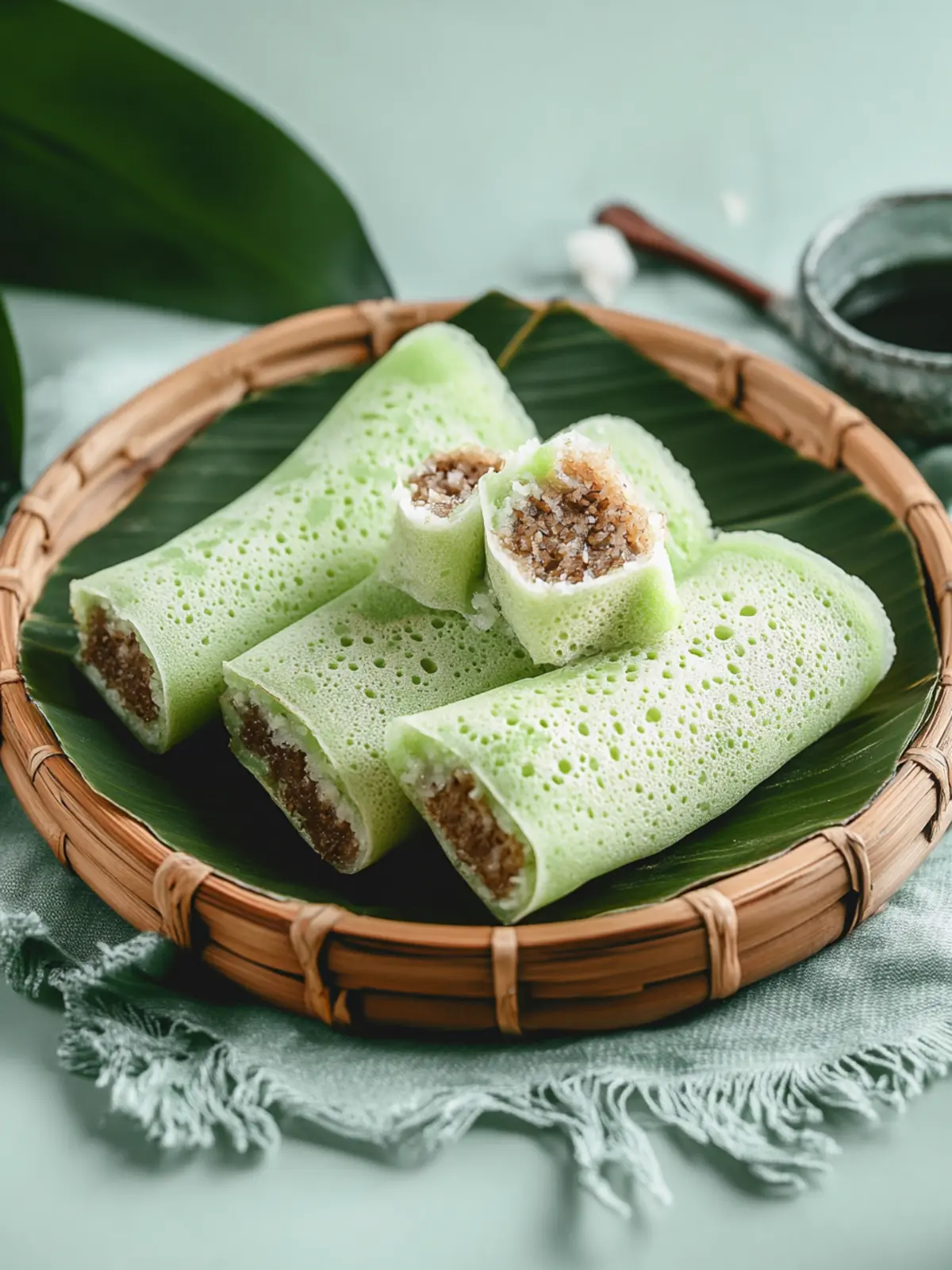
Assemble the Kuih Dadar: Take a crepe and place a generous amount of filling in the center. Fold the sides over and roll it tightly to encase the filling completely.
-
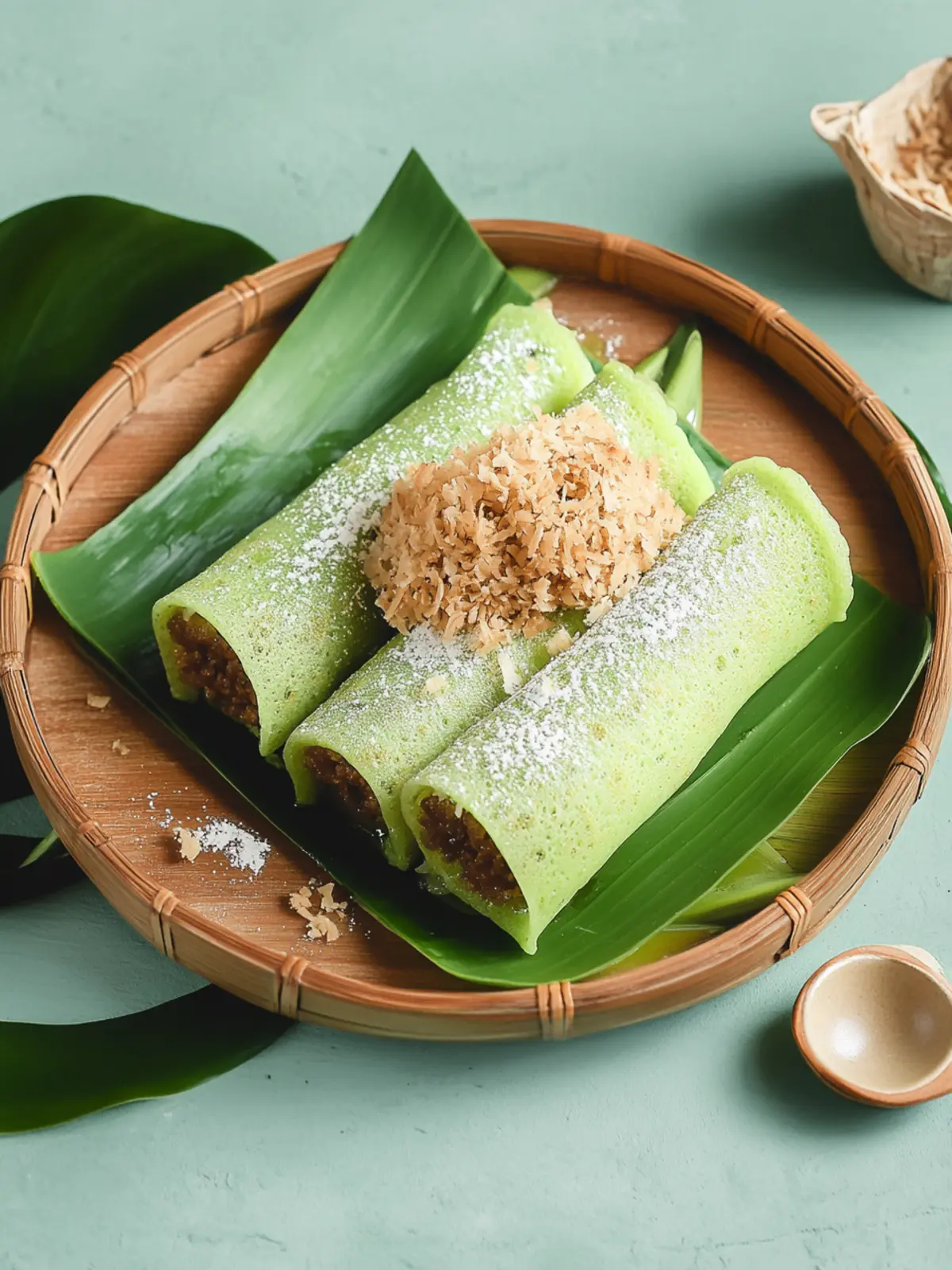
Serve and enjoy: Place the assembled Kuih Dadar seam side down on a serving plate. Optionally, garnish with desiccated coconut or drizzle with gula Melaka syrup for an extra sweet touch.
Optional: Dust with powdered sugar for a delightful finishing touch.
Exact quantities are listed in the recipe card below.
What to Serve with Malaysian Kuih Dadar?
To elevate your dining experience, pairing your Kuih Dadar with complementary dishes can create a delightful feast for your senses.
-
Coconut Sticky Rice: The sweet, chewy texture of sticky rice made with coconut milk enhances the tropical flavors and adds a satisfying chew to your meal.
-
Spicy Chicken Satay: The smoky, spicy skewers provide a savory contrast to the sweet crepes, balancing flavors beautifully for an unforgettable meal.
-
Fresh Mango Salad: Bright and refreshing, this salad adds a fruity hint that offsets the rich coconut filling, giving your palate a refreshing break.
-
Sweetened Iced Tea: A chilled cup of sweetened iced tea pairs perfectly, cutting through the richness of the Kuih Dadar with each sip, keeping things cool and satisfying.
-
Crispy Spring Rolls: The crunchiness of these spring rolls provides a delightful textural contrast to the soft, chewy crepes, making each bite an adventure.
-
Gula Melaka Syrup Drizzle: Drizzling extra syrup over your Kuih Dadar before serving heightens the sweetness and ties together the dish with a comforting touch of indulgence.
-
Tropical Fruit Platter: Serve an assortment of fresh tropical fruits like pineapple and papaya for a colorful, vibrant addition that enhances the festive feel of your meal.
Enjoy creating a harmonious feast that invites everyone to savor the joys of Malaysian Kuih Dadar together!
Expert Tips for Malaysian Kuih Dadar
-
Lump-Free Batter: Always ensure your batter is mixed thoroughly to avoid lumps; this is key for smooth, elegant crepes.
-
No Flipping Required: Cook the crepes without flipping; they should remain soft and flexible, allowing for easier rolling and better texture.
-
Monitor Filling: Keep a close eye on your coconut filling while cooking. Overcooking can cause it to become too dry, losing that delightful stickiness.
-
Avoid Sticking: Stack your cooked crepes with parchment paper in between to prevent them from sticking together, ensuring a flawless assembly.
-
Experiment with Flavors: Feel free to play with the fillings! Adding sweetened red bean paste or crushed nuts can elevate your Malaysian Kuih Dadar to new heights.
Make Ahead Options
Kuih Dadar is perfect for busy home cooks looking to indulge in a delightful treat without the last-minute rush! You can prepare the pandan crepe batter and the coconut filling up to 24 hours in advance. Simply mix the batter and store it in the refrigerator, covered tightly to prevent drying out. The coconut filling can also be made ahead and refrigerated—just ensure it’s in an airtight container. When you’re ready to serve, simply cook the crepes and fill them with the prepped coconut mixture. This way, you’ll enjoy fresh, warm Kuih Dadar that’s just as delicious with minimal effort.
Malaysian Kuih Dadar Variations
Feel free to unleash your creativity and customize this beloved recipe to suit your taste buds and dietary needs.
- Vegan Swap: Replace the egg with a flax egg for a completely plant-based version without compromising on flavor.
- Gluten-Free Option: Use a gluten-free flour blend to make the crepes suitable for those avoiding gluten.
- Nutty Delight: Incorporate crushed almonds or cashews into the coconut filling for an added crunch and a nutty flavor.
- Fruity Surprise: Add diced mango or ripe banana to the grated coconut filling for a fresh, fruity twist that brightens each bite.
- Spiced Up: Stir in a pinch of cinnamon or cardamom to the coconut filling for a warm, aromatic kick that complements the sweetness.
- Chocolate Indulgence: Drizzle melted dark chocolate over the finished Kuih Dadar for a decadent dessert option that chocolate lovers will adore.
- Savory Version: Swap the coconut filling for spiced mashed potatoes or sautéed vegetables for a savory take that can be served as a hearty snack.
- Heat It Up: Add finely chopped chili to the filling for those who enjoy a little kick of spice in their sweet treats.
How to Store and Freeze Malaysian Kuih Dadar
Refrigerator: Keep leftovers in an airtight container in the fridge for up to 2 days to maintain freshness and flavor.
Freezer: Wrap Kuih Dadar tightly in plastic wrap or aluminum foil, then place in a freezer-safe bag to store for up to 3 months. Thaw overnight in the fridge before serving.
Reheating: Gently reheat in a non-stick skillet over low heat for about 2 minutes on each side until warmed through. This keeps the crepes soft and the filling delightfully gooey.
Best Enjoyed Fresh: Although these treats can be stored, Kuih Dadar is always best enjoyed fresh to savor the rich flavors and textures.
Malaysian Kuih Dadar Recipe FAQs
What should I look for when selecting pandan leaves?
Absolutely! When choosing pandan leaves, look for vibrant green leaves with no dark spots or any signs of wilting. Fresh leaves should feel firm and have a fragrant aroma. Avoid any that appear dried out, as that can affect the flavor of your Kuih Dadar.
How should I store leftover Kuih Dadar?
I often recommend storing any leftover Kuih Dadar in an airtight container. They can be kept in the refrigerator for up to 2 days. Just make sure to avoid any moisture to preserve their delightful texture and flavor!
Can I freeze Kuih Dadar?
Yes! To freeze your delicious Kuih Dadar, tightly wrap each rolled crepe in plastic wrap or aluminum foil, and then place them in a freezer-safe bag. They can be stored for up to 3 months. When you’re ready to enjoy them, simply thaw in the fridge overnight, and reheat gently in a non-stick skillet for 2 minutes on each side until warmed through.
Why is my coconut filling too dry?
Very good question! If your filling turns out dry, it’s usually due to overcooking. Make sure to monitor it closely while on the stove, stirring constantly until the coconut absorbs the syrup and becomes sticky, but not dry. Aim for that gooey consistency for the best treat!
Is Kuih Dadar safe for people with dietary restrictions?
Definitely, Kuih Dadar can be made accommodating for various diets! It’s vegetarian-friendly, and if you’d like to make it vegan, simply substitute the egg with a flax egg. Also, if you’re gluten-sensitive, you can use gluten-free flour in the batter. Just be sure to check the ingredients for any potential allergens like coconut.
Can I use a different filling in Kuih Dadar?
The more the merrier! Kuih Dadar is quite versatile. You can experiment with fillings like sweetened red bean paste or durian for a unique twist. Just adjust the sweetness of the filling according to your taste preference, and have fun with it!
Malaysian Kuih Dadar: Irresistible Pandan Crepes with Coconut Filling
Ingredients
Equipment
Method
- Prepare pandan juice: Blend fresh pandan leaves with water until well mixed. Strain to extract juice.
- Mix the batter: In a bowl, whisk together plain flour, egg, coconut milk, pandan juice, and salt. Let it rest for about 15 minutes.
- Make the filling: Combine gula Melaka, white sugar, and water in a saucepan over low heat. Stir until dissolved, then add grated coconut and cook for 8-10 minutes.
- Cook the crepes: Heat a greased frying pan and pour in a ladle of batter, cooking it until dry on top, then remove.
- Stack the crepes: Layer cooked crepes with parchment paper in between to prevent sticking.
- Assemble the Kuih Dadar: Place filling in a crepe, fold the sides over and roll tightly.
- Serve and enjoy: Place Kuih Dadar seam side down, optionally garnish with desiccated coconut or gula Melaka syrup.