
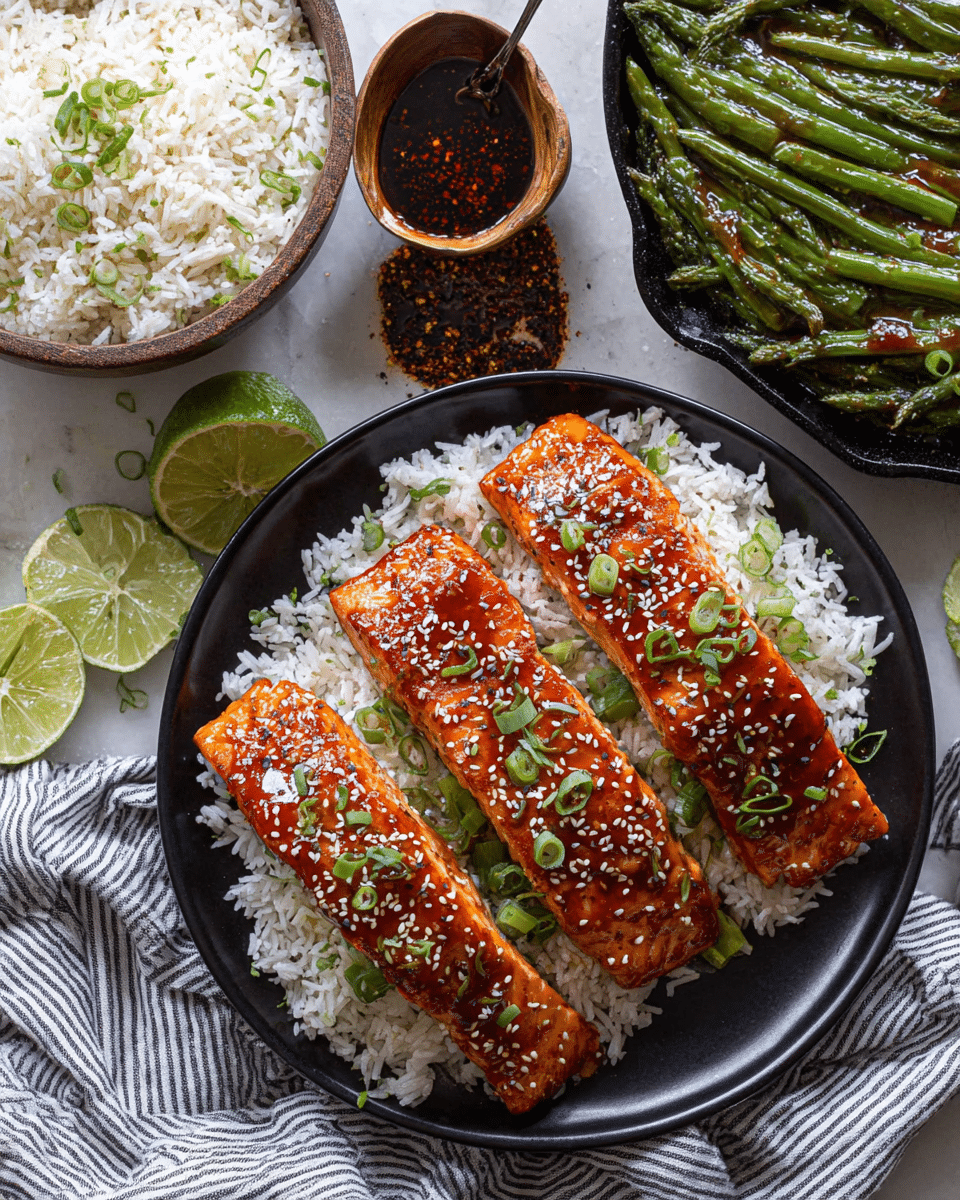
This Gochujang Salmon is a beautifully vibrant dish that marries rich, spicy, and slightly sweet flavors. The glaze caramelizes during baking, leaving the salmon with a slightly crispy exterior, while the flesh remains tender and juicy.
Perfect for a quick weeknight dinner, this dish will bring bold Korean-inspired flavors to your table. The combination of gochujang, honey, and soy sauce provides a unique depth of flavor that pairs wonderfully with the savory taste of the salmon. Serve it alongside rice, sautéed vegetables, or a light salad for a complete, satisfying meal. This recipe is a great way to bring something new and exciting to your regular dinner rotation!
Full Recipe:
-
4 salmon fillets
-
2 tablespoons gochujang (Korean chili paste)
-
1 tablespoon honey
-
1 tablespoon soy sauce
-
1 tablespoon rice vinegar
-
1 teaspoon sesame oil
-
2 cloves garlic, minced
-
1 teaspoon grated ginger
-
1 tablespoon sesame seeds
-
2 scallions, chopped
-
Salt and pepper to taste
Directions:
-
Preheat your oven to 375°F (190°C).
-
In a small bowl, whisk together gochujang, honey, soy sauce, rice vinegar, sesame oil, garlic, and ginger.
-
Season the salmon fillets with salt and pepper, then place them on a baking sheet lined with parchment paper.
-
Spoon the gochujang mixture evenly over the salmon fillets, making sure they are well-coated.
-
Bake the salmon for 12-15 minutes, or until it flakes easily with a fork.
-
Remove the salmon from the oven, and sprinkle with sesame seeds and chopped scallions before serving.
Prep Time: 10 minutes | Cooking Time: 15 minutes | Total Time: 25 minutes
Kcal: 250 kcal | Servings: 4 servings
Korean Gochujang Salmon: A Flavor Explosion in 30 Minutes
The Gochujang Salmon recipe is a quick and easy meal that combines the rich, savory flavors of salmon with the intense heat and sweetness of gochujang, a popular Korean chili paste. This simple dish, ready in less than 30 minutes, offers a delicious balance of spicy, sweet, and umami flavors, making it perfect for a weeknight dinner or an impressive meal for guests.
What Makes Gochujang Salmon Special?
Gochujang, a thick, red chili paste, is a key ingredient in many Korean dishes, providing a distinct spicy-sweet kick. In this recipe, the gochujang is transformed into a flavorful glaze, coating the salmon fillets and bringing them to life with vibrant, bold flavors. The salmon’s crispy skin pairs perfectly with the rich, spicy glaze, making every bite a perfect balance of flavors and textures.
This dish is not only delicious but also highly nutritious. Salmon is an excellent source of protein and omega-3 fatty acids, promoting heart health and offering anti-inflammatory benefits. Whether you’re following a healthy lifestyle or simply craving a flavorful, satisfying meal, Gochujang Salmon checks all the boxes.
Preparing the Salmon
The key to making this dish irresistible is ensuring the salmon stays moist and tender, while the skin crisps up perfectly. A quick sear in a hot skillet followed by a brief stint in the oven is the secret. Searing the salmon on the stovetop for just 3 minutes locks in moisture, and finishing it in the oven allows the glaze to caramelize without overcooking the fish.
While this recipe calls for salmon fillets with skin, you can also use skinless salmon if you prefer. The crispy skin adds a delightful texture, but the glaze and seasoning are so flavorful that the dish remains delicious even without it.
The Versatility of Gochujang
Gochujang is a versatile ingredient that pairs well with various proteins, not just salmon. If you enjoy this recipe, feel free to try the gochujang glaze on chicken, pork, or tofu for a similarly flavorful meal. The glaze can also be used as a condiment or marinade for grilled meats or vegetables, giving them a sweet and spicy kick.
Serving Ideas for Gochujang Salmon
While Gochujang Salmon is delicious on its own, it can easily be paired with a variety of side dishes to create a complete meal. For a lighter option, serve the salmon over a bed of mixed greens or alongside a simple cucumber salad. If you’re in the mood for something heartier, serve the salmon with steamed rice, sautéed vegetables, or even noodles for a satisfying dinner.
Leftovers can be repurposed into a variety of dishes. Try flaking the salmon and adding it to a rice bowl for a quick lunch, or mix it with some Kewpie mayo and serve it with crackers for a tasty snack. The flavor profile is versatile enough to be enjoyed in many different forms, making this dish a great option for meal prep.
Tips for Cooking Perfect Gochujang Salmon
-
Choose Fresh Salmon: The quality of your salmon is key to achieving the best flavor and texture. Look for vibrant, fresh fillets with no fishy smell. If using frozen salmon, make sure it’s properly thawed before cooking.
-
Adjust the Heat: Gochujang paste has a varying level of heat depending on the brand and type. If you prefer a milder flavor, reduce the amount of gochujang used. Conversely, if you love a spicy kick, add more red pepper flakes or increase the gochujang.
-
Monitor Cooking Temperature: The best way to know when your salmon is perfectly cooked is to use a meat thermometer. Aim for an internal temperature of 125-135°F for medium to medium-rare salmon, as the fish will continue to cook slightly after being removed from heat.
Storing and Reheating Gochujang Salmon
If you happen to have leftovers, Gochujang Salmon can be stored in an airtight container in the refrigerator for 3-4 days. To maintain the salmon’s moisture when reheating, do so gently. Reheat in a skillet with a splash of water or in the microwave under a damp paper towel to keep the fish from drying out.
Conclusion: A Must-Try Dish for Any Spice Lover
Gochujang Salmon is a flavorful, satisfying dish that brings the bold flavors of Korean cuisine to your kitchen in just 30 minutes. The sweet and spicy glaze elevates the salmon to new heights, creating a meal that’s both quick and exciting. Whether you’re a fan of seafood or just looking to spice up your weeknight dinners, this recipe is sure to become a go-to in your cooking repertoire. Plus, the versatility of the dish means you can repurpose leftovers into new and creative meals. So, go ahead—grab a piece of salmon and a jar of gochujang, and let the magic begin!