
The vibrant aroma of tangy cabbage fills my kitchen as I prepare to make a batch of traditional German sauerkraut, a delightful fermented dish that has stood the test of time. Just a couple of simple ingredients—crunchy green cabbage and coarse kosher salt—transform into a probiotic-rich masterpiece that enhances everything from sausages to hearty stews. I stumbled upon this recipe during a cozy afternoon when I needed a tasty way to deepen my meals and improve my gut health.
As the days pass, I can’t help but check on my fermenting treasure, eager to see how it evolves into a crunchy, zesty accompaniment that brightens even the heaviest dishes. Packed with flavor and health benefits, this sauerkraut recipe is not only easy to make but also a fantastic way to connect with traditional culinary practices. So roll up your sleeves, and let’s dive into the satisfying world of homemade fermented cabbage that promises to revolutionize your mealtime!
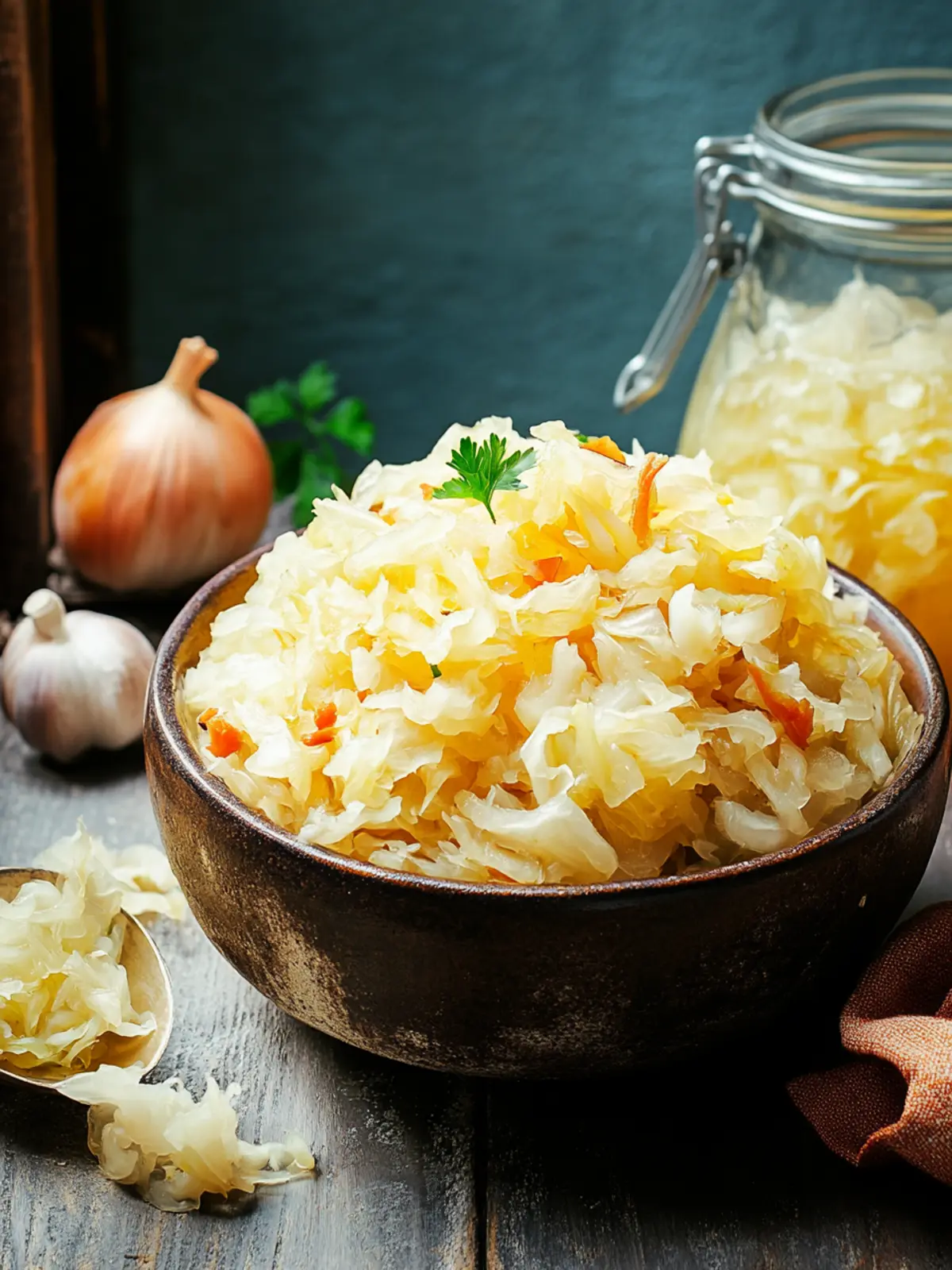
Why will you love German Sauerkraut?
Flavorful and Unique: This German Sauerkraut introduces an addictive tang that elevates any meal.
Probiotic Powerhouse: Packed with gut-friendly probiotics, it supports digestion and overall health.
Simplicity Defined: With just cabbage and salt, it’s incredibly easy to prepare—perfect for beginners!
Versatile Pairing: Serve alongside sausages, in sandwiches, or on salads; the options are endless.
Budget-Friendly: Utilizing minimal ingredients, it’s an affordable way to enjoy a classic dish.
Get ready to impress family and friends with a homemade delight that’s both nostalgic and healthful!
German Sauerkraut Ingredients
• Get ready to create this tangy wonder!
For the Cabbage
• Green Cabbage – Use a medium head (about 1.5 kg), finely shredded for the best texture.
For the Brine
• Kosher Salt – Essential for fermentation; opt for non-iodized salt to avoid unwanted flavors.
• Filtered or Distilled Water – Necessary to ensure the cabbage is fully submerged during fermentation.
For Flavoring (Optional)
• Caraway Seeds – Add these for a distinct traditional flavor that complements the tang of the sauerkraut.
Dive into the fermentation process with these simple ingredients and enjoy the delicious rewards of homemade German Sauerkraut!
How to Make German Sauerkraut
-
Prepare Cabbage: Start by washing your cabbage and discarding any outer leaves that may be damaged. Then, quarter, core, and finely shred the medium head of cabbage for the perfect texture.
-
Salt Cabbage: Place the shredded cabbage in a large mixing bowl and generously sprinkle it with kosher salt. Massage the cabbage for about 5-10 minutes until it softens and releases its liquid.
-
Add Caraway Seeds: If you’d like to incorporate that traditional flavor, now is the time to mix in caraway seeds. Taste to adjust the salt as preferred, creating a balanced brine.
-
Pack Jar: Transfer the cabbage mixture into a clean glass jar or fermentation crock. Press it down firmly to release any trapped air and ensure it’s fully submerged in its brine, leaving some headspace for gas expansion.
-
Ferment: Loosely cover the jar with a lid or clean kitchen towel, and place it in a cool, dark area (around 18-22°C / 65-72°F). Check daily to ensure the cabbage remains submerged and skim any foam that forms.
-
Taste and Store: After 1-4 weeks of fermenting, regularly taste your sauerkraut until it reaches your desired level of tanginess. Once it’s perfect, transfer the sauerkraut to smaller jars and store it in the refrigerator.
Optional: For an extra burst of flavor, try adding garlic or dill when you pack your jar.
Exact quantities are listed in the recipe card below.
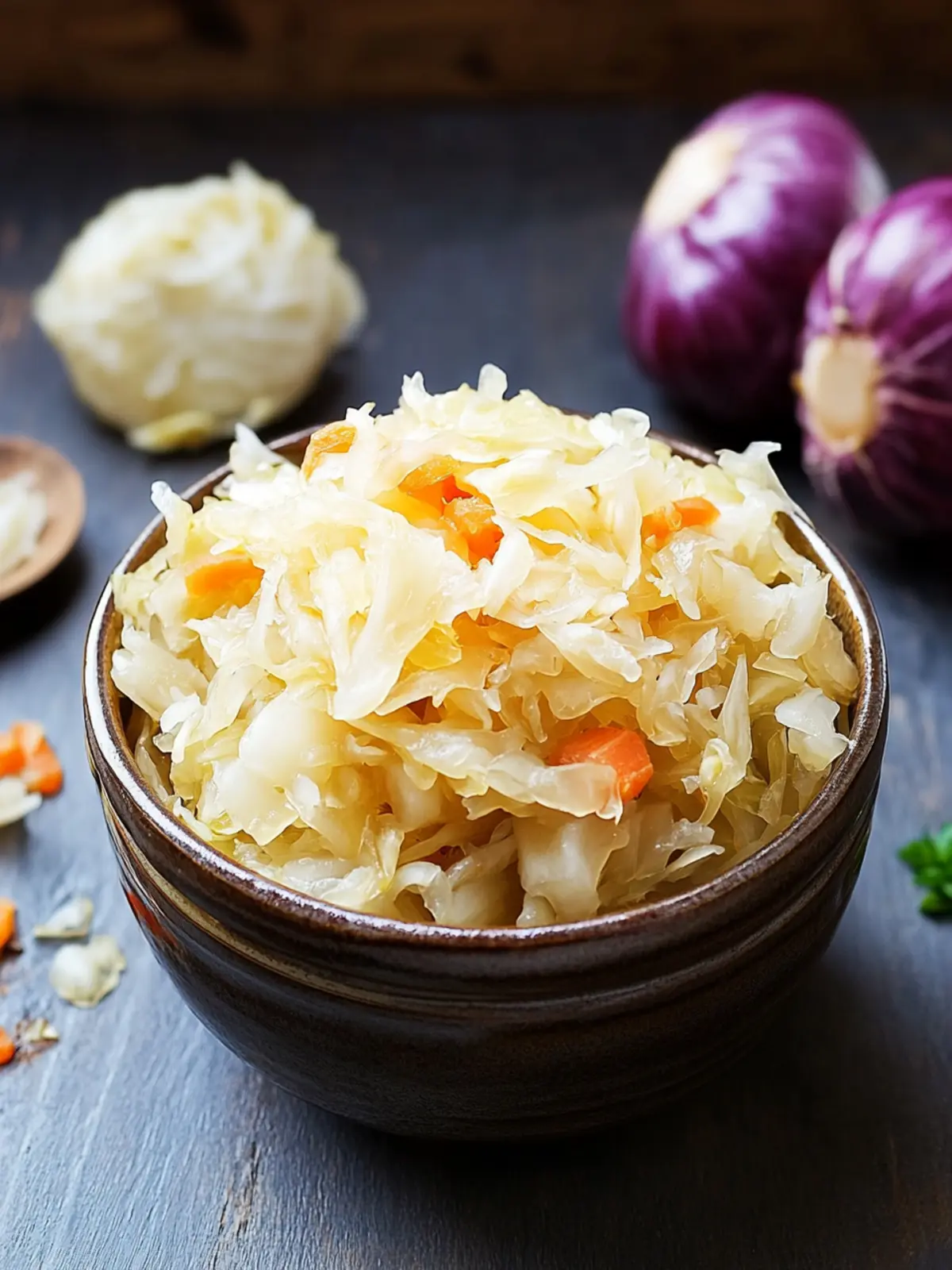
Expert Tips for German Sauerkraut
-
Sanitize Tools: Ensure all utensils and jars are sanitized to prevent unwanted bacteria during fermentation. Cleanliness is key to success!
-
Submerge Cabbage: If you notice the cabbage isn’t fully covered by the brine, add filtered water cautiously. Keeping it submerged is crucial for optimal fermentation of your German sauerkraut.
-
Loose Lid: Avoid sealing the jar tightly; gases need to escape during fermentation. A loose lid or cloth will help maintain the right environment.
-
Regular Tasting: Taste your sauerkraut every few days to find your ideal tanginess. Fermentation time can vary, leading to delightful taste surprises!
-
Storing Safely: Once fermented, transfer your sauerkraut to smaller sealed containers and store in the fridge, where it will stay fresh for several months.
These tips will ensure you create a delicious, tangy German sauerkraut that enhances your meals and supports gut health!
Make Ahead Options
These German sauerkraut preparations are perfect for busy home cooks seeking efficient meal planning! You can accomplish the initial steps of shredding the cabbage and salting it up to 24 hours in advance. Just massage the cabbage with kosher salt until it releases liquid, then pack it into a jar or fermentation crock, ensuring it’s submerged in its brine to prevent browning. When you’re ready to begin the fermentation process, cover the jar loosely and let it sit in a cool, dark area. Simply check it daily and taste until it reaches your preferred tanginess—a deliciously probiotic-rich side dish awaits you with minimal last-minute effort!
How to Store and Freeze German Sauerkraut
Fridge: Store your fermented German sauerkraut in a sealed container in the refrigerator for up to 6 months. This keeps it fresh while the flavors continue to develop.
Freezer: For long-term storage, freeze smaller portions in airtight containers or freezer bags for up to 8 months. Thaw in the fridge before using.
Room Temperature: After opening, do not leave sauerkraut at room temperature for more than 2 hours to avoid spoilage.
Reheating: Unlike some dishes, sauerkraut is typically enjoyed cold. However, if you prefer it warm, gently heat it on the stove without boiling to help preserve its probiotics.
Variations & Substitutions for German Sauerkraut
Explore the tempting possibilities to personalize your German Sauerkraut recipe and make it uniquely yours!
-
Spicy Kick: Add chopped jalapeños or red pepper flakes for an exciting heat that will give your sauerkraut a delicious kick.
-
Herb Infusion: Stir in fresh dill or thyme to elevate the flavor profile with earthy undertones that complement the tanginess beautifully.
-
Sweetness Boost: Mix in shredded carrots or diced apples before fermenting for a subtle sweetness that balances the tang.
-
Curry Twist: Incorporate a teaspoon of curry powder for a bold twist, bringing a unique flavor that dances on your palate.
-
Vegan-Friendly: For a completely plant-based option, skip any animal-derived additives in dishes that accompany the sauerkraut, making it versatile and approachable for everyone!
-
Classic Garlic: Add minced garlic cloves during the packing stage for a robust flavor that pairs wonderfully with the fermentation process.
-
Regional Flare: Experiment with regional ingredients like fennel seeds or even sauerkraut spices popular in regional variations, enhancing its authenticity.
-
Lively Zest: Add lemon juice or zest after fermentation to brighten the flavors and give it a refreshing lift that mirrors sunny days in your kitchen.
These delightful variations not only open up new flavor horizons but also encourage you to explore your culinary creativity while crafting a heartfelt dish. Happy fermenting!
What to Serve with German Sauerkraut?
Elevate your meals with the perfect pairings that highlight the zesty tang and probiotic benefits of your homemade kraut.
-
Savory Sausages: The rich, meaty flavors of bratwurst or kielbasa balance beautifully with the tart crunch of your sauerkraut.
-
Hearty Pork Knuckle: Roast pork knuckle, with its crispy skin and tender meat, creates a delightful contrast to the sharpness of your kraut.
-
Fresh Rye Bread: A slice of dense, nutty rye bread offers a wholesome backdrop, perfectly complementing the tangy bite of the sauerkraut.
-
Creamy Potato Salad: The creaminess of a traditional potato salad can soften the acidity of the sauerkraut, creating a satisfying flavor harmony.
-
Grilled Veggies: Tossed with olive oil and spices, grilled bell peppers or zucchini bring a smoky element that pairs well with the fermented flavors.
The possibilities are endless! Explore these combinations to discover how German Sauerkraut can brighten and transform your meals.

German Sauerkraut Recipe FAQs
What type of cabbage should I use for German sauerkraut?
The best choice is a medium head of green cabbage, around 1.5 kg. It should be finely shredded to achieve the perfect texture and flavor balance for your homemade sauerkraut.
How long can I store my sauerkraut in the refrigerator?
Once fermented, store your German sauerkraut in a sealed container in the fridge for up to 6 months. This will keep it fresh while allowing the flavors to continue evolving.
Can I freeze German sauerkraut?
Absolutely! For long-term storage, place smaller portions in airtight containers or freezer bags and freeze for up to 8 months. When you’re ready to enjoy it, just thaw it in the fridge overnight for the best results.
What if my sauerkraut isn’t fully submerged during fermentation?
If you notice that the cabbage isn’t fully covered by brine, feel free to add filtered or distilled water cautiously. This is crucial, as it ensures optimal fermentation by preventing exposure to air, which can lead to spoilage.
Is sauerkraut safe for pets, and can I share it with my dog?
While sauerkraut is safe for dogs in small amounts, it’s best to avoid it if your pet has digestive issues or a sensitive stomach. Always consult your veterinarian before introducing new foods to your pet’s diet.
What signs indicate my homemade sauerkraut has gone bad?
Look out for off-smelling or sour odors beyond the natural tanginess, a mushy texture, or dark spots all over the cabbage. If you encounter any of these signs, it’s best to discard the batch to ensure your safety and health.
These FAQs can help guide your journey into making German sauerkraut a delightful staple in your culinary repertoire!

German Sauerkraut: Easy Fermented Cabbage for Gut Health
Ingredients
Equipment
Method
- Wash the cabbage and discard damaged outer leaves. Quarter, core, and finely shred the cabbage.
- Place shredded cabbage in a large bowl and sprinkle with kosher salt. Massage for 5-10 minutes until softened.
- Mix in caraway seeds if desired. Adjust salt for balance.
- Transfer the mixture into a jar or crock, pressing down to release air and ensure it's submerged.
- Cover loosely with a lid or towel and store in a cool, dark area. Check daily.
- Taste after 1-4 weeks, and once desired tang is reached, package in smaller jars and refrigerate.