
When the first chill of winter begins to settle in, I find myself reaching for comforting recipes that warm both the heart and the soul. One such dish is sambar—a soulful South Indian lentil and vegetable stew that has become a cherished staple in my kitchen. There’s nothing quite like the fragrant blend of toor dal, seasonal vegetables, and aromatic spices, simmering gently on the stove, filling the air with a rich, inviting aroma.
This recipe not only embodies wholesomeness but also celebrates the culinary heritage of South India. With its balance of tangy tamarind and earthy lentils, sambar is versatile enough to pair flawlessly with fluffy rice, crispy dosa, or soft idli. Whether you’re a seasoned chef or a home cook simply looking to escape the monotony of fast food, this authentic sambar will delight your taste buds and nourish your spirit. Join me as we embark on this flavorful journey, transforming simple ingredients into a comforting, vibrant dish that’s bound to become a favorite in your home too!
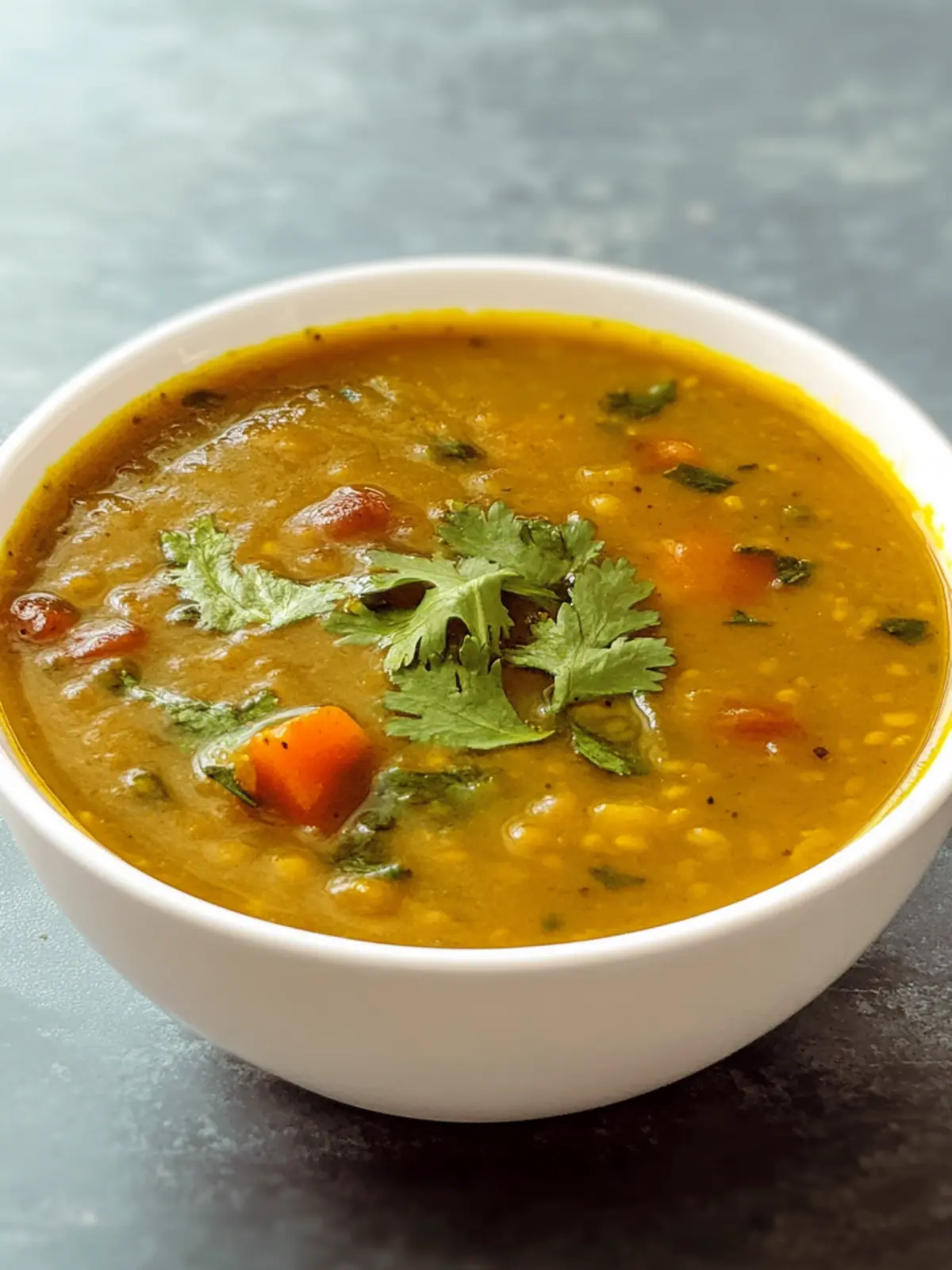
Why is Indian Sambar so beloved?
Comforting Warmth: Indian sambar is the ultimate hug in a bowl, perfect for those chilly days when you crave something soothing.
Wholesome Nutrition: Packed with protein, fiber, and vitamins from lentils and veggies, it’s a guilt-free indulgence.
Versatile Pairing: Enjoy it with rice, dosa, or idli—this stew complements a variety of dishes, keeping every meal exciting!
Rich, Tangy Flavor: The unique blend of spices and tamarind creates an irresistible depth of taste that keeps you coming back for more.
Easy & Quick: Whip it up in just under an hour, making it an ideal meal for busy weeknights.
Cultural Heritage: Sambar is not just food; it’s a gateway to experiencing the vibrant culinary traditions of South India.
Indian Sambar Ingredients
For the Stew
• Toor Dal – This base protein is essential for the stew’s creamy texture; red lentils can be used for a quicker option.
• Mixed Vegetables – Adds nutrition and texture; feel free to use seasonal options like drumsticks, carrots, or okra.
• Onion – Enhances flavor depth with its sweetness when sautéed; yellow onions are preferred for the best taste.
• Tomato – Introduces a lovely balance of acidity and sweetness; you can substitute with a splash of tomato puree if needed.
• Tamarind Pulp – Provides the signature sourness of authentic Indian sambar; lemon juice is a suitable alternative although flavor will vary.
For the Spices
• Sambar Powder – This unique spice blend defines the dish, with coriander and cumin; using freshly ground spices ensures maximum flavor.
• Turmeric Powder – Adds a beautiful color and earthy taste; there is no direct substitute, but curry powder can mimic some aspects.
• Salt – Essential for balancing all the flavors; adjust to your taste preference.
For Tempering
• Sesame Oil – The preferred oil for tempering, lending a nutty undertone; vegetable oil can be substituted if needed.
• Mustard Seeds – Adds aromatic splendor; these should splutter in the hot oil for toasting.
• Cumin Seeds – A warm, earthy flavor that enhances the dish; lightly toast for a richer aroma.
• Dried Red Chillies – Infuses heat; adjust the number based on your spice tolerance.
• Curry Leaves – Offers a distinct flavor; use fresh if possible for the brightest taste.
• Asafoetida (Hing) – A pinch adds umami depth to your tempering, enhancing the overall flavor profile.
For Garnish
• Fresh Coriander Leaves – Sprinkle on top for a refreshing finish and a pop of color.
How to Make Indian Sambar
-
Rinse the Dal: Begin by rinsing the toor dal under cold water until the water runs clear. This removes excess starch, ensuring a lighter texture. Add the washed dal to a pressure cooker with water and turmeric, cooking for 4–5 whistles until soft.
-
Soak Tamarind: While the dal is cooking, soak tamarind pulp in warm water. After about 10 minutes, squeeze to extract the juice and strain, discarding any solids. This will give your sambar its signature tang.
-
Cook Vegetables: In a large saucepan, combine mixed vegetables with water and a pinch of salt. Simmer over medium heat until they are just tender, typically around 10–15 minutes, keeping their color vibrant.
-
Combine Ingredients: Once the dal is cooked, add it to the saucepan with the simmered vegetables, mixing well. Adjust the consistency with additional water if needed, aiming for a stew-like thickness.
-
Add Flavorings: Stir in the tamarind extract, sambar powder, and chopped tomato. Allow the mixture to cook for another 10–12 minutes, letting the flavors meld beautifully together.
-
Prepare Tempering: In a small pan, heat the sesame oil over medium heat. Add mustard seeds, and once they splutter, add cumin seeds, dried red chilies, curry leaves, and asafoetida. Sauté until fragrant, about 2–3 minutes.
-
Finish the Dish: Pour the sizzling tempering over the simmering sambar. Stir gently and let simmer for an additional 5 minutes, allowing those aromatic flavors to infuse throughout the dish.
-
Garnish and Serve: Finish with a sprinkle of fresh coriander leaves. Serve hot, optionally drizzling with melted ghee for an added layer of richness.
Optional: Pair with freshly made dosa or steamed rice for a complete meal.
Exact quantities are listed in the recipe card below.
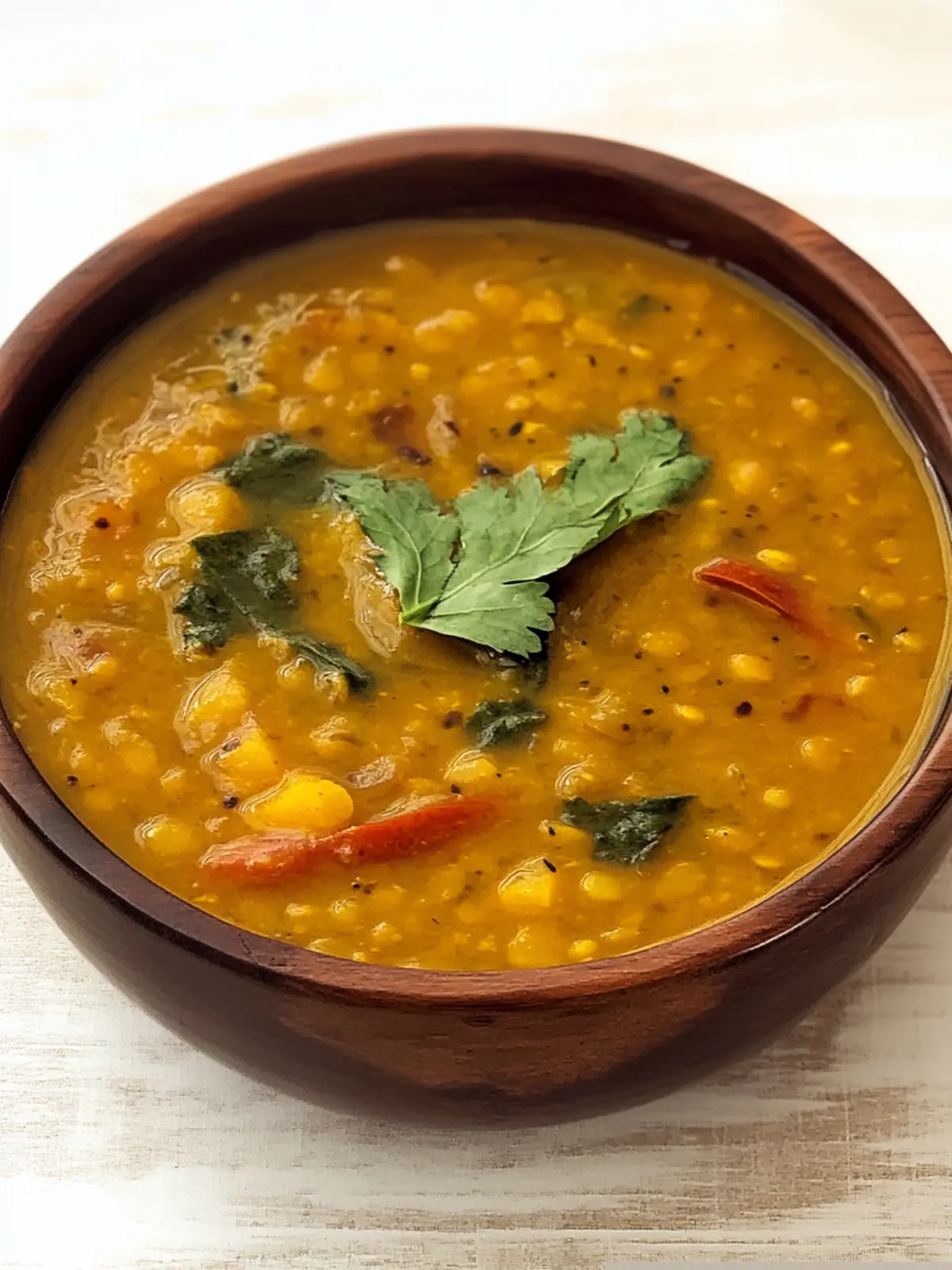
Indian Sambar Variations
Feel free to let your creativity flourish by making this recipe your own—delight your senses with these flavorful twists!
- Sweet Twist: Add a tablespoon of jaggery for a touch of natural sweetness, balancing the tanginess beautifully.
- Protein Boost: Toss in cooked chickpeas or paneer cubes for added richness and protein, turning your sambar into a heartier dish.
- Spice it Up: Increase the number of dried red chilies or add fresh green chilies for a fiery kick that spice lovers will appreciate.
- Creamy Addition: Stir in coconut milk towards the end of cooking for a luscious, creamy texture and a tropical twist.
- Herb Enhancement: Boost freshness by adding mint leaves or curry leaves at the end; their aroma will elevate the dish even more!
- Vegetable Variety: Swap in zucchini or bell peppers for a seasonal twist; both will contribute their unique flavor and texture.
- Curry Powder: In a pinch, use curry powder instead of sambar powder, but remember, the taste will be slightly different.
- Lemon Zing: Replace tamarind with fresh lemon juice for a bright, zesty alternative that contrasts nicely with the earthy lentils.
How to Store and Freeze Indian Sambar
Fridge: Store leftover Indian sambar in an airtight container for up to 4 days. Reheat gently on the stovetop, adding a splash of water to restore its creamy consistency.
Freezer: You can freeze sambar for up to 3 months. Portion it into freezer-safe bags or containers, allowing for convenient meal servings later.
Reheating: Thaw frozen sambar overnight in the fridge before reheating. Gently heat in a saucepan, adding water as needed to achieve your desired thickness.
Freshness Tip: To keep the sambar flavorful, avoid freezing once it has been reheated; this can compromise the texture and taste.
Expert Tips for Indian Sambar
- Fresh Spices Matter: Use freshly ground sambar powder for a robust flavor that’s simply unmatched. Store-bought blends can fade in taste over time.
- Sourness Balance: Adjust tamarind to your taste—adding too much can overpower the dish, while too little can make it bland.
- Watch Vegetables: Avoid overcooking the vegetables; they should retain some crunch and color to enhance the dish’s presentation and nutrition.
- Reheat Wisely: When reheating your Indian sambar, do so slowly on the stovetop and add water to maintain its velvety texture.
- Experiment: Feel free to vary the vegetables or add proteins like chickpeas. Personalizing your sambar can lead to delightful surprises!
What to Serve with Indian Sambar?
Delight in an array of flavors and textures that make your meal complete and satisfying.
- Steamed Basmati Rice: Fluffy rice absorbs the rich, tangy flavors of sambar beautifully, creating a harmonious blend of textures.
- Crispy Dosa: The crunchy exterior of dosa contrasts with the velvety sambar, creating a delightful play of textures in every bite.
- Fluffy Idli: These soft, steamed cakes are the perfect vehicles for sambar, soaking up its flavors while adding a comforting bite.
- Lemon Rice: The zesty notes of this rice dish brighten the palate, perfectly balancing the earthiness of the sambar.
- Papadam: Crispy papadam offers a crunchy contrast, providing a delightful texture that complements the stew’s smoothness.
- Coconut Chutney: A touch of sweetness from chutney provides an invigorating contrast, enhancing the overall flavor experience.
- Pickles: A tangy pickle adds a sharp kick, brightening the dish and enhancing its vibrant flavors.
- Mango Lassi: This creamy, sweet yogurt drink refreshes your palate, making it a perfect accompaniment to the spices of sambar.
- Gulab Jamun: For dessert, these sweet, fried dumplings provide a satisfying finish, offering contrast to the savory dish.
Make Ahead Options
These Indian Sambar preparations are perfect for busy home cooks looking to save time during the week! You can prepare the toor dal and soak the tamarind up to 24 hours in advance, storing them separately in the refrigerator to maintain their flavors. Additionally, you can chop your vegetables and store them in an airtight container in the fridge for up to 3 days. When you’re ready to enjoy your sambar, simply cook the soaked dal and vegetables together, add the tamarind extract, sambar powder, and tomatoes, and finish with the tempering for that freshly cooked flavor. This not only saves time but ensures your sambar remains just as delicious!
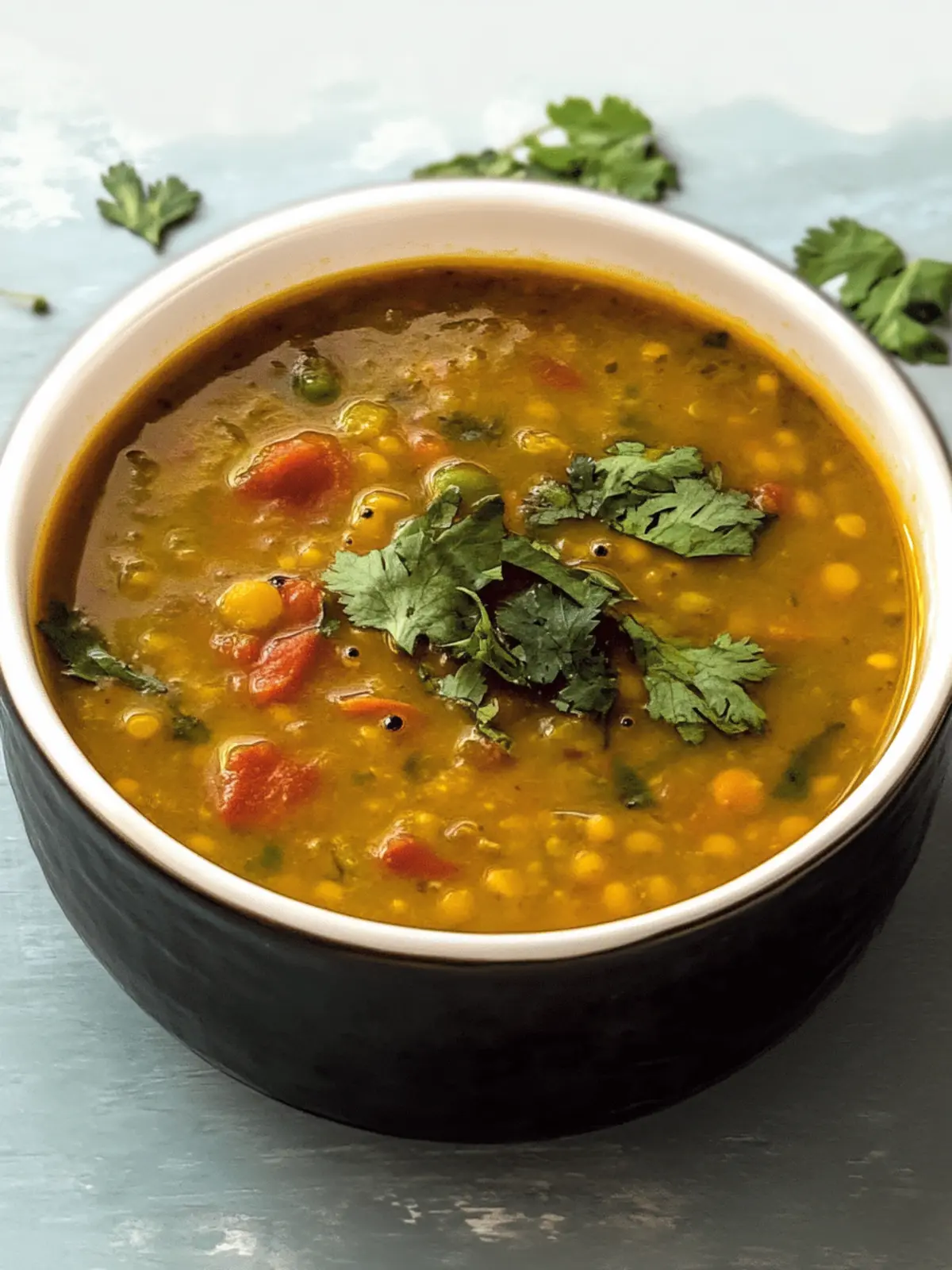
Indian Sambar Recipe FAQs
What type of dal should I use for sambar?
Absolutely! The traditional dal used for making sambar is toor dal (pigeon peas), renowned for its creamy texture. If you’re in a pinch or looking for a quicker option, red lentils can work as a substitute—just note that they cook faster and may alter the texture slightly.
How should I store leftover sambar?
Very! You can store leftover Indian sambar in an airtight container in the fridge for up to 4 days. When reheating, gently warm it on the stovetop and add a splash of water to restore the creamy consistency.
Can I freeze sambar, and how do I do it?
Absolutely! To freeze Indian sambar, portion it into freezer-safe bags or containers. Ensure to leave room for expansion. It can be stored for up to 3 months. When you’re ready to enjoy it, thaw it overnight in the fridge, then gently heat in a saucepan, adding water as needed to achieve your desired thickness.
What if my sambar is too sour?
No worries! If your sambar turns out too sour, try adding a pinch of sugar or jaggery to balance the acidity. This might also enhance the overall flavor. Adjusting the tamarind quantity can help for next time—start with less and gradually add more to find your perfect balance.
Is Indian sambar suitable for vegetarians and gluten-free diets?
Very much so! Indian sambar is naturally vegetarian and gluten-free, making it a wholesome comfort food option for many dietary preferences. Just be sure to check your sambar powder and any pre-packaged ingredients to confirm they meet your dietary needs.
Can I add protein to my sambar?
Of course! If you want to add protein, consider chickpeas or paneer. Simply stir them in when you add the cooked dal to the vegetables, and adjust the cooking time to ensure everything is heated through. The more, the merrier in terms of nutrition!
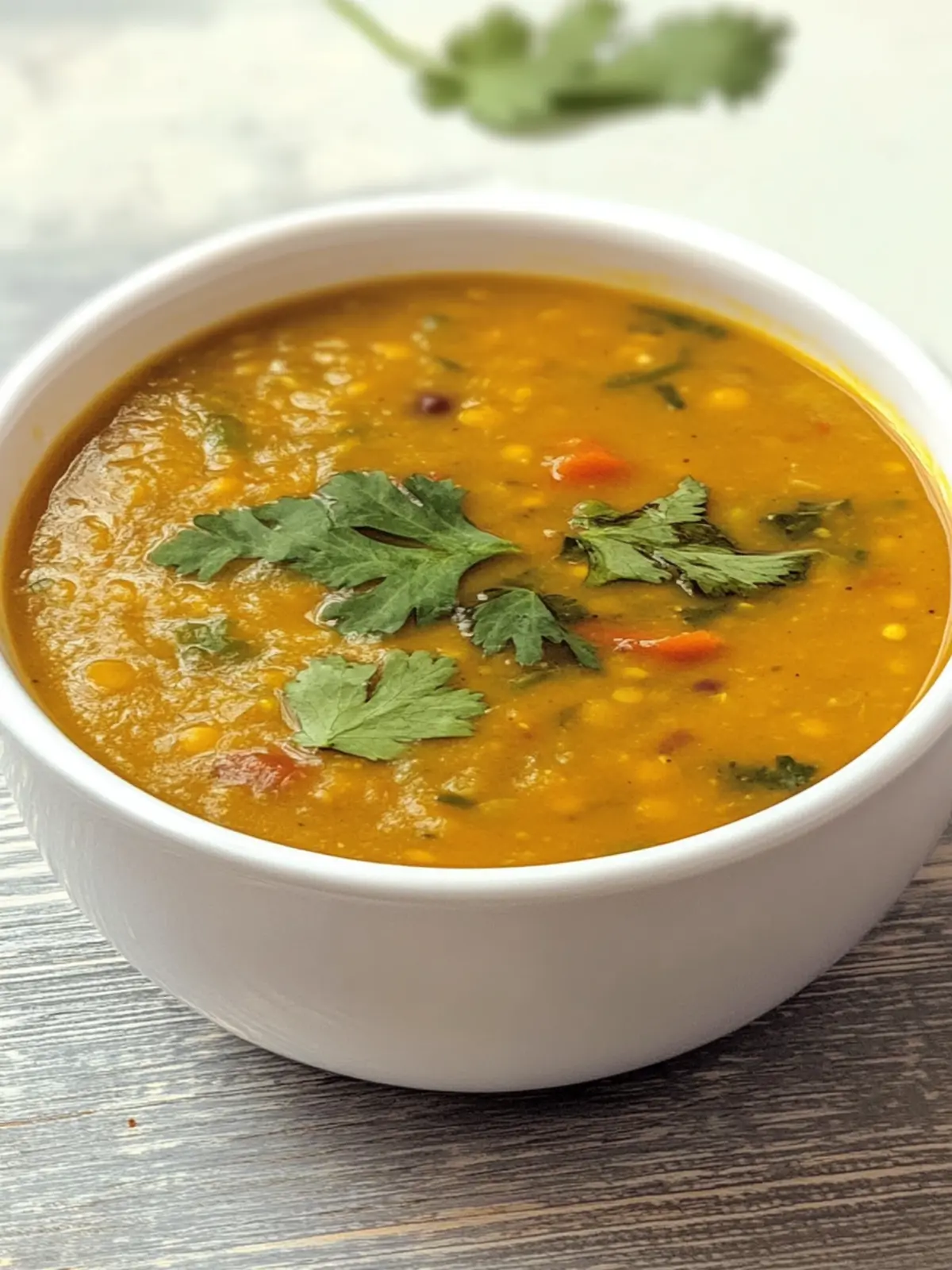
Master Indian Sambar: Comforting Lentil-Based Vegetable Stew
Ingredients
Equipment
Method
- Rinse the toor dal under cold water until the water runs clear. Add to a pressure cooker with water and turmeric, cooking for 4–5 whistles until soft.
- While the dal is cooking, soak tamarind pulp in warm water. After about 10 minutes, squeeze to extract the juice and strain, discarding any solids.
- In a large saucepan, combine mixed vegetables with water and a pinch of salt. Simmer over medium heat until they are just tender, typically around 10–15 minutes.
- Once the dal is cooked, add it to the saucepan with the simmered vegetables, mixing well. Adjust consistency with additional water if needed.
- Stir in the tamarind extract, sambar powder, and chopped tomato. Allow to cook for another 10–12 minutes.
- In a small pan, heat sesame oil over medium heat. Add mustard seeds, and once they splutter, add cumin seeds, dried red chilies, curry leaves, and asafoetida. Sauté for 2–3 minutes.
- Pour the sizzling tempering over the simmering sambar. Stir gently and let simmer for an additional 5 minutes.
- Finish with a sprinkle of fresh coriander leaves. Serve hot, optionally drizzling with melted ghee.