
When I first tried making sushi at home, I was taken aback by how simple and satisfying it turned out to be. The vibrant colors of fresh vegetables and the nutty aroma of brown rice instantly brightened my kitchen. With each roll, I could feel the excitement of creating something that not only looked beautiful but also burst with flavor. This Maki Sushi Recipe marries wholesome ingredients like roasted shiitake mushrooms and creamy avocado, transforming a typical weeknight dinner into a fun culinary adventure.
As a healthier alternative to takeout, these sushi rolls are not just easy on the wallet but also perfect for impressing guests or indulging yourself after a long day. With a zesty carrot-ginger dipping sauce that complements every bite, you’re on your way to a delightful meal that’s equally nutritious and delicious. Whether you’re a seasoned chef or a kitchen newbie, this recipe brings together fun and freshness that will keep you coming back for more!

Why Love This Maki Sushi Recipe?
Simplicity at Its Best: This Maki Sushi Recipe requires minimal cooking skills, making it accessible for everyone.
Vibrant Ingredients: Packed with colorful veggies like crisp cucumber and creamy avocado, every roll is a feast for the eyes and palate.
Healthier Option: Brown rice not only lends a nutty flavor but also boosts fiber content, making it a guilt-free indulgence.
Fun & Interactive: Invite friends over and turn sushi-making into an enjoyable group activity that encourages creativity and laughter.
Versatile Fillings: Feel free to customize with your favorite vegetables or proteins; the options are endless!
Quick Preparation: In under an hour, you can enjoy a delicious homemade meal that’s fresher than any takeout option.
Maki Sushi Recipe Ingredients
For the Sushi Rolls
- Short Grain Brown Rice – This nutty base provides a chewy texture and is a healthier alternative to white rice.
- Nori Sheets – Encasing the rolls, nori adds a delightful crunch; opt for seasoned varieties for extra flavor.
- Shiitake Mushrooms – These umami-packed mushrooms bring savory depth; substitute with any mushrooms you prefer.
- Red Cabbage – Offers a pop of color and a satisfying crunch; green cabbage works well if that’s what you have.
- Cucumber – Known for its refreshing crunch, feel free to swap it for your favorite crunchy vegetables.
- Avocado – Adds creaminess to each bite; if you need an alternative, try using hummus as a spread.
For the Dipping Sauce
- Chopped Roasted Carrots – This sweet base enhances the dipping sauce, but raw carrots can save time if necessary.
- Minced Ginger – Fresh ginger infuses the sauce with zing; avoid powdered for the best flavor.
- Rice Vinegar – Balances the flavors in both the sushi and sauce; apple cider vinegar is a suitable substitute.
- Sea Salt – Enhances flavor without overpowering; regular salt can also do the trick, but sea salt offers subtle richness.
- Water – Necessary for adjusting the consistency of your dipping sauce; add more or less based on preference.
- Extra-Virgin Olive Oil – Used for roasting and blending, it delivers a smooth finish; feel free to substitute with a neutral oil.
For Serving
- Tamari – This gluten-free sauce enhances flavor and can be swapped with soy sauce if gluten isn’t a concern.
- Pickled Ginger – A classic sushi accompaniment that elevates the experience with an extra zing.
- Sesame Seeds – Sprinkle on top for a nutty touch and to enhance visual appeal.
With these colorful and nutritious ingredients combined, this Maki Sushi Recipe promises a satisfying culinary experience that’s both fun and fresh!
How to Make Maki Sushi Rolls
-
Preheat Oven: Set your oven to 400°F (200°C) while you prepare the shiitake mushrooms. This ensures they’re roasted to perfection.
-
Prepare Roasted Shiitakes: Toss shiitake mushrooms with extra-virgin olive oil and tamari on a baking sheet. Roast for 25-30 minutes until they are golden brown and fragrant.
-
Blend Dipping Sauce: In a blender, combine chopped roasted carrots, water, olive oil, rice vinegar, minced ginger, and sea salt. Blend until creamy, then chill while you work on the sushi.
-
Cook Sushi Rice: Rinse short grain brown rice under cold water until the water runs clear. Cook it with the right amount of water and olive oil in a saucepan; bring to a boil, then reduce heat and simmer for 45 minutes. Let it sit covered for an additional 10 minutes, then fluff with vinegar and salt.
-
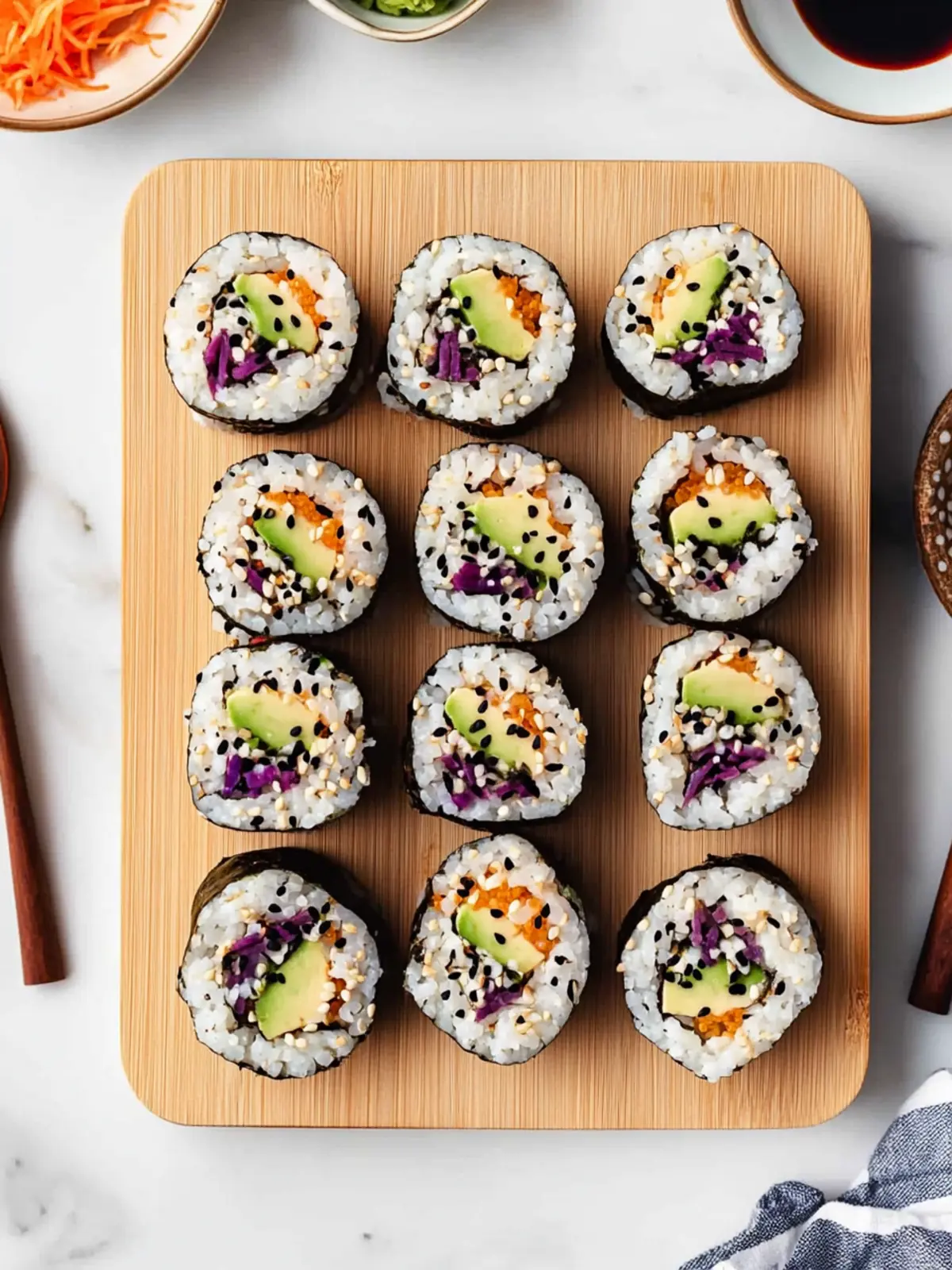
Assemble Rolls: Place a nori sheet on a bamboo mat, spread a layer of sushi rice on the lower two-thirds. Add roasted shiitakes, red cabbage, cucumber, and avocado, then roll up gently using the mat, pressing to shape.
-
Cut and Serve: Use a damp knife to slice the rolls into bite-sized pieces. Garnish with sesame seeds and serve with your dipping sauce, tamari, and pickled ginger.
Optional: Serve with edamame or miso soup for a complete dining experience.
Exact quantities are listed in the recipe card below.
How to Store and Freeze Maki Sushi
Room Temperature: Enjoy maki sushi rolls immediately for the best flavor and texture; they are best consumed within 2 hours of preparation.
Fridge: Uncut rolls can be stored wrapped in plastic wrap in the refrigerator for up to 3 days. This keeps them moist and prevents drying out.
Freezer: While not ideal for texture, you can freeze uncut rolls wrapped tightly in plastic and then foil. Consume within 1 month; thaw in the fridge before serving.
Reheating: Avoid reheating sushi in the microwave, as it may compromise the taste. If using frozen rolls, let them thaw overnight in the fridge before cutting and serving fresh.
What to Serve with Maki Sushi Rolls?
Enhance your sushi night experience with delightful pairings that bring out the best flavors and textures.
-
Edamame: Lightly salted edamame adds a warm, nutty flavor and a pleasing crunch that perfectly balances your sushi rolls.
-
Miso Soup: A comforting bowl of miso soup warms the soul and complements the fresh flavors of the sushi with its umami richness.
-
Seaweed Salad: The tangy and slightly sweet seaweed salad introduces a chewy texture and vibrant green color that harmonizes beautifully with sushi.
-
Pickled Vegetables: Crisp pickled radishes or cucumbers provide a zesty, refreshing bite that cleanses the palate between sushi pieces.
-
Sake: A chilled glass of sake enhances the experience, its smoothness and delicate flavors pairing wonderfully with the fresh ingredients of your maki.
-
Chilled Green Tea: This refreshing beverage not only hydrates but also works to balance out the flavors of the sushi, making it a peaceful pairing.
-
Mochi Ice Cream: For dessert, indulge in sweet mochi ice cream; its chewy texture and icy sweetness provide a delightful contrast to the savory sushi.
-
Fresh Fruit Platter: A simple assortment of seasonal fruits like mango, kiwi, or berries offers a bright, refreshing end to your meal, leaving you satisfied yet wanting more.
Maki Sushi Recipe Variations
Feel free to bring your own flair to this delightful dish with these easy and fun swaps!
-
Gluten-Free: Use tamari instead of soy sauce for a gluten-free experience that still packs a punch of flavor.
-
Creamy Avocado Substitute: Swap avocado for hummus for a unique twist, adding a burst of flavor that’s both creamy and rich. It blends beautifully with the other ingredients.
-
Vibrant Vegetable Mix: Experiment with bell peppers, carrots, or sprouts to enhance nutrition and color—each alternative adds its own unique taste!
-
Zesty Citrus Flavor: Add grated zest from lime or lemon to the rice for a refreshing citrus note that brightens every bite.
-
Spicy Kick: Incorporate sliced jalapeños or a drizzle of sriracha into your rolls for those who crave a bit of heat. It brings an exciting punch!
-
Sweet Surprise: Add thinly sliced mango or papaya for a sweet touch that beautifully complements savory ingredients, creating a delightful balance of flavors.
-
Texture Twist: Include crunchy tempura vegetables inside your rolls for added texture and a satisfying crunch that elevates the overall experience.
-
Layered Flavors: For a bolder taste, spread a thin layer of wasabi or spicy mayo onto the nori before adding rice and fillings. It adds a delightful zing!
Tips for the Best Maki Sushi Recipe
-
Quality Ingredients: Choose fresh, high-quality vegetables and sushi rice for the best flavor. This will enhance your overall maki sushi recipe experience.
-
Rice Rinsing: Always rinse the brown rice until the water runs clear to remove excess starch, ensuring a lighter texture once cooked.
-
Rolling Technique: Use a bamboo mat for rolling. Apply even pressure and make sure to tuck the nori tightly around the fillings to avoid loose rolls.
-
Cutting Rolls: Use a sharp, damp knife to slice the rolls. Wipe the knife between cuts to maintain clean edges on each piece.
-
Keep It Fresh: Sushi is best enjoyed fresh. If you need to store it, keep the rolls whole and wrap tightly in plastic to prevent drying out. Cut just before serving.
Make Ahead Options
These Maki Sushi Rolls are perfect for busy home cooks who crave fresh meals! You can prepare the roasted shiitake mushrooms and the carrot-ginger dipping sauce up to 3 days in advance. Simply roast the mushrooms and blend the sauce, then store them in airtight containers in the fridge to maintain their texture and flavor. Additionally, you can cook the sushi rice 24 hours ahead, letting it cool and then refrigerating it until you’re ready to roll. When you’re ready to serve, assemble the rolls with prepped fillings and cut them into pieces right before enjoying to ensure maximum freshness. With these make-ahead options, you’ll enjoy a delightful sushi feast with less stress!
Maki Sushi Recipe FAQs
What type of brown rice is best for sushi?
I recommend using short grain brown rice as it gives the best texture for sushi. It provides a chewy consistency and holds together well, making it perfect for rolling. If you can’t find short grain, another type of sticky brown rice can work, but might give a different texture experience.
How should I store leftover sushi?
For the best quality, store uncut rolls wrapped in plastic wrap in the refrigerator for up to 3 days. Keep them moist and avoid cutting until you’re ready to eat. If you have cut rolls left, place them in an airtight container to minimize air exposure.
Can I freeze maki sushi?
Absolutely! While fresh sushi is best, you can freeze uncut rolls. Wrap them tightly in plastic wrap, then in foil, and store in the freezer for up to 1 month. When ready to eat, thaw in the refrigerator overnight. Avoid using a microwave, as it can affect the texture.
What if my sushi is falling apart when I roll it?
Don’t worry! If your rolls are falling apart, it may be due to either too much filling or the rice not being sticky enough. Try using less filling and ensure the rice is properly rinsed and cooked until sticky. Also, apply even pressure while rolling and make sure to tuck the nori tightly.
Are there any allergens associated with maki sushi?
Yes, some common allergens include soy (in tamari and soy sauce), mushrooms, and avocado. If you’re serving guests, I always recommend labeling all ingredients. For those with gluten sensitivity, using tamari instead of regular soy sauce keeps the dish gluten-free.
Can I make a vegetarian version of this maki sushi?
Very! This Maki Sushi Recipe is already vegetarian-friendly, featuring wholesome veggies like cucumber and avocado. For extra flavor, consider adding roasted bell peppers or some marinated tofu for protein. The beauty of sushi is in its versatility!
Make Maki Sushi Recipe Fun with Brown Rice & Fresh Veggies
Ingredients
Equipment
Method
- Preheat Oven: Set your oven to 400°F (200°C) while you prepare the shiitake mushrooms.
- Prepare Roasted Shiitakes: Toss shiitake mushrooms with extra-virgin olive oil and tamari on a baking sheet. Roast for 25-30 minutes until golden brown and fragrant.
- Blend Dipping Sauce: Combine chopped roasted carrots, water, olive oil, rice vinegar, minced ginger, and sea salt in a blender. Blend until creamy and chill.
- Cook Sushi Rice: Rinse rice under cold water until clear. Cook with water and olive oil; bring to boil, reduce heat, and simmer for 45 minutes. Let sit covered for 10 minutes.
- Assemble Rolls: Place a nori sheet on a bamboo mat, spread sushi rice on the lower two-thirds. Add roasted shiitakes, red cabbage, cucumber, and avocado, then roll up gently.
- Cut and Serve: Use a damp knife to slice into bite-sized pieces. Garnish with sesame seeds and serve with dipping sauce, tamari, and pickled ginger.