
There’s something beautifully nostalgic about the savory aroma of Filipino Adobo wafting through the kitchen, instantly transporting me to family gatherings filled with laughter and shared moments. This marinated meat stew, typically made with tender chicken or rich pork, is a beloved staple in Filipino cuisine, celebrated for its harmonious blend of vinegar and soy sauce that creates a depth of flavor unlike any other.
Having stumbled upon a treasured family recipe, I can assure you that Filipino Adobo is not just a dish; it’s a comforting hug on a plate, perfect for casual weeknight dinners or special occasions that call for something truly delightful. What’s more, its adaptability means you can easily customize it—add a splash of coconut milk for creaminess or swap the protein for a vegetarian option like tofu. Get ready to embark on a culinary adventure that will impress your family and friends while reigniting your love for home-cooked meals. Let’s dive into creating this hearty classic that bridges tradition and taste!
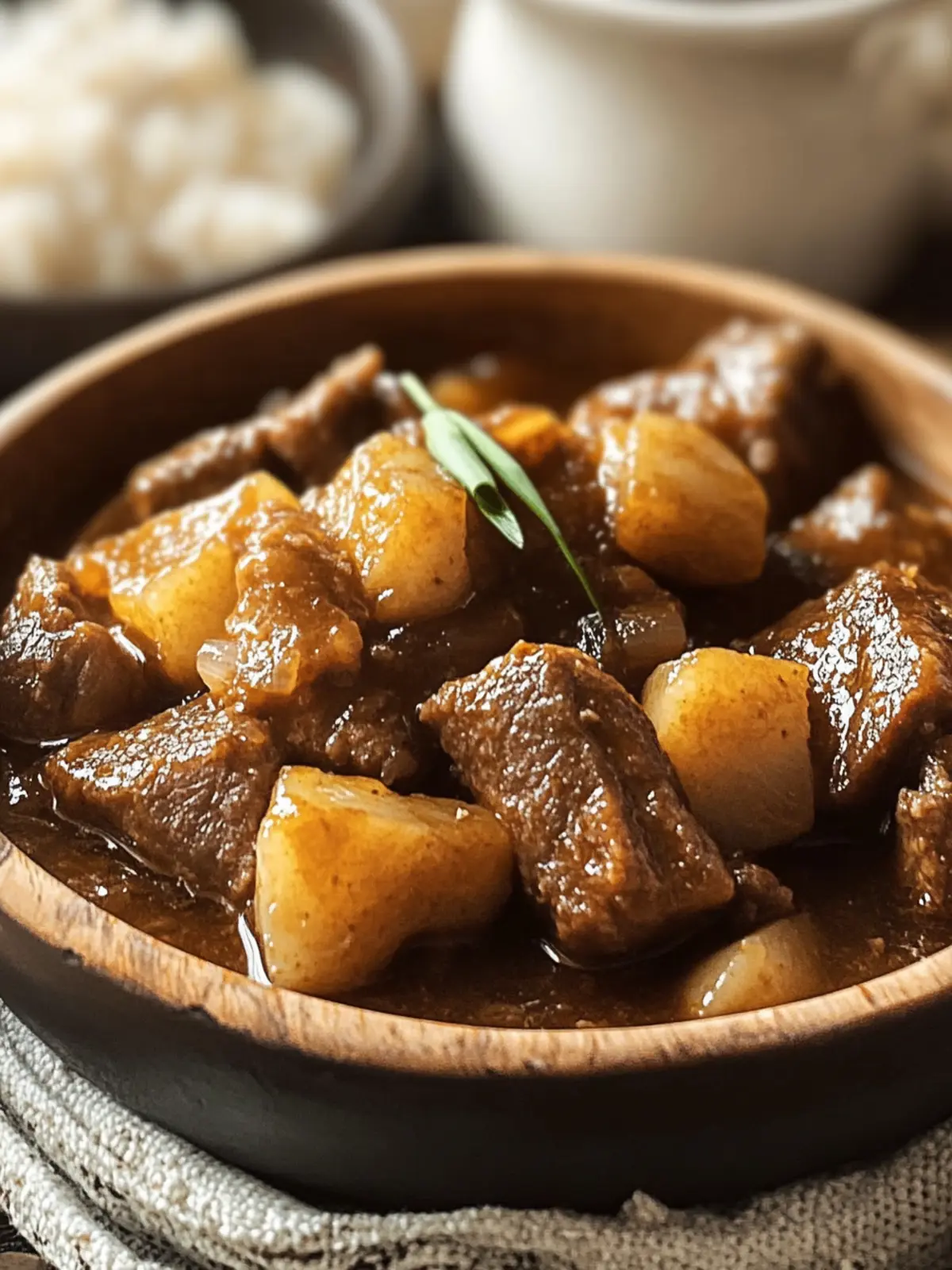
Why is Filipino Adobo so loved?
Nostalgic Flavor: Filipino Adobo captures the essence of home-cooked meals with its unique blend of savory, salty, and tangy notes.
Versatile Ingredients: Easily customize your dish by swapping proteins or adding coconut milk for an extra layer of richness.
Simplicity: The straightforward cooking process makes it accessible for both novice and seasoned chefs.
Crowd-pleaser: Perfect for family gatherings, it’s a dish that brings everyone together over hearty servings.
Meal Prep Friendly: Leftovers taste even better the next day, making it a fabulous option for meal prepping!
Cultural Experience: Enjoy a taste of Filipino heritage right in your kitchen and impress your loved ones!
Filipino Adobo Ingredients
-
For the Meat
Chicken Thighs and Drumsticks or Pork Belly – Choose your favorite protein for a fulfilling base; boneless chicken or lean cuts can lighten up the dish. -
For the Marinade
Garlic – Fresh minced garlic is key for that aromatic depth; avoid the pre-minced stuff for fullest flavor.
Soy Sauce – Opt for low-sodium soy sauce to keep it healthier while still delivering that characteristic umami punch.
Vinegar (White or Cane) – Essential for the distinctive tang; cane vinegar is traditional, but apple cider or rice vinegar are solid substitutes.
Bay Leaves – Fresh are best for adding that earthy aroma your Filipino Adobo craves.
Black Peppercorns – Crushing them intensifies their flavor; while pre-ground is handy, it won’t give the same depth. -
For Sweetness
Sugar (optional) – This balances the acidity perfectly; adjust based on your preference or skip it for a sugar-free version! -
For Cooking
Water or Chicken Broth – For braising, homemade chicken broth adds an extra layer of flavor; just enough to keep your meat tender.
Cooking Oil – Essential for searing meat to create a delicious base; a high smoke point oil like canola or vegetable works wonders.
Let these ingredients come together for a Filipino Adobo that captures your heart and taste buds while embracing the essence of comfort food!
How to Make Filipino Adobo
-
Marinate Meat: In a bowl, combine the chicken or pork with soy sauce, minced garlic, and half of the vinegar. Cover and refrigerate for at least 1 hour or up to overnight for deeper flavor infusion.
-
Prepare Spices: Lightly crush the black peppercorns in a small bowl to enhance their aroma. Set aside the bay leaves for the next step.
-
Sear Meat: Heat a drizzle of cooking oil in a pot over medium heat. Sear the marinated meat until it’s golden brown on all sides, around 3-4 minutes per side, creating a delicious base.
-
Add Marinade: Stir in the reserved marinade along with the remaining vinegar, bay leaves, and crushed peppercorns. This will form the flavorful stew.
-
Simmer: Pour enough water or chicken broth into the pot until the meat is about two-thirds submerged. Bring it to a boil, then reduce the heat, cover, and let it simmer for 30-40 minutes, stirring occasionally.
-
Adjust Flavor: Taste the sauce and adjust with additional soy sauce or sugar as needed. If you prefer a thicker sauce, uncover the pot for the last 10 minutes to allow for reduction.
-
Serve: Once the meat is tender, garnish with green onions or crispy fried garlic chips. Serve hot with steamed rice to soak up all the delicious sauce!
Optional: Drizzle with a bit of coconut milk during the final simmer for a rich and creamy twist.
Exact quantities are listed in the recipe card below.
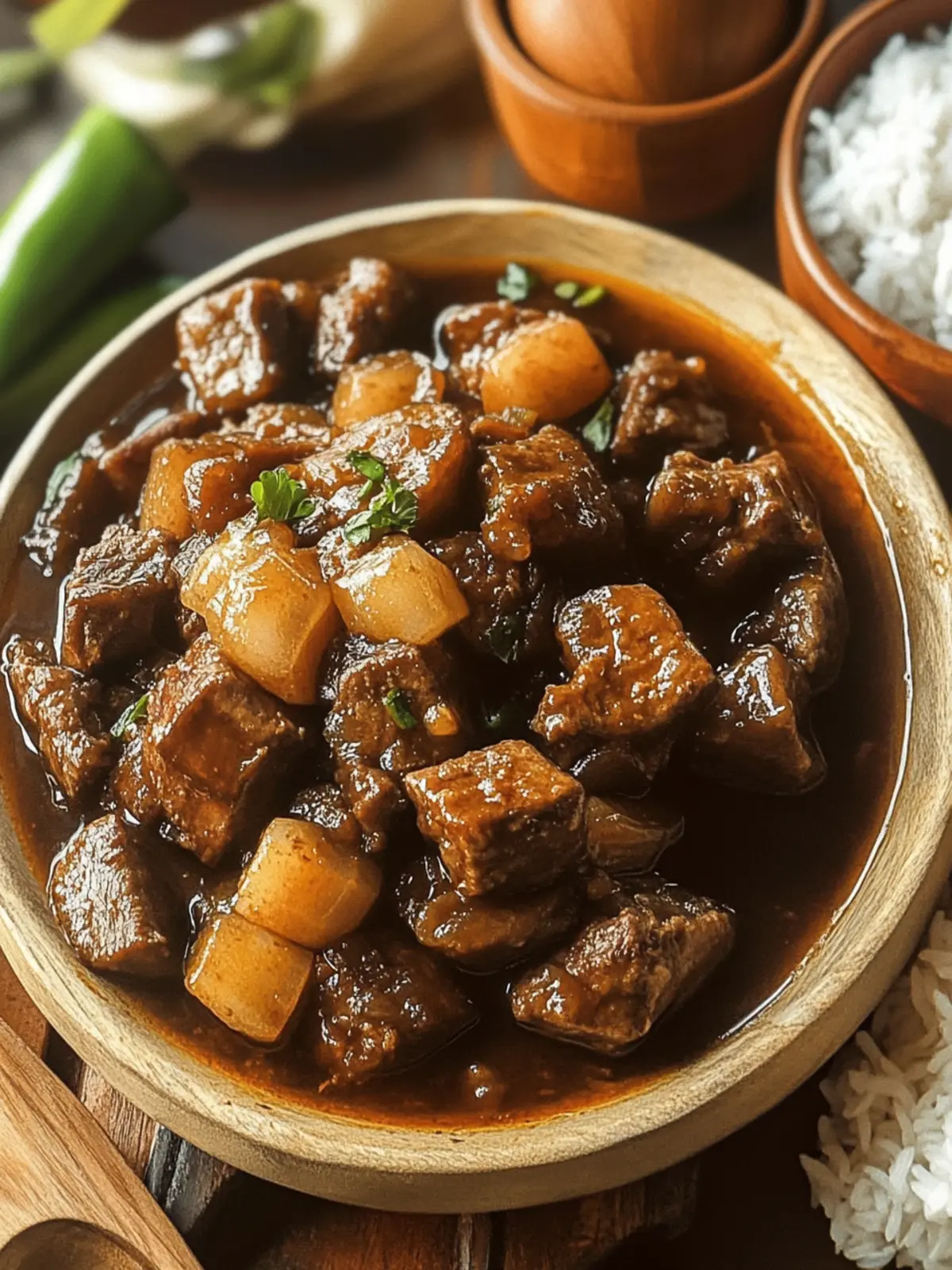
Make Ahead Options
Filipino Adobo is a perfect dish for busy home cooks looking to save time during the week! You can marinate the chicken or pork in soy sauce, minced garlic, and half of the vinegar up to 24 hours in advance, allowing the flavors to meld beautifully. Additionally, you can prepare the spices (crushing the black peppercorns and setting aside bay leaves) ahead of time. Just refrigerate the marinated meat in an airtight container to maintain its quality. When you’re ready to cook, simply sear the marinated meat and follow the remaining steps, ensuring minimal effort for a comforting meal that’s just as delicious as if made fresh.
How to Store and Freeze Filipino Adobo
-
Fridge: Store leftover Filipino Adobo in an airtight container for up to 3 days. The flavors meld beautifully during storage, making it even tastier the next day.
-
Freezer: For longer storage, freeze the Adobo in a freezer-safe container for up to 3 months. After thawing, reheat gently to preserve its rich flavors.
-
Reheating: Reheat on the stove over low heat or in the microwave, adding a splash of water or broth if needed to maintain the stew’s consistency and moisture.
-
Thawing: When ready to enjoy, transfer the frozen Adobo to the fridge overnight to thaw. For quicker thawing, you can use the microwave’s defrost setting, but keep an eye to avoid cooking it.
Filipino Adobo Variations
Feel free to play around with these delightful twists to make your Filipino Adobo even more exciting and personalized!
-
Beef Swap: Use beef chuck or brisket instead of chicken for a heartier flavor. The long simmer will make it tender and rich.
-
Vegetarian Delight: Swap meat for firm tofu or tempeh, marinating and cooking to soak up those delicious flavors. Perfect for plant-based eaters!
-
Coconut Cream: Stir in a can of coconut milk during the simmer for a luxurious, creamy texture that complements the tangy sauce beautifully.
-
Annatto Infusion: Add a teaspoon of annatto powder for a vibrant color and a subtle nutty flavor that enhances the dish’s visual appeal.
-
Spicy Kick: Toss in a couple of sliced Thai chilies or a sprinkle of chili flakes to heat things up. This will give your Adobo a lovely warmth.
-
Vinegar Variety: Experiment with different vinegars like malt or rice vinegar for a unique twist on the traditional tanginess. It can change the profile entirely!
-
Fruity Splash: Add a handful of pineapple chunks or a splash of pineapple juice for a sweet and tangy balance that pairs wonderfully with the savory notes.
-
Herbal Twist: Incorporate fresh herbs like cilantro or basil at the end of cooking for a fresh burst of flavor that brightens the dish.
What to Serve with Filipino Adobo?
The vibrant flavors of this marinated meat stew create a perfect backdrop for an inviting family meal.
- Steamed Rice: The classic partner, fluffy rice soaks up the rich sauce, allowing every last morsel to be enjoyed.
- Garlic Fried Rice: A flavorful twist, enhancing the umami notes of Adobo while adding a hint of garlic aroma to the table.
- Atchara (Pickled Papaya): This tangy side brings a refreshing crunch that cuts through the savory richness, balancing each bite beautifully.
- Fresh Salads: Crisp greens with citrus dressing provide a fresh contrast to the hearty stew, brightening the dish’s warmth.
- Eggplant Tortang: A Filipino-style omelet adds a delightful texture and subtle flavor that complements the savory notes of Adobo.
- Banana Ketchup: A uniquely sweet-spicy condiment that can elevate your meal, adding a playful twist to every taste.
- Coconut Milk: Drizzling this during the final simmer of Adobo infuses richness, offering a decadent layer of flavor that’s unforgettable.
- Mango Salad: This sweet, tangy addition brightens the palate, especially when the mangoes are in season, enhancing the overall meal experience.
- Soda (like sarsaparilla): A fizzy drink adds a refreshing sweetness, balancing the spices and acidity beautifully for a complete dining experience.
- Leche Flan: As a final sweet note, this creamy dessert creates a lovely contrast, perfect to end the meal on a high note.
Expert Tips for Filipino Adobo
-
Quality Counts: Use high-quality meat for a richer flavor that absorbs the marinade beautifully. Fresh ingredients make a noticeable difference in taste.
-
Marinating Time: Adjust marinating time based on your flavor preference; a few hours to overnight yields a stronger flavor, while a shorter time offers a milder taste.
-
Searing Matters: Don’t overcrowd the pan when searing the meat. This helps develop a deep, savory flavor and prevents steaming, allowing for that beautiful golden crust to form.
-
Flavor Adjustments: Always taste and adjust the sauce before serving. Add soy sauce for saltiness or sugar to balance acidity; a splash of vinegar can enhance tanginess if desired.
-
Creamy Twist: For an alluring depth, consider adding coconut milk during the last simmering phase for a creamy Filipino Adobo that will wow your guests.
-
Storage Tip: Leftovers are even better! Refrigerate for up to three days; the flavors will evolve and intensify, making your next meal even more delightful.
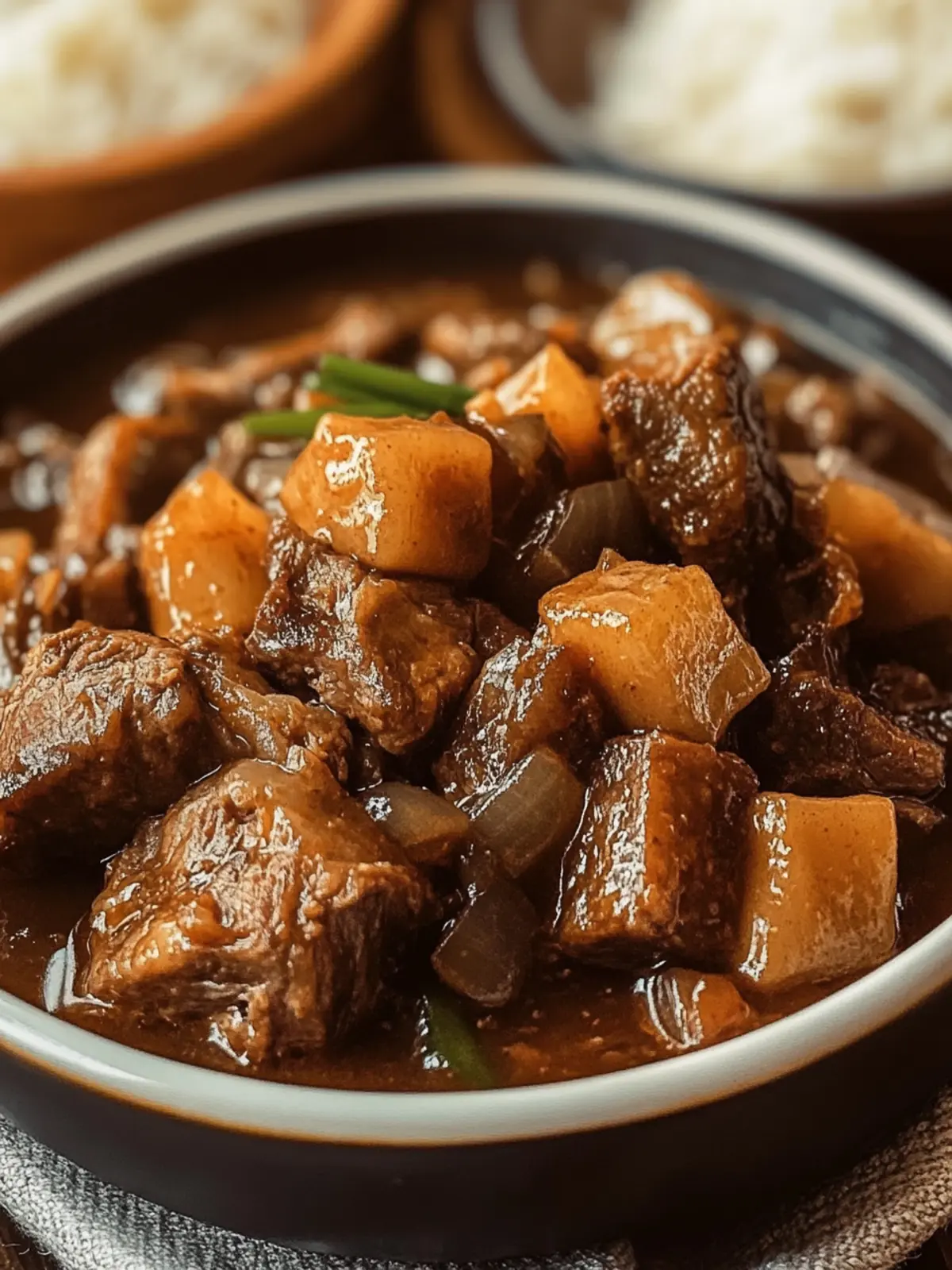
Filipino Adobo Recipe FAQs
What type of vinegar is best for Filipino Adobo?
For the most authentic flavor, cane vinegar is traditional and offers a unique tanginess. However, if you can’t find it, apple cider or rice vinegar are excellent substitutes that will still contribute a nice acidic component to the stew.
How long does Filipino Adobo last in the fridge?
Your leftovers can be stored in an airtight container for up to 3 days. The great news is that the flavors deepen over time, making each reheated meal even more delightful than the last.
Can I freeze Filipino Adobo?
Absolutely! To freeze, place the cooled Adobo in a freezer-safe container, leaving some space for expansion. It can last up to 3 months in the freezer. When ready to enjoy it again, let it thaw in the fridge overnight and reheat gently on the stove for the best results.
What if my Filipino Adobo is too salty?
If you find your Adobo too salty, there are a couple of ways to rescue it! You can dilute the sauce by adding a splash of water or low-sodium chicken broth. Alternatively, stirring in a small amount of sugar can help balance out the flavors. Taste as you go to ensure it meets your preference!
Is Filipino Adobo suitable for my gluten-free diet?
Yes! To make Filipino Adobo gluten-free, simply swap regular soy sauce for gluten-free tamari or coconut aminos. This substitution will keep the savory essence of the dish intact while meeting your dietary needs.
How do I adjust the sweetness of the sauce?
If you’d like to adjust the sweetness, simply add sugar to the sauce a teaspoon at a time while tasting until it reaches your desired level. If you prefer it less sweet, you can omit the sugar entirely and focus on balancing the vinegar and soy sauce instead.
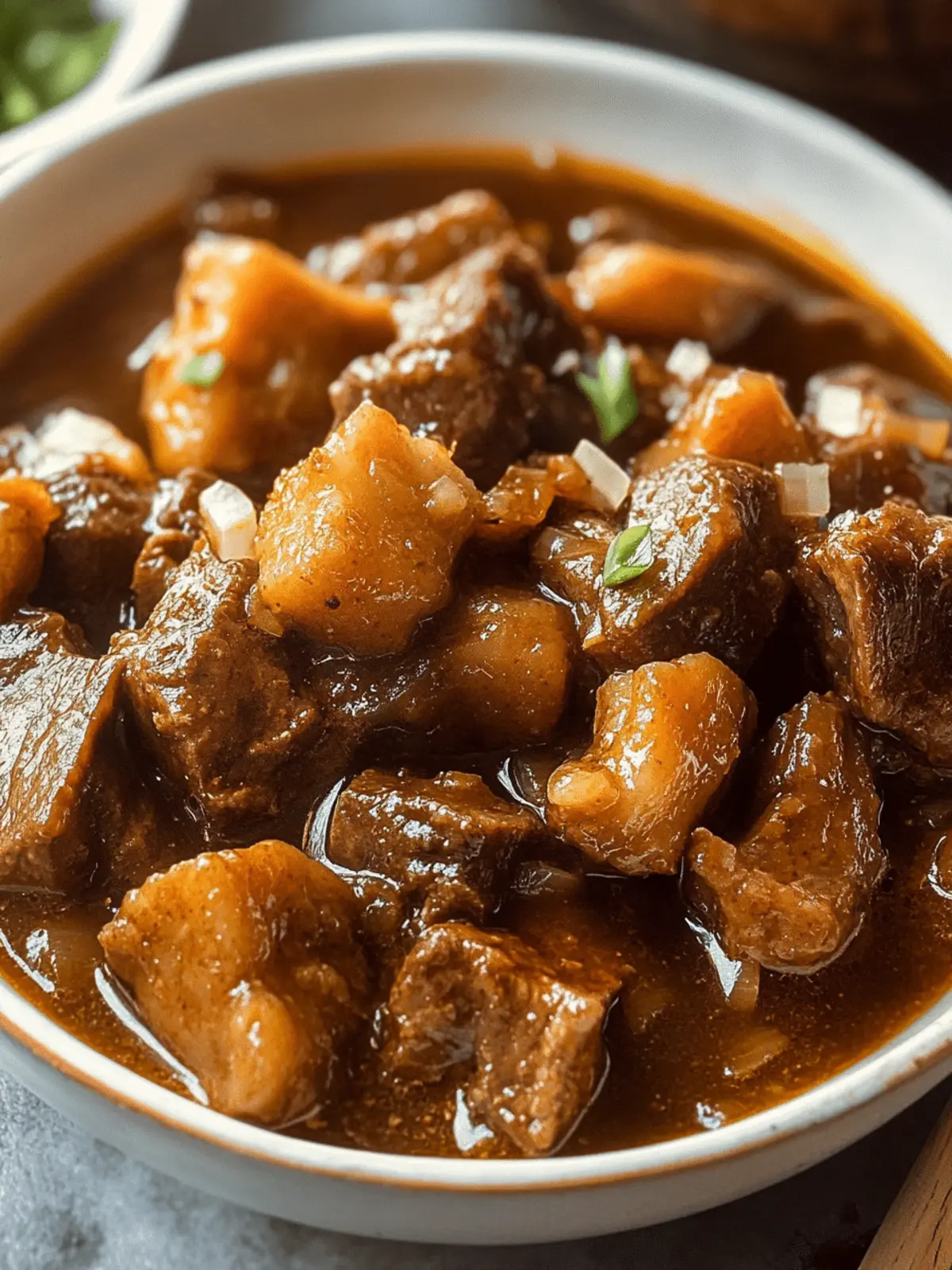
Filipino Adobo: Savory Marinated Meat Stew You'll Love
Ingredients
Equipment
Method
- In a bowl, combine the chicken or pork with soy sauce, minced garlic, and half of the vinegar. Cover and refrigerate for at least 1 hour or up to overnight for deeper flavor infusion.
- Lightly crush the black peppercorns in a small bowl to enhance their aroma. Set aside the bay leaves for the next step.
- Heat a drizzle of cooking oil in a pot over medium heat. Sear the marinated meat until it’s golden brown on all sides, around 3-4 minutes per side.
- Stir in the reserved marinade along with the remaining vinegar, bay leaves, and crushed peppercorns. This will form the flavorful stew.
- Pour enough water or chicken broth into the pot until the meat is about two-thirds submerged. Bring it to a boil, then reduce the heat, cover, and let it simmer for 30-40 minutes.
- Taste the sauce and adjust with additional soy sauce or sugar as needed. If you prefer a thicker sauce, uncover the pot for the last 10 minutes.
- Once the meat is tender, garnish with green onions or crispy fried garlic chips. Serve hot with steamed rice to soak up all the delicious sauce!