
There’s something truly special about the first spoonful of Kare Kare, the iconic Filipino peanut stew. As the luscious, nutty aroma wafts through the kitchen, it instantly takes me back to family gatherings, where hearty laughter and the clinking of spoons accompany the rich flavors of this beloved dish. The vibrant colors of tender oxtail, fresh green beans, and creamy eggplant create a feast for the eyes, while the creamy, savory peanut sauce warms the soul from the inside out.
After a particularly hectic week, whipping up this comforting stew feels like a well-deserved treat. It’s not just a meal; it’s a warm hug in a bowl. Best served with steamed rice and a side of bagoong, Kare Kare is versatile enough to impress guests or simply satisfy your craving for something homemade and hearty. Whether you’re a seasoned chef or just looking to elevate your dinner game, this recipe promises to bring joy and flavor to your home, transforming any occasion into a celebration of Filipino heritage. Let’s dive into making this unforgettable dish!
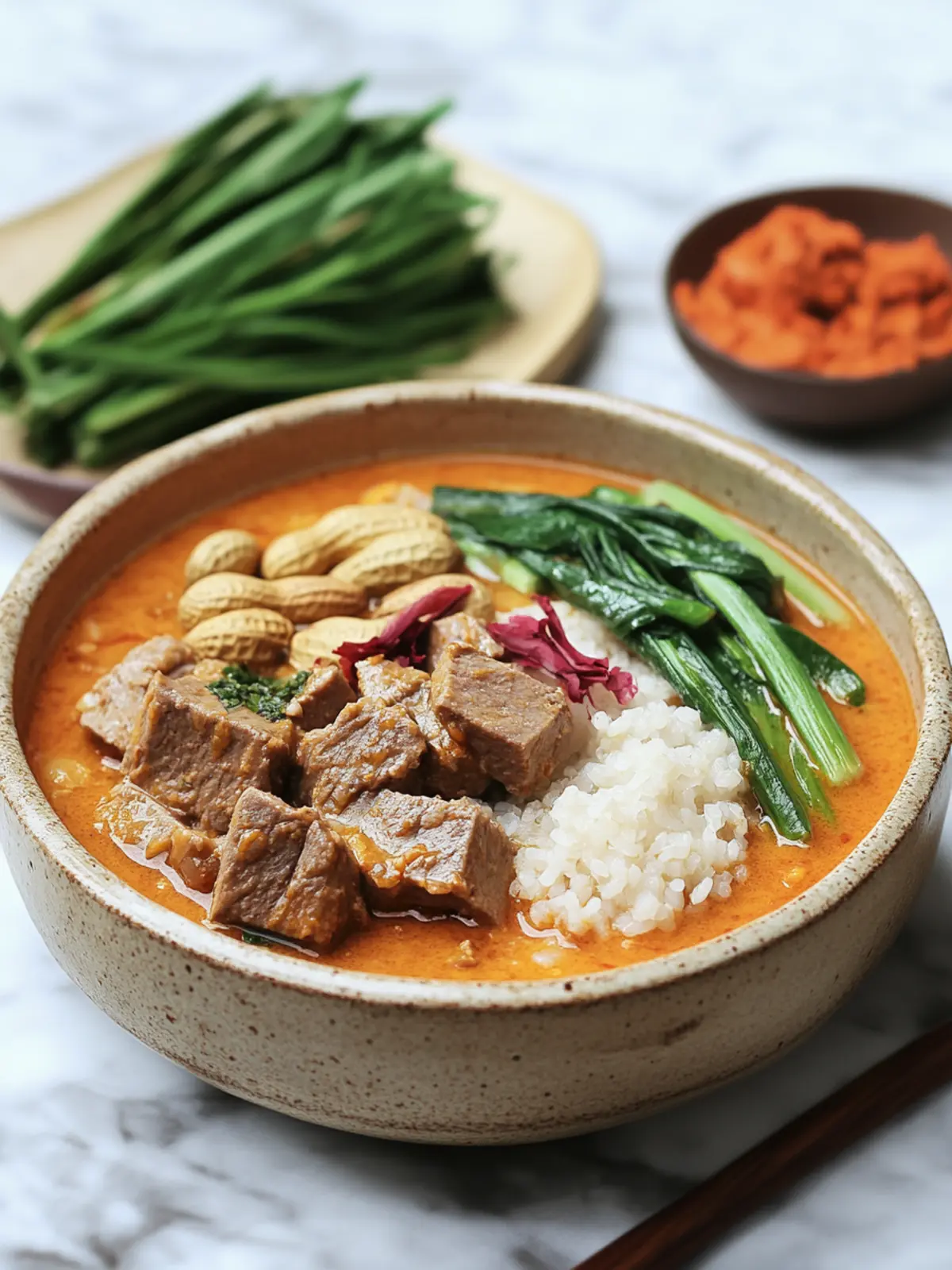
Why is Filipino Kare Kare a Must-Try?
Comforting, this stew is like a warm hug in a bowl, perfect for those cozy family dinners. Nutty flavor, the creamy peanut sauce brings a unique taste that’ll have everyone asking for seconds. Beautifully vibrant, the colorful medley of vegetables and proteins makes it a feast for the eyes. Versatile options mean you can customize it with different proteins or omit tripe for a lighter touch. Plus, it’s a crowd-pleaser that transforms any dinner into a lively celebration! For a complete meal, serve it alongside steamed rice and enjoy the traditional pairing with bagoong—a must-try!
Filipino Kare Kare Ingredients
• Get ready to create a delightful dish with these comforting ingredients!
For the Stew
- Oxtail (500g) – The main protein source that gives a rich flavor and a delightful gelatinous texture; beef shank is a suitable substitute.
- Tripe (200g, optional) – Enhances the stew with additional texture and flavor; feel free to skip for a lighter version.
- Eggplant (1 medium) – Adds creaminess and vibrant color when sliced for even cooking.
- String Beans (1 bunch) – Fresh and crisp, they lend a delightful crunch; trim to 2-inch pieces for easy eating.
- Bok Choy (1 bunch) – This green leafy vegetable provides a crunchy contrast and bright color; separate into stalks.
- Banana Heart (optional) – Brings a unique flavor and texture; slice and soak to prevent discoloration.
- Onion (1 medium) – Serves as the aromatic base for the stew; dice for even distribution.
- Garlic (4 cloves) – Enhances the flavor profile; mince for quick incorporation.
- Annatto Powder (1 tbsp) – Responsible for the characteristic golden hue of Kare Kare.
For the Sauce
- Beef Broth (3 cups) – Creates a flavorful base for the stew; reserved from boiling the meat to build depth.
- Unsweetened Peanut Butter (1 cup) – The star ingredient for a creamy sauce, offering that essential nuttiness that defines Filipino Kare Kare.
- Ground Toasted Rice (2 tbsp) – Thickens the sauce and contributes a unique flavor; can substitute with cornstarch if needed.
- Fish Sauce (1 tbsp) – Adds umami and saltiness; adjust this to taste.
For Seasoning
- Salt and Pepper – Essential for balancing flavors; remember to adjust as needed.
For the Side
- Bagoong – Serve this fermented shrimp paste on the side for that authentic salty, umami contrast that elevates the dish.
Gather these ingredients, and you’re one step closer to creating this delightful and flavorful Filipino Kare Kare!
How to Make Filipino Kare Kare
-
Cook Meat: In a large pot, boil the oxtail and tripe in salted water for 1.5 to 2 hours until tender. Don’t forget to reserve 3 cups of broth and set the meat aside.
-
Prepare Vegetables: Slice the eggplant, trim the string beans, and soak the banana heart in water. Keep the bok choy stalks separated for even cooking.
-
Sauté Aromatics: In a separate pan, heat some oil and sauté the diced onions and minced garlic until fragrant. Then, add in the annatto powder for color.
-
Make Peanut Sauce: Pour the reserved broth into the pan, whisk in the creamy peanut butter and ground toasted rice, and let it simmer until thickened.
-
Combine Ingredients: Return the cooked meat to the pot, season with fish sauce, and let everything simmer together for about 15 minutes. Incorporate the prepared vegetables and cook until they’re just tender.
-
Finish Cooking: Add the bok choy to the pot, cover, and allow it to steam for 2-3 minutes until wilted. Let the dish rest for 5 minutes before serving.
-
Serve: Present your Kare Kare in a bowl with sautéed bagoong on the side and some fluffy steamed rice to complete the meal.
Optional: Garnish with chopped peanuts for added texture and flavor.
Exact quantities are listed in the recipe card below.
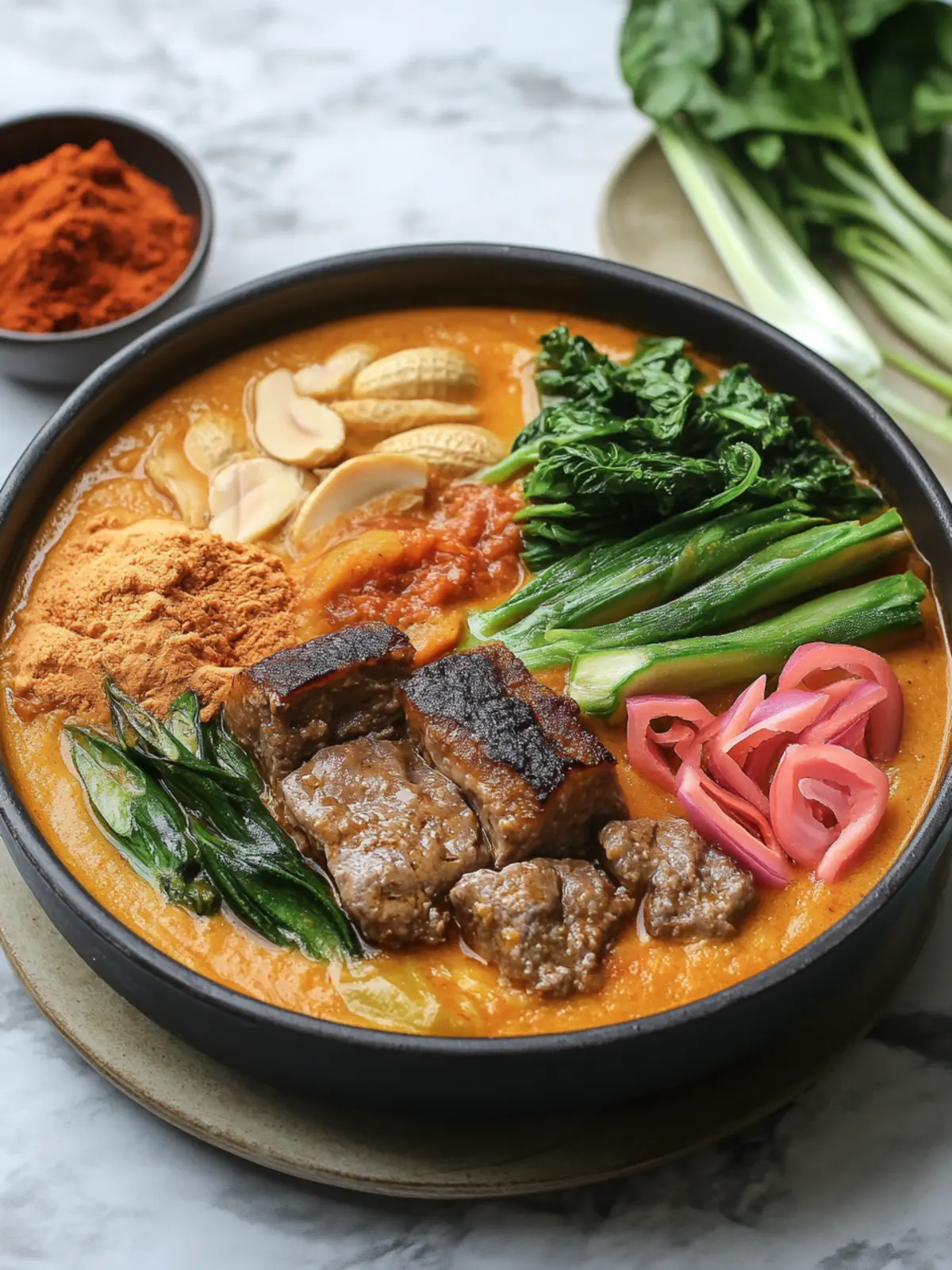
Filipino Kare Kare Variations & Substitutions
Feel free to experiment with these delightful variations and make this comforting dish uniquely yours!
-
Protein Swap: Substitute oxtail with beef shank, pork, or chicken for a different flavor profile. Each meat brings its unique richness to the stew.
-
Seafood Twist: Use shrimp or fish instead of traditional meats for a lighter, ocean-inspired Kare Kare. This variation adds a fresh zest to the classic recipe.
-
Veggie-Loaded: Include more vegetables like zucchini or bell peppers for an extra burst of nutrients. The vibrant colors will make your dish even more enticing!
-
Peanut Butter Alternative: For a nut-free option, use sunflower seed butter or tahini. These will still create a creamy sauce but without the peanuts.
-
Spicy Kick: Add chopped chili peppers or a dash of sriracha for a spicy version of Kare Kare. This twist can add an exciting heat that complements the peanut sauce.
-
Dairy-Free: Substitute regular peanut butter with coconut cream for a unique, creamy texture. It gives the Kare Kare a tropical flair while keeping it dairy-free.
-
Thickening Options: Swap ground toasted rice for cornstarch or arrowroot powder to thicken the sauce without altering the flavor. A smooth consistency can enhance the overall experience!
-
Bagoong Alternatives: If bagoong isn’t available, use soy sauce or miso paste as a dip for a similar umami kick without the seafood.
Let your creativity spark joy in the kitchen, and enjoy each hearty bowl of Kare Kare your way!
How to Store and Freeze Filipino Kare Kare
Fridge: Keep your leftover Kare Kare in an airtight container in the refrigerator for up to 3 days. This stew only gets better as the flavors meld together!
Freezer: If you want to store it long-term, Kare Kare can be frozen for up to 3 months. Portion it out in freezer-safe containers, leaving some space for expansion.
Reheating: To reheat, thaw overnight in the fridge if frozen, then gently warm it on the stovetop over low heat, stirring occasionally to preserve the creamy texture of the peanut sauce.
Airtight Storage: Always ensure that your storage containers are airtight to prevent freezer burn and maintain the delightful flavors of your Filipino Kare Kare.
Make Ahead Options
These Filipino Kare Kare (Peanut Stew) are perfect for busy weeknights! You can prepare the meat and broth up to 24 hours in advance, simply boiling the oxtail and tripe as directed, then refrigerating the cooked meat and reserved broth. Additionally, slice and soak the eggplant and banana heart, as well as trim the string beans ahead of time; refrigerate these veggies for up to 3 days. When you’re ready to serve, just reheat the broth, combine it with the peanut sauce, and add the vegetables, simmering until just tender for that fresh, vibrant taste. This way, you’ll have a delicious, homemade meal ready to soothe your soul without the last-minute rush!
Tips for the Best Filipino Kare Kare
- Tender Meat: Make sure your oxtail is fully cooked for a rich flavor; adjust boiling time if needed for perfect tenderness.
- Veggie Crunch: Avoid overcooking the vegetables; this keeps them vibrant and gives that satisfying crunch in every bite.
- Rich Sauce: For a creamier sauce, consider adding extra peanut butter or ground toasted rice to achieve your desired thickness.
- Bagaong Balance: Serve bagoong on the side to enhance the flavor profile of your Kare Kare without overpowering its delicate nuances.
- Storage Savvy: If making ahead, store in the fridge for up to 3 days and reheat gently to maintain texture—perfect for busy weeknights!
What to Serve with Filipino Kare Kare?
To create a wonderful dining experience centered around this nutty stew, consider pairing it with delightful side dishes and beverages.
-
Steamed Jasmine Rice: The fluffy, fragrant rice serves as the perfect base, soaking up the savory peanut sauce while adding a comforting element to each bite.
-
Fried Plantains: Their natural sweetness beautifully balances the rich flavors of the stew, creating a harmony of taste on your plate.
-
Fresh Lumpiang Sariwa: This fresh vegetable spring roll brings a crunchy and vibrant contrast, enhancing the meal with additional textures and flavors.
-
Chopped Peanuts: Sprinkling these crunchy morsels on top adds an extra layer of texture and enhances the nutty flavor profile of the Kare Kare.
-
Sweet Mango Salad: The tangy-sweet notes of a mango salad lighten the heaviness of the stew, cleansing your palate with each refreshing bite.
-
San Miguel Beer: This local brew complements the rich flavors of Kare Kare, enhancing the overall dining experience while offering a taste of Filipino culture.
Craft a memorable meal filled with comforting tastes and delightful contrasts, as each pairing enhances your Kare Kare experience.
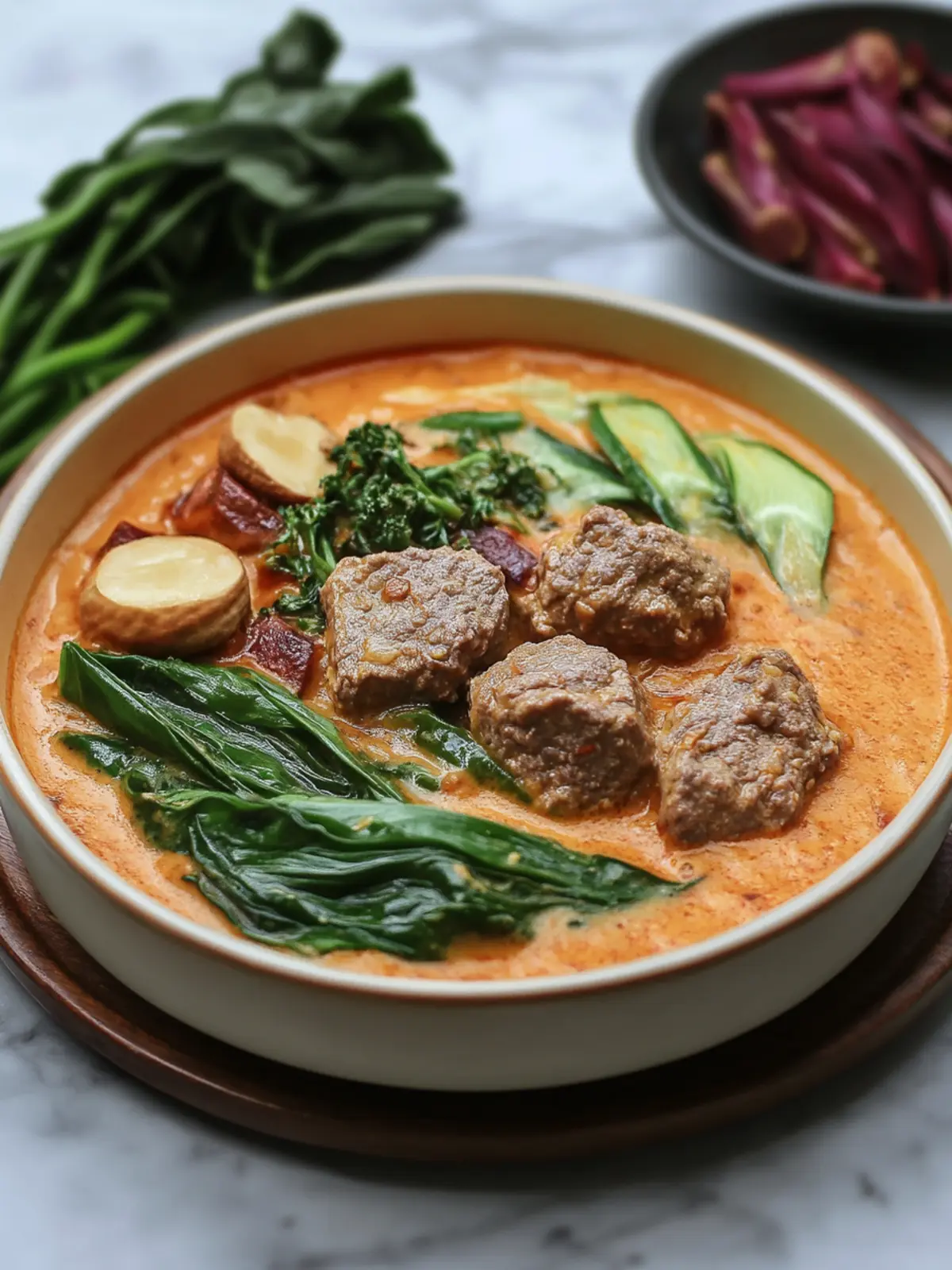
Filipino Kare Kare Recipe FAQs
What kind of meat works best for Kare Kare?
Absolutely! While traditional Kare Kare uses oxtail for its rich flavor and gelatinous texture, you can also use beef shank, pork, or even seafood. Just make sure the meat is tender to enjoy the stew’s beautiful blend of flavors.
How should I store leftover Kare Kare?
After enjoying your meal, transfer any leftover Kare Kare into an airtight container and store it in the refrigerator. It will stay fresh for up to 3 days. I often find that the flavors deepen and become even more delicious after a day or two!
Can I freeze Kare Kare for later?
Yes, indeed! Kare Kare can be frozen for up to 3 months. To do this, portion the stew into freezer-safe containers, making sure to leave a little space for expansion. When you’re ready to enjoy it again, simply thaw it overnight in the refrigerator before reheating.
Why is my peanut sauce not as thick as I expected?
If your peanut sauce is too thin, don’t worry! You can thicken it by whisking in a bit more ground toasted rice or peanut butter. A good tip is to gradually add one tablespoon at a time, allowing it to simmer until it reaches your desired consistency.
Can I make Kare Kare vegan-friendly?
Certainly! For a vegan version, skip the meat and use vegetables like chickpeas or tofu. You can replace beef broth with vegetable broth and choose a plant-based peanut butter. Adjust the seasoning to ensure it remains rich and comforting!
Is there a substitute for bagoong if I want to make it more family-friendly?
If you’d like to keep it family-friendly, you can use a dash of soy sauce or fish sauce as an alternative to bagoong. You can even offer a mix of sautéed mushrooms or miso as a delicious vegan-friendly topping!
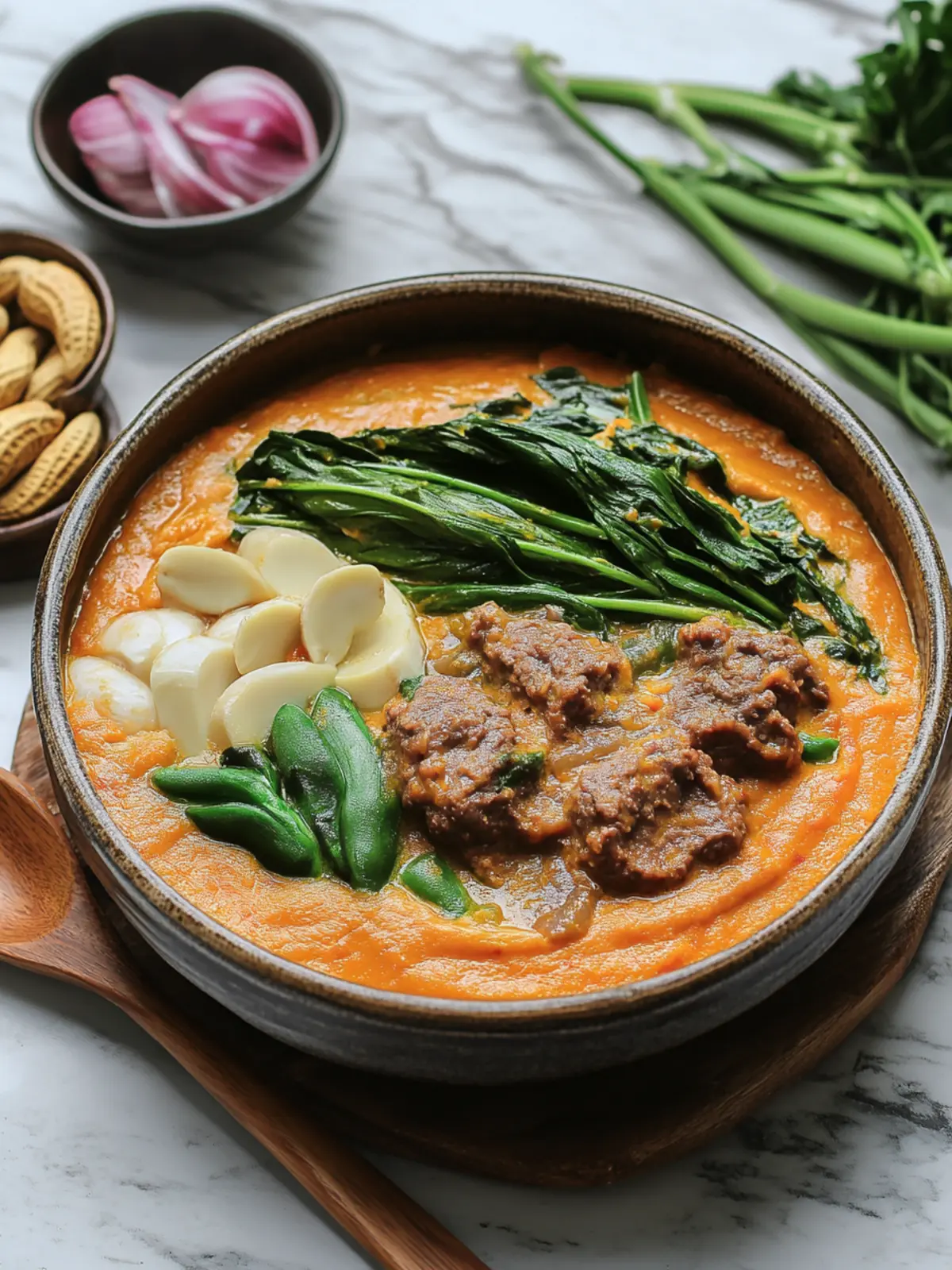
Ultimate Filipino Kare Kare: Comforting Peanut Stew Bliss
Ingredients
Equipment
Method
- In a large pot, boil the oxtail and tripe in salted water for 1.5 to 2 hours until tender. Reserve 3 cups of broth and set meat aside.
- Slice the eggplant, trim the string beans, and soak the banana heart in water. Keep the bok choy stalks separated.
- In a separate pan, heat some oil and sauté the diced onions and minced garlic until fragrant. Add the annatto powder for color.
- Pour the reserved broth into the pan, whisk in the peanut butter and ground toasted rice, and let it simmer until thickened.
- Return the cooked meat to the pot, season with fish sauce, and let it simmer together for about 15 minutes. Incorporate the prepared vegetables.
- Add the bok choy, cover, and steam for 2-3 minutes until wilted. Let the dish rest for 5 minutes before serving.
- Present your Kare Kare in a bowl with sautéed bagoong on the side and fluffy steamed rice.