
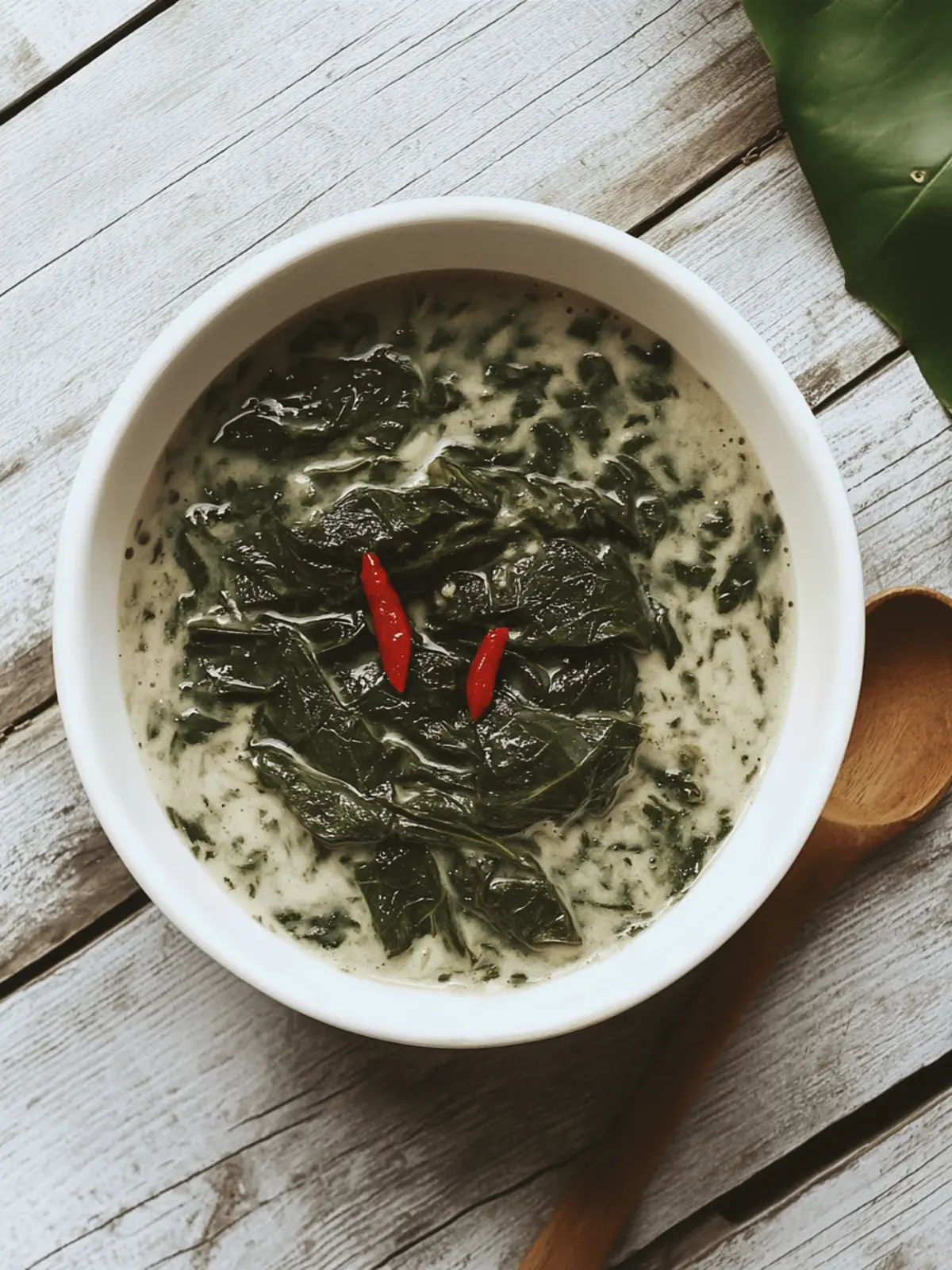
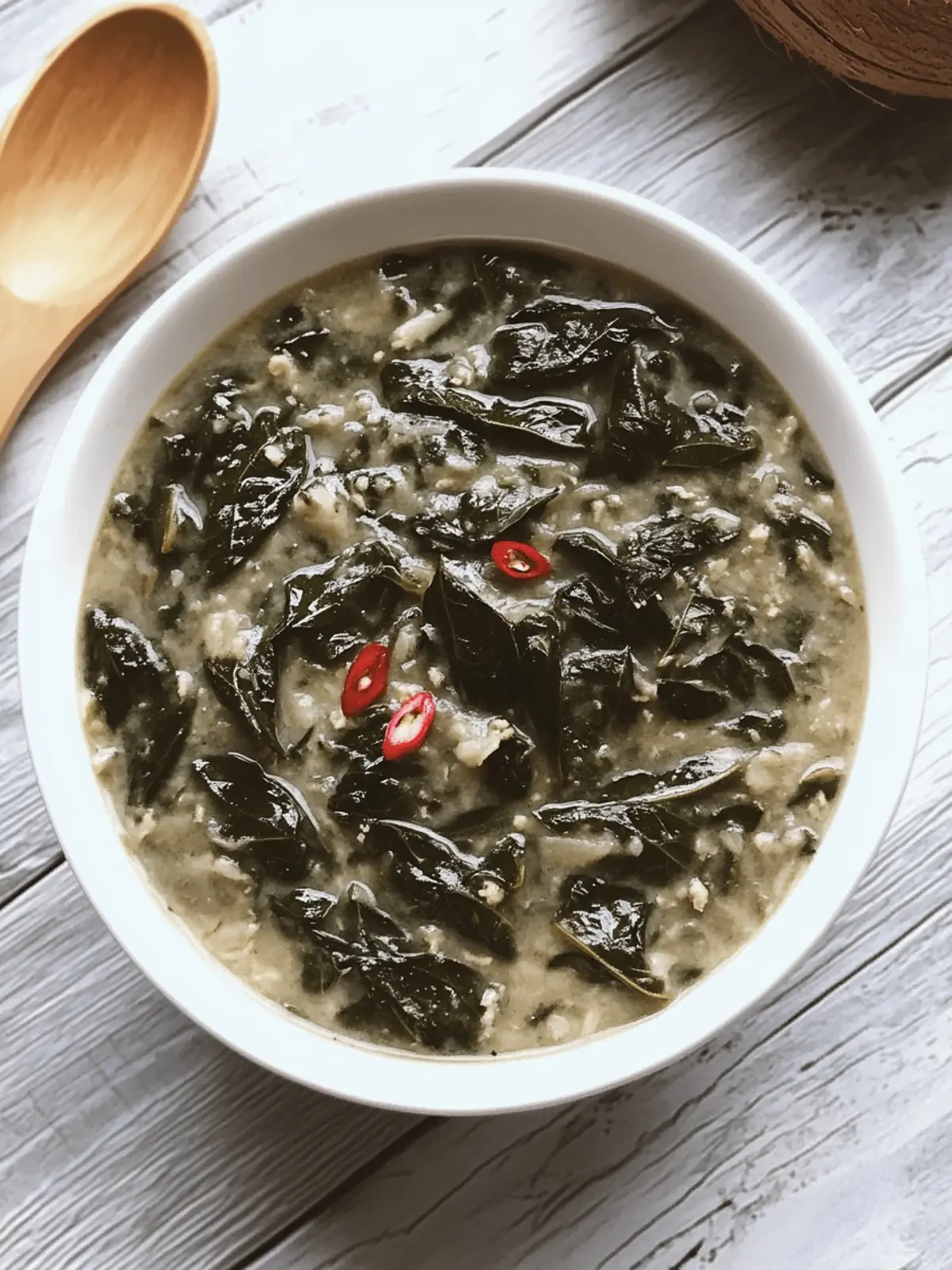
As the sun sets and the air grows crisp, the kitchen fills with the intoxicating aroma of coconut and spices. It’s one of those special moments when comfort food calls, and I find myself drawn to my roots—making Laing, a beloved Filipino dish brimming with traditional flavors. This creamy taro dish, hailing from the Bicol region, showcases the delicate balance between the rich warmth of coconut milk and the gentle heat of chillies, transporting me back to family gatherings where this dish was a staple.
Whether you’re a seasoned chef or someone searching for a comforting respite from fast food, this Laing recipe is as versatile as it is delectable. You can easily adapt it to suit your taste, adding pork for richness or keeping it vegetarian with mushrooms. No matter how you choose to prepare it, this dish is sure to become a cherished part of your culinary repertoire. Let’s dive into the creamy goodness of Laing—your taste buds will thank you!

Why is Filipino Laing so irresistible?
Comforting, creamy goodness: Laing offers a delightful blend of flavors, with the richness of coconut milk perfectly complementing the earthy taro leaves.
Customizable for all: Whether you prefer it vegetarian with mushrooms or hearty with pork, this dish caters to various dietary preferences.
A taste of home: Each bite evokes memories of family gatherings, making it a nostalgic favorite for many.
Quick and simple: Despite its rich flavor, Laing comes together with minimal fuss, making it approachable for busy home cooks.
Perfect with rice: Serve it alongside steaming rice, and you’ll have a meal that pleases everyone at the table!
Filipino Laing Ingredients
For the Base
- Dried Taro Leaves – The main ingredient that absorbs all the delicious flavors; ensure they’re grit-free, as washing can cause itchiness.
- Thick Coconut Milk – This creamy base adds the rich texture essential to the dish.
- Thin Coconut Milk – Used initially to create a soupy consistency; adjust according to your preference for creaminess.
For the Protein
- Pork Belly – Infuses savory depth; feel free to substitute with mushrooms for a vegetarian take on this Filipino Laing recipe.
- Dried Smoked Fish (Tinapa) – Adds a savory, salty note; can be omitted for a meat-free version.
For Flavor Enhancements
- Red Chillies – Provides that signature spice; modify the quantity for your desired heat level.
- Garlic – Adds a fragrant depth of flavor; always opt for fresh for the best results.
- Shallots – Offers a sweet and aromatic essence; can be swapped out with onions if necessary.
- Fresh Ginger – Contributes a warming spice; you can reduce the amount if you prefer milder flavors.
- Shrimp Paste – Elevates umami richness; substitute with soy sauce for a vegetarian variant.
- Salt & Ground Black Pepper – Essential for seasoning; taste and adjust as needed.
How to Make Filipino Laing
-
Prepare Taro Leaves: Gently wipe the dried taro leaves with a clean cloth to remove any grit, avoiding direct washing to prevent itchiness. Once clean, set them aside for later use.
-
Cook Base: In a deep pan, mix the thin coconut milk with minced garlic, sliced shallots, grated ginger, shrimp paste, diced pork belly, and flaked smoked fish. Bring it to a gentle simmer over medium heat for about 10 minutes, allowing the flavors to meld.
-
Add Taro Leaves: Carefully layer the prepared taro leaves on top of the mixture without stirring, so they retain their shape. Cover and steam until softened, roughly 15 minutes—this keeps the leaves tender and flavorful.
-
Incorporate Thick Coconut Milk: After the leaves are softened, pour in the thick coconut milk along with whole red chillies. Simmer uncovered on low heat for 20-30 minutes, or until the sauce thickens and everything is well combined.
-
Adjust Seasoning: Taste the dish at this point and season with salt and ground black pepper. Feel free to add more chillies if you’re craving extra heat!
-
Finish Cooking: Allow the mixture to continue simmering until the sauce becomes rich and thick, and the taro leaves are perfectly tender. This will create a beautifully cozy dish that clings to your rice.
-
Serve: Dish out the creamy Filipino Laing hot, ideally pairing it with steamed rice in a shallow clay pot to elevate its charm and authenticity.
Optional: Garnish with fresh coriander for an added pop of flavor and color.
Exact quantities are listed in the recipe card below.
How to Store and Freeze Filipino Laing
Fridge: Refrigerate the Filipino Laing in an airtight container for up to 2-3 days. Gently reheat on the stove or microwave before serving to savor its creamy goodness.
Freezer: If you want to store it longer, freeze Laing in a freezer-safe container for up to 2 months. Thaw in the fridge overnight before reheating.
Reheating: When reheating, stir in a splash of coconut milk to restore creaminess, ensuring the dish remains delightful and not too thick.
Serving Refresh: Freshly made Filipino Laing tastes best, but storing it properly will allow the flavors to develop even further while keeping the essence of this cherished dish intact.
Make Ahead Options
These Filipino Laing preparations are perfect for busy home cooks! You can prepare the base of the dish (thin coconut milk, garlic, shallots, ginger, shrimp paste, pork belly, and fish) up to 24 hours in advance; just refrigerate it in an airtight container. To save more time, you can also wipe and set aside the dried taro leaves ahead of time. When you’re ready to enjoy your Laing, simply reheat the base gently on the stove, add the taro leaves, cover, and steam until softened (about 15 minutes). Incorporating the thick coconut milk should be the final step before simmering everything together into a rich, creamy dish, ensuring your flavors remain just as delicious!
What to Serve with Filipino Laing?
As you prepare to delight in the creamy goodness of Laing, let’s explore the perfect companions that will enhance this traditional dish.
- Steamed Jasmine Rice: The fluffy rice is ideal for soaking up the rich, flavorful sauce, creating a comforting balance with Laing.
- Grilled Pork Belly: Adding a savory grilled element, this dish pairs beautifully with Laing’s creaminess, elevating your meal to a feast.
- Sautéed Green Beans: Fresh and crunchy, the lightly sautéed beans bring a vibrant color and crisp texture, contrasting beautifully with the creaminess.
- Eggplant Salad: The smoky flavor of grilled eggplant blended with a tangy dressing adds a refreshing touch that complements the richness of Laing.
- Spicy Papaya Salad: A touch of heat and sweetness from the salad will tantalize your taste buds and provide a refreshing balance to Laing.
- Coconut Water: Pair your meal with this refreshing drink that echoes the coconut notes in Laing while hydrating and revitalizing the palate.
- Mango Float Dessert: End on a sweet note with this delightful no-bake dessert, its creamy texture mirrored in Laing, offering a satisfying end to your meal.
Filipino Laing Variations & Substitutions
Feel free to put your own spin on this beloved dish, enhancing its deliciousness with these thoughtful adaptations!
- Vegetarian: Omit pork and fish, adding mushrooms for an earthier flavor instead. They provide a similar texture that’s both savory and satisfying.
- Vegan: Swap shrimp paste with miso to maintain umami while keeping it plant-based—just a little will add depth to the dish.
- Add Veggies: Incorporate diced eggplant or string beans to bulk it up, providing a delightful crunch and additional nutrients.
- Creamy Coconut Twist: For an extra indulgent touch, mix in a dollop of cream cheese or sour cream right before serving—it’s incredibly rich!
- Heat it Up: If you love spice, try adding a splash of chili oil or a sprinkle of crushed red pepper flakes for an exciting kick.
- Crossover Flavors: Blend in a hint of curry powder for a unique fusion twist, delivering an unexpected but delightful flavor boost.
- Fish Lover’s Delight: Introduce shrimp or crab for a seafood take that complements the dish without overwhelming the coconut flavor.
- Crispy Toppings: Top with fried garlic or crispy shallots at the end for a delightful crunch that contrasts beautifully with the creamy base.
Expert Tips for Filipino Laing
- Choose Quality Leaves: Always select dried taro leaves that are clean and free from grit. Avoid rinsing them to prevent itching.
- Heat Control: Keep the heat low during simmering to prevent the leaves from breaking apart. Gentle cooking ensures a tender texture.
- Coconut Milk Balance: Adjust the ratio of thick and thin coconut milk based on your preference for creaminess; too much thin milk can dilute flavors.
- Spice at Your Own Pace: Start with fewer red chillies; you can always add more later. It’s easier to increase heat than to tone it down!
- Resting Time: Let the Filipino Laing sit for a few minutes before serving; it allows flavors to meld beautifully, enhancing your dining experience.
Filipino Laing (Taro Leaves in Coconut Milk) Recipe FAQs
What should I look for when selecting dried taro leaves?
When choosing dried taro leaves, ensure they are free from grit and any dark spots, which can indicate spoilage. I recommend checking for a vibrant color and freshness, as this will contribute to the flavor of your dish. Remember, avoid washing them directly with water to prevent itchiness.
How do I store leftover Filipino Laing?
Refrigerate any leftover Filipino Laing in an airtight container for up to 2-3 days. To reheat, simply warm it gently on the stove or in the microwave. Adding a splash of coconut milk while reheating helps restore the creamy goodness that may have thickened after refrigeration.
Can I freeze Filipino Laing?
Absolutely! You can freeze Filipino Laing in a freezer-safe container for up to 2 months. To do this, first ensure it’s fully cooled, then portion it out and seal tightly. When ready to eat, thaw it in the fridge overnight and reheat gently, adding a little coconut milk to keep the texture creamy and delightful.
What are common troubleshooting tips for making Laing?
If you find your Laing too bitter, it might be due to overcooked taro leaves. To avoid this, monitor the cooking time closely. If the sauce is too thick, just stir in a bit of water or coconut milk until you reach the desired consistency. Remember to taste as you cook to perfect the seasoning!
Is Laing safe for my pet?
While the individual ingredients in Filipino Laing are generally safe, coconut milk and spices can be tough on a pet’s stomach. It’s best to keep this dish for humans only. If you’re concerned about allergies or sensitive pets, it’s wise to consult your veterinarian for guidance.
Can I make a vegan version of Filipino Laing?
Of course! To create a vegan variant of Filipino Laing, simply omit the pork and smoked fish. You can substitute these with mushrooms to maintain that savory depth, and use miso or soy sauce instead of shrimp paste for umami richness.
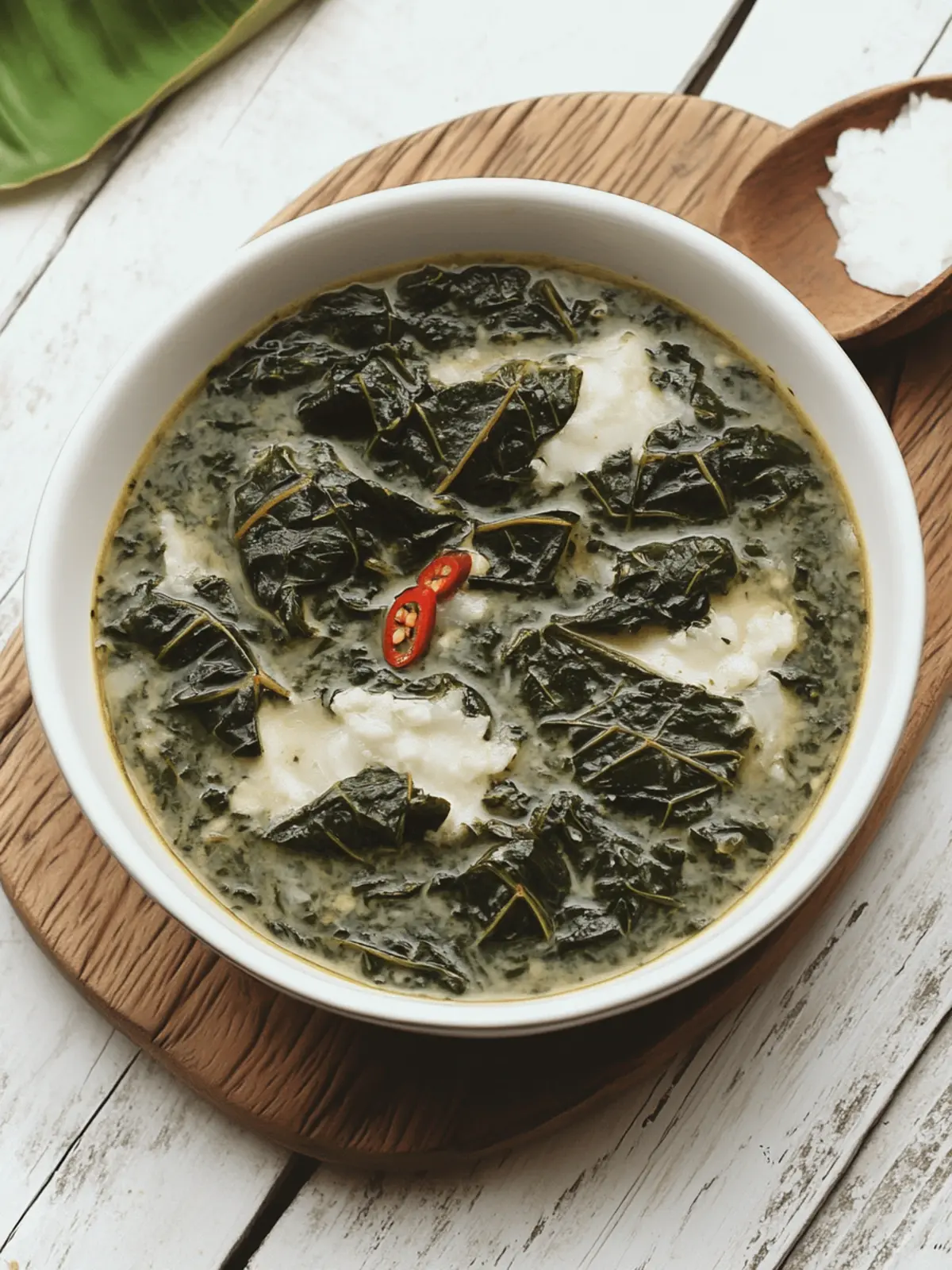
Creamy Filipino Laing: Cozy Taro Leaves in Coconut Milk
Ingredients
Equipment
Method
- Gently wipe the dried taro leaves with a clean cloth to remove any grit, avoiding direct washing to prevent itchiness. Set aside.
- In a deep pan, mix the thin coconut milk with minced garlic, sliced shallots, grated ginger, shrimp paste, diced pork belly, and flaked smoked fish. Bring to a gentle simmer for about 10 minutes.
- Carefully layer the prepared taro leaves on top of the mixture without stirring. Cover and steam until softened, roughly 15 minutes.
- After the leaves are softened, pour in the thick coconut milk and whole red chillies. Simmer uncovered on low heat for 20-30 minutes.
- Taste the dish and season with salt and ground black pepper. Add more chillies if desired.
- Allow the mixture to simmer until the sauce becomes rich and thick, and the taro leaves are tender.
- Serve hot with steamed rice in a shallow clay pot. Optionally, garnish with fresh coriander.