
There’s a particular joy that fills my kitchen when I whip up a vibrant plate of Pancit Bihon. As the rich aroma of garlic and soy sauce dances through the air, I’m reminded of family gatherings where laughter and stories blend with the delightful tastes of this Filipino classic. This beloved dish, featuring thin stir-fried rice noodles, is more than just food; it’s a comforting embrace that brings everyone together. Whether it’s a holiday feast or a cozy weeknight dinner, Pancit Bihon shines as a versatile, crowd-pleasing centerpiece.
Imagine savoring tender noodles tossed with succulent shrimp, savory meats, and crisp vegetables, all drizzled in a luscious sauce that balances umami notes with a hint of citrus. It’s not just a meal; it’s an invitation to gather and share. Let’s dive into this recipe that celebrates not only the vibrant flavors of Filipino cuisine but also the spirit of togetherness and home-cooked goodness. Your taste buds are in for a treat!

Why is Filipino Pancit Bihon a Must-Try?
Comforting, Pancit Bihon embodies the warmth of home-cooked meals, making it perfect for gatherings or cozy dinners. Flavorful ingredients meld together, creating a savory sauce that elevates every bite. Versatile by nature, you can easily swap in your favorite proteins or vegetables. Quick to make, this dish can be on your table in under 30 minutes! Plus, it’s a crowd-pleaser with its blend of textures and tastes, ensuring smiles all around. Don’t miss out on discovering more about this delightful dish in our detailed guide!
Filipino Pancit Bihon Ingredients
• Your ticket to a delightful feast!
For the Noodles
- Rice Noodles (Bihon) – Absolutely essential; soak them in warm water until softened before use for the best texture.
For the Proteins
- Chicken Breast or Pork – Thinly sliced for quick cooking and provides hearty protein; tofu makes a great vegetarian alternative!
- Shrimp – Peeled and deveined, it adds a lovely seafood touch; feel free to omit or substitute with your favorite seafood.
For the Sauce
- Soy Sauce – The backbone of flavor; use low-sodium soy sauce if you’re watching your salt intake.
- Oyster Sauce – Adds richness to the dish; opt for mushroom sauce if going vegetarian.
- Fish Sauce – Optional, but it enhances umami—modify based on your dietary needs.
- Ground Black Pepper – A pinch enhances flavor; adjust to your taste.
For the Vegetables
- Cabbage – Crunchy and fresh; bok choy or napa cabbage work as good substitutes.
- Carrot – Adds sweetness and color; julienne for the best presentation.
- Onion & Garlic – The aromatic bases; sauté until fragrant for maximum flavor.
- Green Beans – Sliced diagonally for added crunch; snow peas or bell peppers are great alternatives.
For the Garnishes
- Green Onions – Chopped for a fresh finish; sprinkle them on top just before serving.
- Lemon or Calamansi – A squeeze at the end brightens the dish beautifully; essential for that zesty finish!
With these ingredients on hand, you’re all set to create a fantastic Filipino Pancit Bihon that will bring your loved ones together for a warm and inviting meal. Enjoy your cooking adventure!
How to Make Filipino Pancit Bihon
-
Soak the Noodles: Begin by soaking the rice noodles in warm water for 10–15 minutes until softened. This crucial step ensures they absorb all the wonderful flavors during cooking.
-
Sauté Aromatics: In a large wok, heat a bit of oil over medium-high heat. Add minced garlic and diced onions and sauté until they become translucent and fragrant (about 2–3 minutes).
-
Cook the Proteins: Add the sliced chicken or pork to the wok and stir-fry until lightly browned, seasoning with soy sauce (approximately 5 minutes). This will impart a delightful flavor to the meat.
-
Add Shrimp: Toss in the peeled and deveined shrimp. Cook until they turn pink (around 2 minutes), then take the cooked meats out and set them aside for later.
-
Stir-Fry Vegetables: In the same wok, stir-fry the chopped cabbage, julienned carrots, and sliced green beans until they are tender-crisp (about 3–4 minutes). Set these colorful veggies aside.
-
Create the Sauce: Pour chicken broth into the pan and bring it to a gentle simmer. Mix in soy sauce, fish sauce (if using), and a dash of ground black pepper to create a rich flavor base.
-
Combine with Noodles: Add the soaked rice noodles to the pan, using tongs to toss them gently with the sauce and other ingredients, allowing them to absorb the liquid (about 5 minutes).
-
Reunite Ingredients: Return the cooked meats and vegetables to the pan. Stir everything together until heated through, ensuring that the noodles are well-coated in the savory sauce.
-
Finish and Serve: Sprinkle with chopped green onions and serve with wedges of lemon or calamansi on the side for those who enjoy a zesty kick.
Optional: A sprinkle of crushed chili flakes adds a nice heat!
Exact quantities are listed in the recipe card below.
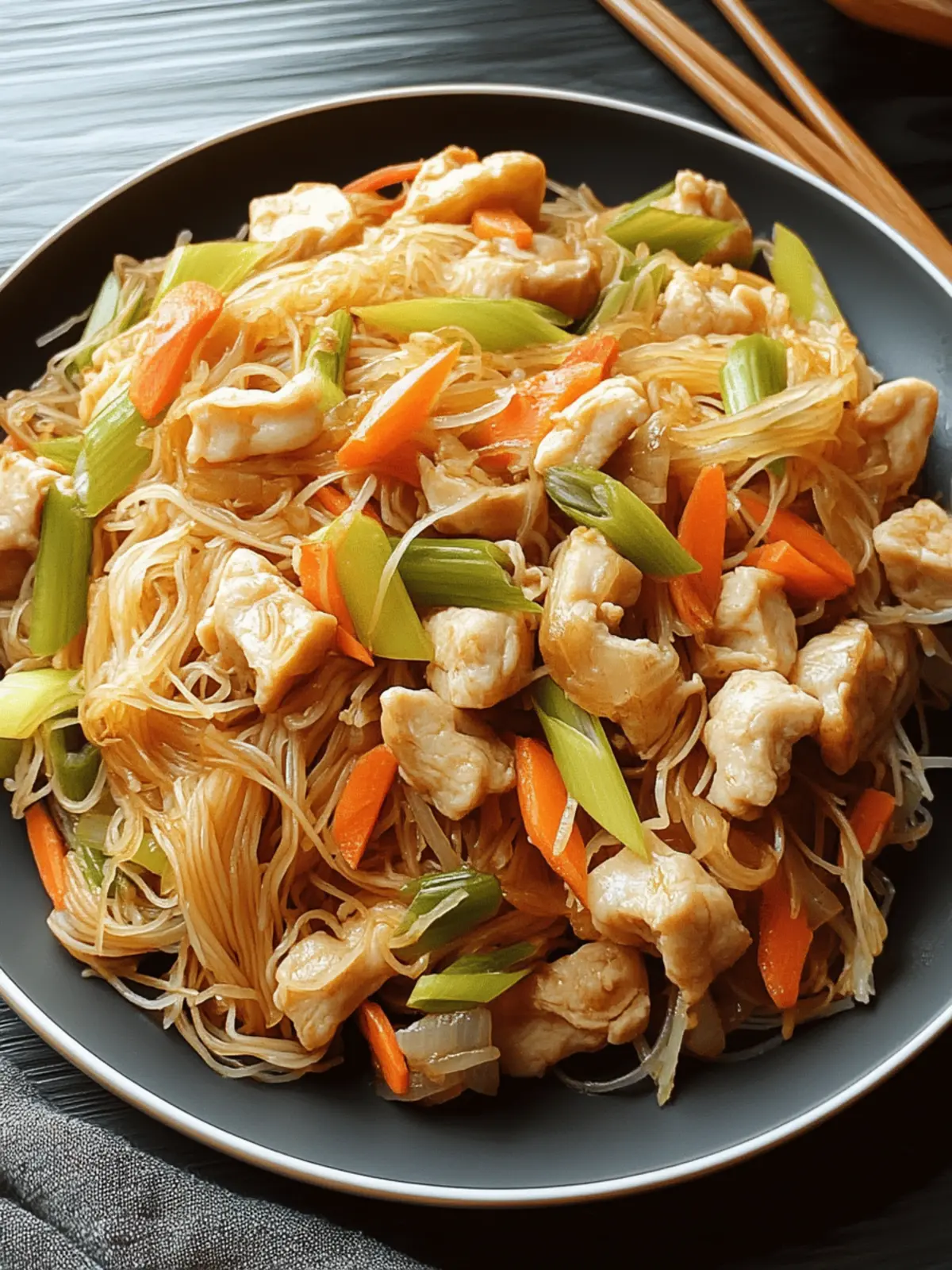
How to Store and Freeze Filipino Pancit Bihon
Fridge: Store leftover Pancit Bihon in an airtight container for up to 2 days. This retains its flavors and texture without drying out.
Freezer: For longer storage, freeze Pancit Bihon for up to 3 months in a freezer-safe container. Thaw overnight in the fridge before reheating.
Reheating: When ready to enjoy, reheat gently on the stovetop over medium-low heat with a splash of chicken broth to restore moisture and avoid sogginess.
Room Temperature: Do not leave Pancit Bihon out at room temperature for more than 2 hours to prevent foodborne illnesses.
Filipino Pancit Bihon Variations & Substitutions
Explore the delightful possibilities of customizing your Pancit Bihon! Each variation invites you to twist the classic flavors into something uniquely yours.
- Dairy-Free: Use coconut aminos in place of soy sauce for a great alternative with a hint of sweetness.
- Vegetarian Delight: Swap chicken and shrimp for tofu and increase the amount of colorful vegetables for a hearty dish.
- Gluten-Free: Substitute rice noodles with gluten-free vermicelli, ensuring a nice texture without any wheat.
- Spicy Kick: Add sliced chili peppers or a sprinkle of chili flakes during cooking for a delightful heat that enhances flavor.
- Seafood Medley: Combine shrimp with squid or scallops for a seafood twist that brings an oceanic depth to the dish.
- Extra Crunch: Toss in water chestnuts or bamboo shoots to add a delightful crunch alongside your veggies.
- Citrusy Twist: Enhance the balance of flavors by adding zest of lime or a splash of orange juice before serving for a refreshing brightness.
- Grain-Free: Replace noodles with spiralized zucchini or sweet potato for a low-carb option that maintains a satisfying bite.
These variations not only showcase the versatility of Pancit Bihon but also ensure you can cater to all preferences while preserving the spirit of this beloved Filipino dish!
Expert Tips for Filipino Pancit Bihon
• Soak Noodles Well: Ensure rice noodles are thoroughly soaked to prevent breaking and allow them to absorb flavors during cooking.
• Use High Heat: Stir-frying on high heat is essential for achieving that signature texture and flavor in your Filipino Pancit Bihon.
• Season Smartly: Taste and adjust seasoning after combining all ingredients for a well-balanced dish; don’t shy away from adding more soy sauce if needed.
• Avoid Overcrowding: Cook proteins and vegetables in batches if necessary to ensure even cooking and prevent steaming instead of stir-frying.
• Add Freshness Last: For vibrant colors and textures, add quick-cooking ingredients like green onions and citrus just before serving.
Make Ahead Options
These Filipino Pancit Bihon are perfect for busy cooks looking to save time without sacrificing flavor! You can soak the rice noodles and prepare the protein and vegetables up to 24 hours in advance; just refrigerate them in separate airtight containers. When you’re ready to serve, stir-fry the aromatics and add the broth, followed by the prepped noodles and meats, allowing them to absorb the flavors as they cook. To ensure the quality stays intact, avoid combining all ingredients too early, as this can lead to soggy noodles. Just follow the final cooking steps, and you’ll have a deliciously satisfying meal ready in no time!
What to Serve with Filipino Pancit Bihon?
Pairing this vibrant dish with complementary sides will elevate your meal experience and bring forth the fullness of flavors, creating delightful harmony on your table.
-
Lumpia (Spring Rolls): Crispy and packed with flavor, these spring rolls are the perfect crunchy counterpart to the soft textures of Pancit Bihon, making every bite a delightful experience.
-
Fried Rice: A fragrant plate of garlic fried rice adds another layer of deliciousness. The savory flavor enhances the overall meal, creating a deliciously satisfying feast.
-
Chicken Adobo: This tangy, savory chicken dish adds depth and richness, perfectly contrasting the bright flavors of the stir-fried noodles while staying true to Filipino cuisine.
-
Vegetable Stir-Fry: Lightly sautéed seasonal vegetables maintain a refreshing crunch that complements the savory Pancit Bihon.
-
Fruit Salad: A sweet, tropical fruit salad brings a refreshing balance that cuts through the savory richness of the noodles, adding a delightful contrast.
-
Filipino Halo-Halo: This iconic dessert filled with crushed ice and layered sweet treats is an exciting way to finish the meal. Its coolness and vibrant colors also add a festive touch to gatherings.
-
Calamansi Juice: Refreshing and zesty, this citrus drink perfectly complements the umami flavors of Pancit Bihon, cleansing the palate between bites.
-
Green Salad: A simple green salad with a tangy vinaigrette contributes crunch while cutting through the hearty flavors, inviting easy conversation and sharing.
Consider these delightful pairings to create an unforgettable dining experience!
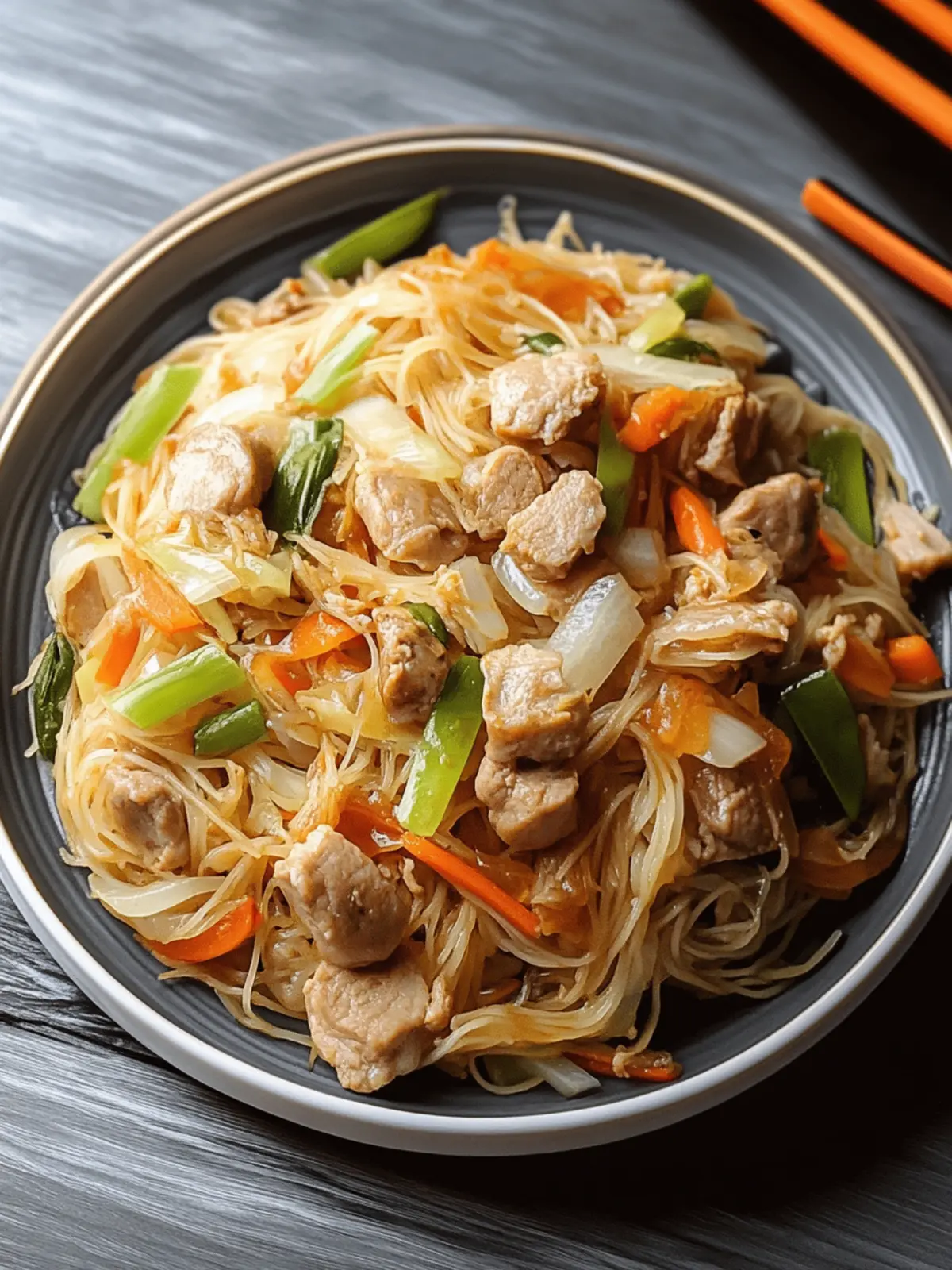
Filipino Pancit Bihon Recipe FAQs
How do I choose the right rice noodles for Pancit Bihon?
Absolutely! The key is to look for flat, thin rice noodles labeled as “Bihon.” They should be supple and free of dark spots or cracks. If you can, opt for fresh noodles for the best texture, but dried varieties work just fine. Just remember to soak them in warm water until softened before cooking.
How should I store leftovers of Pancit Bihon?
Absolutely, store any leftovers in an airtight container in the fridge for up to 2 days. This helps retain the dish’s delicious flavor and texture. Make sure to allow it to cool completely before sealing to avoid condensation, which can lead to sogginess.
Can I freeze Pancit Bihon for later use?
Yes, you can! To freeze Pancit Bihon, first cool it completely, then pack it into a freezer-safe container or heavy-duty freezer bags, removing as much air as possible. It can be stored in the freezer for up to 3 months. When ready to enjoy, thaw it overnight in the fridge and gently reheat on the stovetop, adding a splash of broth for moisture.
What can I do if my Pancit Bihon turns out too dry?
Very much! If your Pancit Bihon is too dry, it is often a sign that the noodles absorbed all the moisture. To fix this, simply add a bit of chicken broth or water to the pan during reheating. Stir it gently over low heat until the noodles are rehydrated and the dish is heated through.
Are there any dietary considerations for Pancit Bihon?
Absolutely! Pancit Bihon can be customized to accommodate various dietary needs. For a vegetarian version, replace the meats with tofu or additional vegetables and skip the oyster sauce in favor of mushroom sauce. When it comes to allergies, always check the labels on condiments like fish sauce and soy sauce. It’s essential to ensure that no cross-contamination occurs with shellfish if you’re preparing this for someone with allergies.
How long will my Pancit Bihon stay good at room temperature?
Very! It’s best not to leave Pancit Bihon out at room temperature for more than 2 hours to avoid any risk of foodborne illnesses. If it’s a hot day, aim to refrigerate leftovers even sooner.
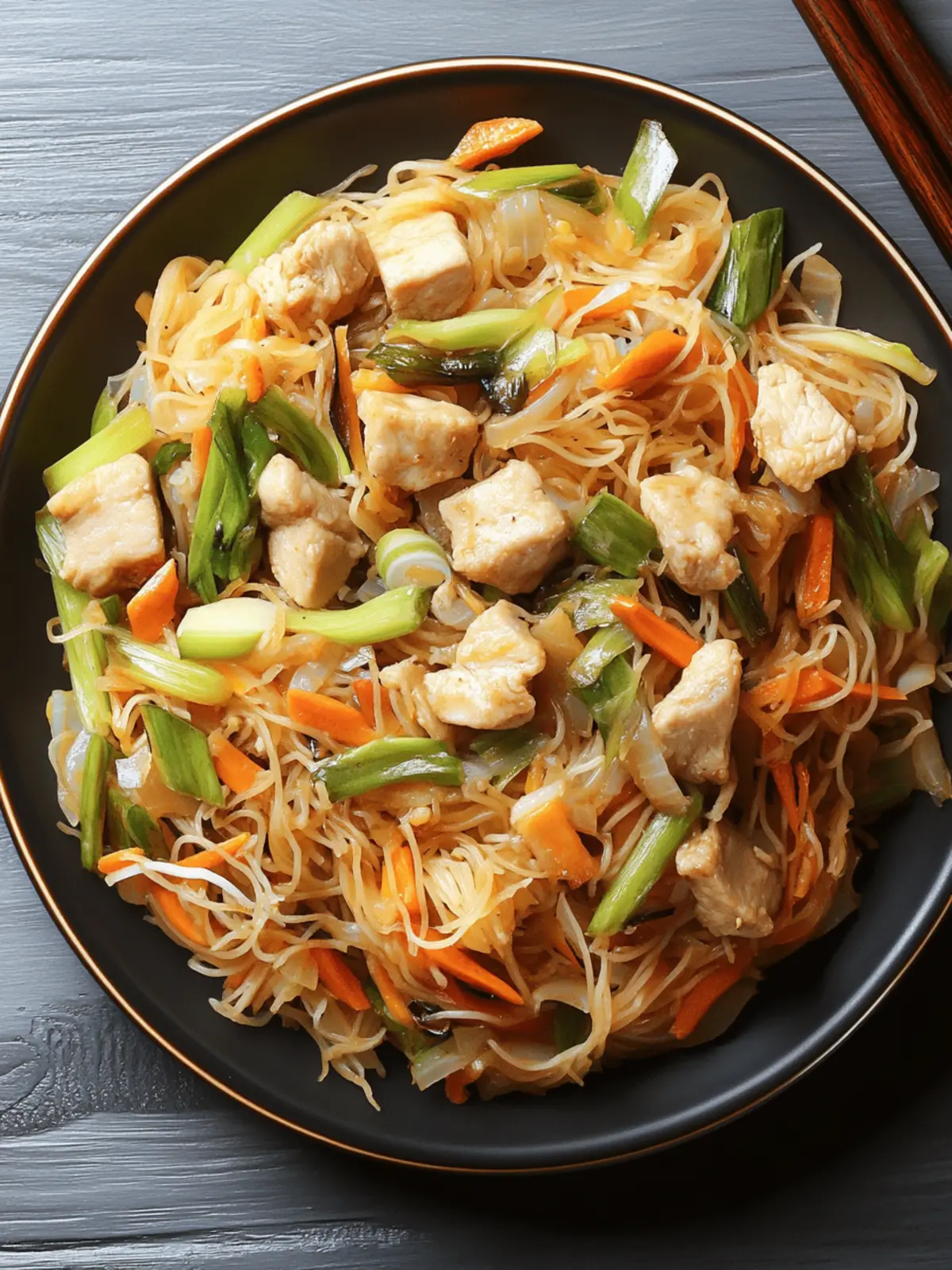
Delicious Filipino Pancit Bihon: Your New Family Favorite!
Ingredients
Equipment
Method
- Soak the rice noodles in warm water for 10–15 minutes until softened.
- In a large wok, heat a bit of oil over medium-high heat. Add minced garlic and diced onions and sauté until they become translucent and fragrant (about 2–3 minutes).
- Add the sliced chicken or pork to the wok and stir-fry until lightly browned, seasoning with soy sauce (approximately 5 minutes).
- Toss in the peeled and deveined shrimp. Cook until they turn pink (around 2 minutes), then take the cooked meats out and set them aside.
- In the same wok, stir-fry the chopped cabbage, julienned carrots, and sliced green beans until tender-crisp (about 3–4 minutes). Set aside.
- Pour chicken broth into the pan and bring it to a gentle simmer. Mix in soy sauce, fish sauce (if using), and a dash of ground black pepper.
- Add the soaked rice noodles to the pan, tossing gently with the sauce and other ingredients for about 5 minutes.
- Return the cooked meats and vegetables to the pan and stir everything together until heated through.
- Sprinkle with chopped green onions and serve with wedges of lemon or calamansi.