
The rich, tangy aroma of a simmering broth can transform a simple kitchen into a place of comfort—a sentiment that perfectly describes my love for Sinigang, the iconic Filipino sour soup. As the first drops of rain began to fall, I found myself yearning for that warm embrace that only homemade meals can provide. This dish, traditionally made with tender pork, can easily adapt to shrimp, fish, or even beef, making it a versatile favorite for any day of the week. With a delightful balance of sour and savory elements, each spoonful of Sinigang reflects the heart and soul of Filipino culinary tradition. Whether to warm your spirit on a chilly evening or to share with friends during a gathering, this soup has a way of lifting moods and satisfying cravings. Let’s dive into crafting this comforting classic that is sure to impress even the most discerning palates.

Why is Filipino Sinigang a Must-Try?
Comforting, warm flavors: Sinigang’s tangy broth is a hug in a bowl, perfect for cozying up on a rainy day.
Versatile delight: With options of pork, shrimp, or fish, you can easily suit the taste of anyone at your table.
Nutritious and hearty: Packed with vegetables and lean protein, this dish keeps you satisfied while being healthy.
Quick and easy: With simple steps and common ingredients, you’ll have a nourishing meal ready in no time!
Crowd-pleaser: Sinigang’s unique flavor profile makes it a standout at any gathering, guaranteed to impress friends and family.
If you need ideas for serving suggestions, check out my stunning side dishes that will complement this amazing soup!
Filipino Sinigang Ingredients
• Dive into making this heartwarming Filipino Sinigang with fresh, wholesome ingredients that truly bring out its comforting flavors.
For the Soup
- Pork Belly or Ribs – Delivers a rich and hearty flavor; you can also substitute with shrimp or fish for a lighter experience.
- Onion – Essential for sweetness and depth; yellow or white varieties work best in this dish.
- Tomatoes – Enhances the broth’s acidity; feel free to use fresh or canned tomatoes depending on what you have on hand.
- Water – The main ingredient that forms the soup base; adjust for your desired broth thickness.
- Tamarind Soup Base Mix or Fresh Tamarind Pulp – The key to Sinigang’s signature tang; fresh tamarind is ideal for an authentic flavor.
- Fish Sauce – Adds that umami kick; soy sauce can be a substitute, but this will change the taste slightly.
- Cooking Oil – Any neutral oil works; it’s used for sautéing the onions and pork to create a flavorful base.
For the Vegetables
- Daikon Radish – Offers a mild flavor and nice crunch; regular radish can be a fine substitute if necessary.
- Long Beans (Sitaw) – Brings a delightful texture and sweetness; green beans are also a great alternative.
- Eggplant – Contributes to the soup’s mix of textures; any variety will do well here.
- Water Spinach (Kangkong) or Spinach – Adds a touch of nutrition and color; standard spinach can replace water spinach easily.
- Green Chili Peppers (Siling Haba) – Optional for a kick of heat; feel free to adjust based on your spice preference.
For Serving
- Steamed Jasmine Rice – A perfect accompaniment for this dish, balancing the bold flavors; you may opt for other types of rice as substitutes.
- Fish Sauce with Sliced Chili – Serve as a condiment for those who enjoy extra flavor.
Gather these ingredients, and you’re on your way to creating a warm, comforting bowl of Filipino Sinigang that will not only satisfy your taste buds but also warm your heart!
How to Make Filipino Sinigang
-
Sear Pork: Heat cooking oil in a large pot over medium heat. Add the pork belly or ribs and brown them on all sides for about 5–7 minutes. Once nicely seared, remove them from the pot and set aside.
-
Sauté Aromatics: In the same pot, add the onions and cook until they become translucent, about 2 minutes. Then, stir in the tomatoes and continue to cook until they are softened, releasing their juices.
-
Simmer Pork: Return the seared pork to the pot, then pour in 6 cups of water. Bring to a boil, then reduce the heat and let it simmer for 20–30 minutes until the pork is tender.
-
Add Tamarind: Incorporate the tamarind soup base mix or fresh tamarind pulp into the pot. Stir well and adjust the sourness to your taste by adding more or less tamarind.
-
Incorporate Vegetables: Start by adding the daikon radish and cook for about 5 minutes. Next, add the eggplant and optional chili, followed by the long beans. Cook for another 2–3 minutes until just tender.
-
Finish with Greens: Gently stir in the water spinach or standard spinach and cook only until wilted, which should take about 1–2 minutes.
-
Adjust Seasoning: Taste the broth and add fish sauce as needed, adjusting according to your preference for saltiness before serving hot alongside steamed jasmine rice.
Optional: Serve with a drizzle of fish sauce mixed with sliced chili for an extra boost of flavor!
Exact quantities are listed in the recipe card below.
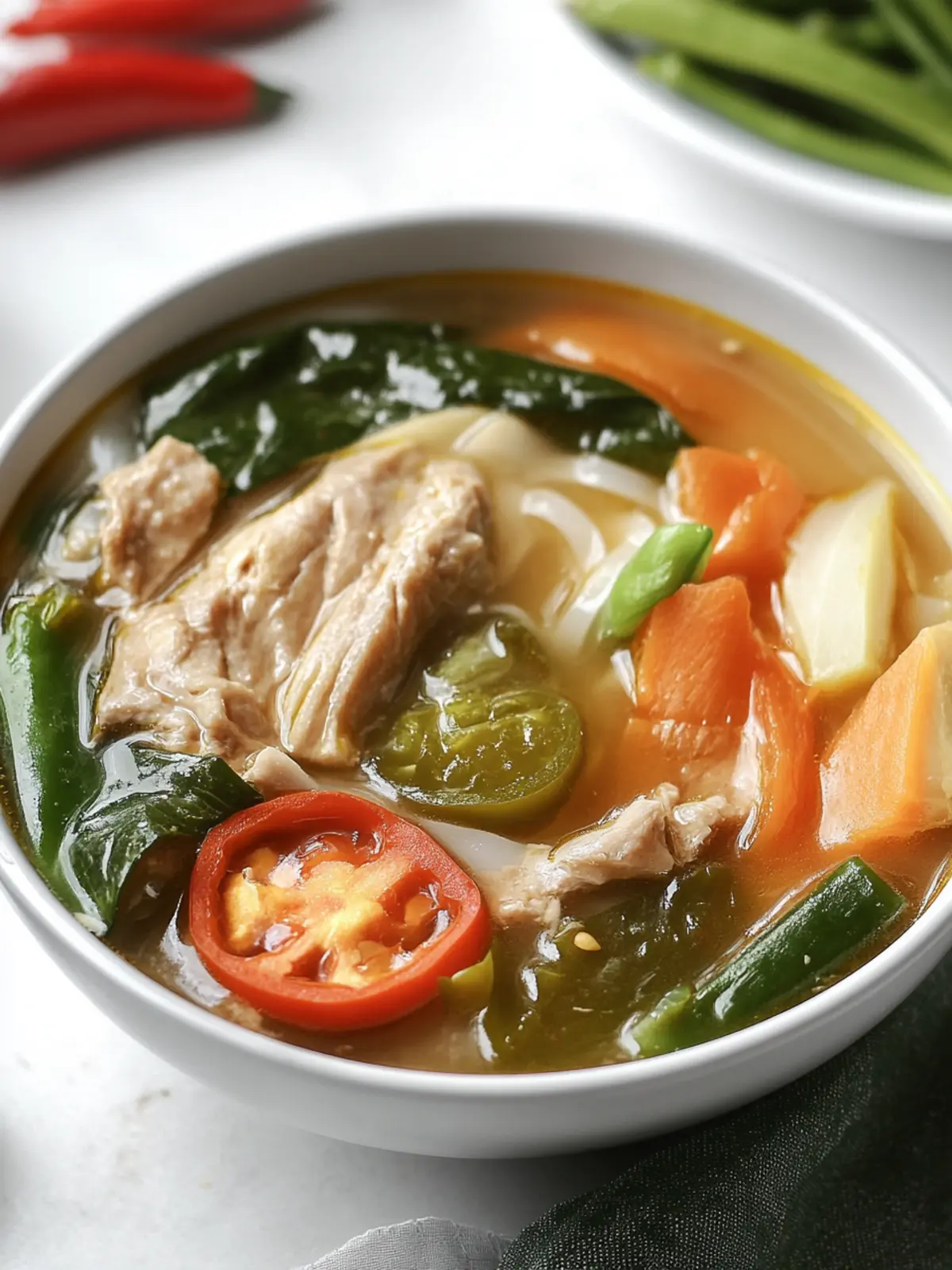
Expert Tips for Filipino Sinigang
-
Perfectly Sear Pork: Ensure your pot is hot enough before adding the pork—this creates a golden crust and enhances flavor in your Filipino Sinigang.
-
Fresh Tamarind Hack: If using fresh tamarind, boil it briefly to extract juice more efficiently. This avoids bitterness and enhances the soup’s sourness.
-
Vegetable Crunch: Don’t overcook your vegetables; aim for a slight crunch to add texture to your dish and maintain the vibrant colors.
-
Taste as You Go: Gradually adjust the sourness with tamarind, as adding too much at once can overwhelm the broth’s flavor profile.
-
Flavorful Fish Sauce: Use high-quality fish sauce for a depth of umami goodness; it perfectly complements the tangy elements of your Filipino Sinigang.
Make Ahead Options
Sinigang is an ideal recipe for meal prep enthusiasts, allowing you to savor its comforting flavors without the rush. You can chop your vegetables and sear the pork up to 24 hours in advance; just place them in airtight containers in the refrigerator to maintain freshness. Additionally, the soup can be fully cooked and refrigerated for up to 3 days—the flavors will deepen, making it even more delicious! When it’s time to serve, simply reheat the pot over medium heat, adding a splash of water if necessary to restore its consistency. This hassle-free approach ensures you can enjoy a heartwarming bowl of Filipino Sinigang with minimal effort on busy weeknights!
Storage Tips for Filipino Sinigang
-
Room Temperature: It’s best to serve Filipino Sinigang hot and fresh. If left out, consume within 2 hours for safety.
-
Fridge: Store leftovers in an airtight container in the refrigerator for up to 3 days. The flavors of the soup will deepen, enhancing its taste with each day.
-
Freezer: For longer storage, freeze portions in freezer-safe bags or containers for up to 2 months. When ready to enjoy, thaw in the fridge overnight.
-
Reheating: Gently reheat on the stovetop over low heat, stirring often to prevent the vegetables from overcooking. Enjoy your comforting bowl of Sinigang warm!
Filipino Sinigang Variations
Feel free to make this beloved soup your own with these delightful twists and substitutions!
-
Seafood Swap: Use shrimp or fish for a lighter, ocean-inspired version. The sweetness of seafood beautifully complements the tangy broth.
-
Beefy Upgrade: Substitute pork with beef short ribs for a rich and hearty flavor. Make sure to adjust the simmering time for tenderness.
-
Vegetarian Delight: Use tofu as your protein and vegetable broth instead of water for a completely plant-based option. The tofu will soak up the luscious flavors beautifully.
-
Spicy Kick: Add a dash of crushed red pepper or extra green chilies to elevate the heat level. This adds a warming touch that’s simply irresistible!
-
Flavor Boosts: Toss in a few fresh herbs like cilantro or parsley before serving to brighten the soup. This adds freshness that balances the sourness!
-
Veggie Mix-Up: Experiment with seasonal vegetables such as bok choy, zucchini, or bell peppers based on what you have on hand. Each will contribute unique flavors and textures.
-
Sour Alternatives: If tamarind isn’t available, lime juice or even green mango can provide that zesty punch you crave. Adjust the quantities to suit your taste!
-
Vegan Twist: Utilize a soy sauce alternative to fish sauce and a variety of rich mushrooms for umami depth, creating a satisfying option for everyone.
Feel free to explore these variations to create the perfect Sinigang that resonates with your family’s palate!
What to Serve with Filipino Sinigang?
Transforming your meal into a delightful feast is simple when pairing dishes that enhance the comforting flavors of Sinigang.
-
Steamed Jasmine Rice: This is the classic companion, soaking up the savory broth and balancing the tanginess of the soup beautifully.
-
Vegetable Lumpia: These crispy vegetable spring rolls provide a delightful crunch, complementing the tangy soup with their savory filling.
-
Grilled Fish: Lightly seasoned and grilled fish adds a smoky depth that pairs well with the sourness of Sinigang, creating a harmonious flavor.
-
Pancit Canton: This stir-fried noodle dish introduces satisfying texture and heartiness, making for a well-rounded and filling meal.
-
Fresh Garden Salad: A simple salad with citrus dressing adds freshness and brightens the palate, acting as a refreshing contrast to the warm soup.
-
Chili Garlic Sauce: Serve this as a condiment for those who enjoy an extra kick; it enhances the overall taste of the Sinigang while adding layers of flavor.
-
Mango Float: For dessert, this chilled sweet treat provides a refreshing end to your meal, balancing the flavors of the savory dishes.
Pair these options and create a memorable dining experience that your family will cherish!
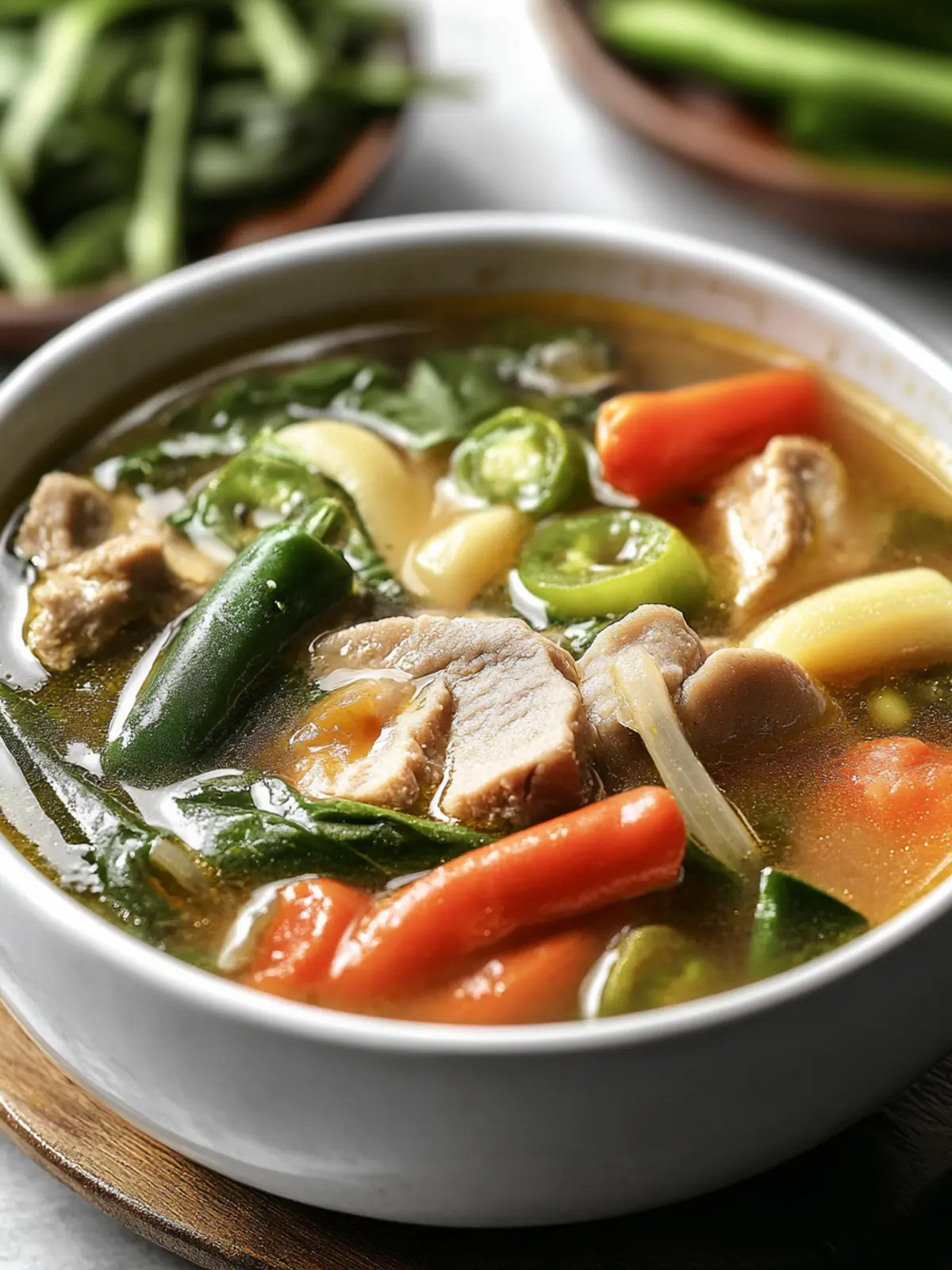
Filipino Sinigang Recipe FAQs
What type of tamarind should I use?
I recommend using fresh tamarind for the best flavor in your Sinigang. If fresh tamarind isn’t available, you can opt for a tamarind soup base mix or tamarind paste; just remember to adjust the quantity since the paste can be more concentrated.
How can I store leftover Sinigang?
Store any leftovers in an airtight container in the refrigerator for up to 3 days. The flavors of the soup actually deepen over time, so it’s a delightful treat to reheat it the next day!
Can I freeze Sinigang for later use?
Absolutely! You can freeze Sinigang in freezer-safe bags or containers for up to 2 months. To thaw, simply place it in the refrigerator overnight before reheating. When warming it up, do so on low heat, stirring occasionally to prevent overcooking the vegetables.
What if my soup is too sour?
If your Sinigang turns out too sour, you can balance the flavors by adding a pinch of sugar or an extra splash of fish sauce, which can help mitigate the tanginess. Remember to taste as you adjust, adding a little at a time until you achieve your desired flavor.
Is Sinigang suitable for people with dietary restrictions?
Yes! Sinigang can be easily adapted to accommodate dietary restrictions. For a gluten-free option, use gluten-free fish sauce. Additionally, a vegetarian version can be made by substituting pork with tofu and using vegetable broth instead of water.
Can I use frozen vegetables in Sinigang?
While fresh vegetables are ideal for maintaining texture and flavor, you can use frozen vegetables if that’s what you have on hand. Just be mindful that frozen veggies may cook faster than fresh ones, so add them toward the end of the cooking process to preserve that wonderful crunch.
Feel free to dive into this comforting bowl of Filipino Sinigang—it’s sure to evoke warmth and cheer!
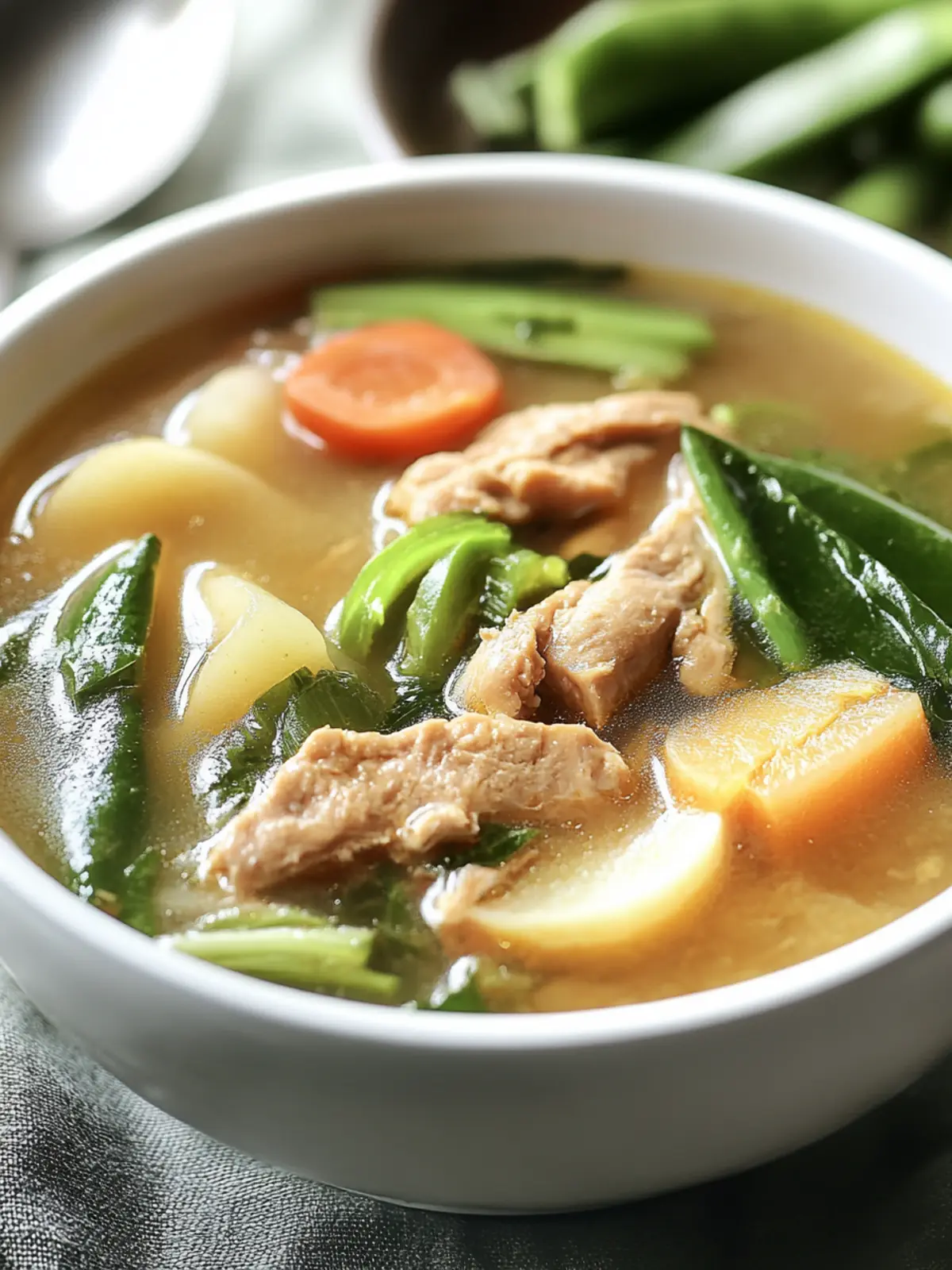
Filipino Sinigang: Soul-Warming Sour Soup for Any Day
Ingredients
Equipment
Method
- Heat cooking oil in a large pot over medium heat. Add the pork belly or ribs and brown them on all sides for about 5–7 minutes. Once seared, remove from the pot and set aside.
- In the same pot, add the onions and cook until translucent, about 2 minutes. Stir in the tomatoes and cook until softened.
- Return the seared pork to the pot, then pour in 6 cups of water. Bring to a boil, then reduce heat and simmer for 20–30 minutes until tender.
- Incorporate the tamarind soup base mix or fresh tamarind pulp, stirring well to adjust sourness.
- Add the daikon radish and cook for about 5 minutes. Add the eggplant and optional chili, followed by the long beans. Cook for 2–3 minutes until tender.
- Stir in the water spinach or spinach and cook until wilted, about 1–2 minutes.
- Taste the broth, adding fish sauce as needed for saltiness before serving hot with steamed jasmine rice.